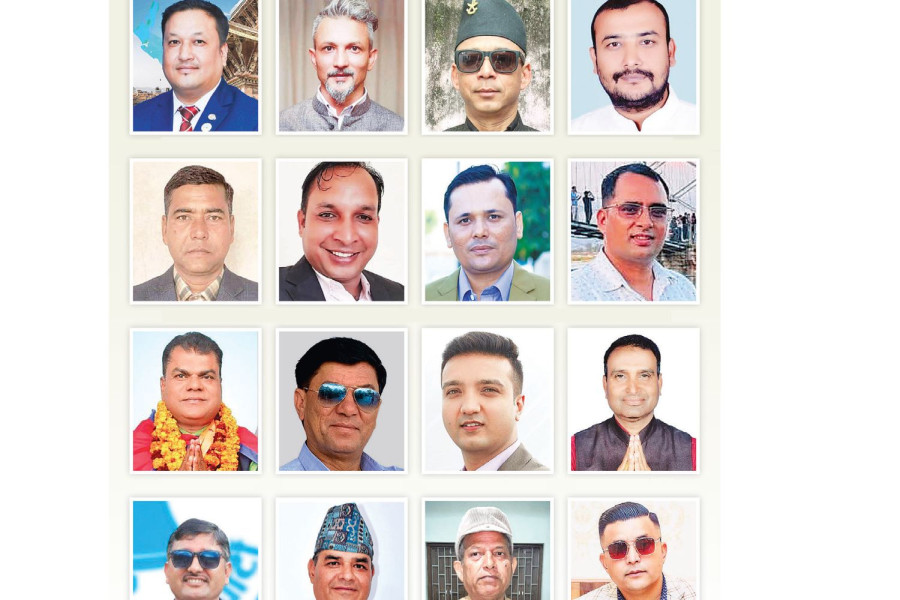
The Rastriya Swatantra Party (RSP) has achieved a landslide victory in the March 5 House of Representatives elections, winning 125 seats under the first-past-the-post (FPTP) system. The party is far ahead with about 47.8 percent of the total valid vote under the proportional representation system.
Remarkably 42 of its victorious candidates under the FPTP category are politicians who abandoned established parties shortly before the polls. From Madhesh to the hills of Gandaki defectors from the Nepali Congress, CPN-UML, Nepali Communist Party and regional parties rode the RSP wave promising change, accountability and new leadership in national politics during the elections.
In Madhesh province alone 17 of the party’s winning candidates had recently switched allegiance reflecting both the region’s volatile political loyalties and the appeal of the RSP’s anti-establishment campaign. Many candidates argued that voters were tired of entrenched party structures and corruption.
One of the most discussed victories came in Sunsari Constituency 4, where Deepak Kumar Sah defeated senior Nepali Congress leader and former minister Gyanendra Bahadur Karki. Sah had only recently joined the RSP after a turbulent journey through several parties including the Janamat Party led by CK Raut. Expelled from Janamat he briefly attempted to launch his own organisation before ultimately embracing the RSP weeks before nominations were filed. His victory stunned established political networks in the eastern plains and energised supporters.
Former journalist Santosh Rajbanshi emerged as a surprise winner contesting under the RSP banner in Morang-4. Having worked with Nepal Television and several local radio stations he gradually shifted from reporting to political activism in recent years. Earlier associated with the Nagarik Unmukti Party, Rajbanshi joined the RSP barely a week before nominations.
Despite the late switch Rajabanshi defeated Nepali Congress General Secretary Gururaj Ghimire, former minister Amanlal Modi of Nepali Communist Party, UML’s candidate Jeeban Ghimire in a closely watched multi-cornered race surprising observers across Koshi province.
Across Madhesh several other defectors also prevailed. Engineer Ramji Yadav won Saptari-2 as a RSP candidate, while RSP’s candidate Amar Kant Chaudhary defeated Janata Samajbadi Party chairman Upendra Yadav in neighbouring Saptari-3. Sitaram Sah emerged victorious in Saptari-4 after leaving the Nepali Congress. Other RSP winners included Ram Binod Yadav in Dhanusha-2, Rajkishor Mahato in Dhanusha-4 and Pramod Mahato in Mahottari-1. Their victories reflected shifting alliances among Madhesh voters seeking fresh representation in federal politics according to analysts observing the regional vote closely this year across the plains.
In Rautahat too former Congress district secretary Rajesh Kumar Chaudhary delivered a major upset contesting for the RSP in Rautahat-1. He defeated candidates from the UML, Nepali Congress and the NCP by a wide margin. Meanwhile Rabindra Patel and Ganesh Paudel secured victories in Rautahat-3 and Rautahat-4 respectively after abandoning their previous parties. Analysts say such rapid shifts underline growing voter frustration with traditional party rivalries that have dominated the Tarai for decades without delivering stable governance or development outcomes.
The trend was equally visible in the Kathmandu Valley. Sunil KC, a former leader of the Rastriya Prajatantra Party, won from Kathmandu-2 defeating Nepali Congress candidate Kabir Sharma. In Kathmandu-10, Pradip Bista, previously associated with the Congress, unseated Himal Karki. Bhaktapur-1 also witnessed an upset as Rukesh Ranjit once an UML activist defeated veteran Nepal Workers and Peasants Party leader Prem Suwal. Local residents said voters were determined to weaken party strongholds that had dominated municipal and national politics for years.
Beyond the capital several winners had roots in mainstream parties. In Kavre-1, Badan Kumar Bhandari left the CPN (Unified Socialist) before joining the RSP. Bodha Narayan Shrestha elected from Dhading-2 had earlier supported Maoist politics. In Tanahun-1, economist Swarnim Wagle retained his parliamentary seat after previously leaving the Nepali Congress while Shriram Neupane, another former Congress activist triumphed in Tanahun-2. These shifts illustrate how the RSP has absorbed figures from diverse ideological backgrounds united by reformist rhetoric and voter frustration.
In Gandaki province, former district secretary of the Congress affiliated Tarun Dal Sagar Bhusal won from Parbat while former Congress activist Sushil Khadka captured Baglung. Uttam Prasad Paudel, former youth leader of Congress, emerged victorious in Kaski-2. Tourism administrator Dhananjay Regmi with earlier Congress links prevailed in Syangja-1.
According to political observers, many of these candidates capitalised on the growing influence of the RSP founded by former television presenter Rabi Lamichhane and former Kathmandu’s mayor Balendra Shah. Their anti-corruption message has resonated strongly among younger voters disillusioned with traditional parties for years now.
In Lumbini province, defections were equally decisive. Former provincial legislator Janata Samajbadi Party Nepal Kanhaiya Baniya resigned from the Loktantrik Samajbadi Party to contest Rupandehi-4 and won comfortably. In neighbouring Nawalparasi West, former Congress leaders Bikram Khanal and Narendra Gupta captured constituencies after internal disputes within the Congress over candidate selection. Local residents in Ramgram in Nawalparasi West said the RSP offered an alternative to factional politics that had paralysed district development projects for years.
In Kapilvastu-2, former Congress figure Bikram Singh Thapa defeated ex-minister Surendra Raj Acharya. Palpa-2 also produced drama when Madhav Thapa, a Congress leader, entered the RSP shortly before nominations and overcame Congress chairman Himal Datta Shrestha. In Dang-1 teacher leader Devaraj Pathak beat prominent rivals including Congress joint general secretary Yogendra Chaudhary. Former Congress activist Khagendra Sunar meanwhile triumphed in Banke-3 defeating provincial party chief Amar Singh Pun in a decisive contest watched nationwide.
In Bardiya-1, former journalist Thakur Singh Tharu, previously associated with the Nagarik Unmukti Party, joined the RSP and defeated Congress leader Sanjay Gautam who had beaten him in the previous election. Bardiya-2 winner Shridhar Pokharel had likewise spent many years within Congress organisations before joining the RSP.
Analysts say such reversals illustrate how quickly Nepal’s political loyalties can shift when voters sense an opportunity for new leadership and accountability in government institutions across rural districts today.
Sudurpaschim province also produced striking examples. Komal Gyawali won Kailali-1 after leaving the Nagarik Unmukti Party while Tara Prasad Joshi, who was once leader of CPN Unified Socialist), broke the long-standing Congress dominance in Dadeldhura. Former Congress rebel Hari Mohan Bhandari triumphed in Baitadi and Gyanendra Singh Mahata secured Kanchanpur-3 after earlier affiliations with UML and the CPN (Unified Socialist).
The RSP bagged a single seat in Karnali province. Ramesh Kumar Sapkota, who was Congress’s municipal committee secretary of Birendranagar, emerged victorious from Surkhet-2 as the RSP candidate.
These stories highlight how politicians from rival ideological backgrounds converged under the RSP banner during the campaign hoping to ride the party’s growing popularity among voters nationwide this election cycle.
RSP candidates emerged victorious by shifting party allegiance
Candidate Constituency No Former Party
Santosh Rajbanshi Morang-4 Nagarik Unmukti Party
Deepak Kumar Sah Sunsari-4 Janamat Party
Ramaji Yadav Saptari-2 Rastriya Janata Party
Amarkant Chaudhary Saptari-3 Rastriya Janata Party
Sitaram Sah Saptari-4 Congress
Rambinod Yadav Dhanusha-2 Madhesh-based parties
Rajkishor Mahato Dhanusha-4 Janata Samajbadi Party
Pramod Kumar Mahato Mahottari-1 Loktrantik Samajbadi Party
Ujjawal Kumar Jha Mahottari-3 Janata Samajbadi Party
Narendra Sah Kalawar Sarlahi-3 Nepali Communist Party
Rajesh Kumar Chaudhary Rautahat-1 Congress
Rabindra Patel Rautahat-3 Nepali Communist Party
Ganesh Paudel Rautahat-4 Congress
Ganesh Dhimal Bara-1 Congress
Chandan Kumar Singh Bara-2 Janata Samajbadi Party
Rahabar Ansari Bara-4 Nepali Communist Party
Sushila Kumar Kanu Parsa-2 Janata Samajbadi Party
Ramakanta Prasad Chaurasiya Parsa-3 Congress
Tek Bahadur Shakya Parsa-4 Nepali Communist Party
Sunil KC Kathmandu-2 Rastriya Prajatantra Party
Pradeep Bista Kathmandu-10 Congress
Rukesh Ranjit Bhaktapur-1 UML
Badan Kumar Bhandari Kavre-1 Nepali Communist Party
Bodhanarayan Shrestha Dhading-2 Nepali Communist Party
Shreeram Neupane Tanahun-2 Congress
Sagar Bhusal Parbat Congress
Sushil Khadka Baglung-1 Congress
Uttam Prasad Paudel Kaski-2 Congress
Dhananjaya Regmi Syangja-1 Congress
Kanhaiya Baniya Rupandehi-4 Loktrantik Samajbadi Party
Bikram Khanal Nawalparasi West-1 Congress
Narendra Gupta Nawalparasi West-2 Congress
Bikram Singh Thapa Kapilvastu-2 Congress
Madhav Thapa Palpa-2 Congress
Devraj Pathak Dang-1 Congress
Suresh Kumar Chaudhary Banke-1 Nagarik Unmukti Party
Thakur Singh Tharu Bardiya-1 Nagarik Unmukti Party
Shreedhar Pokharel Bardiya-2 Congress
Ramesh Kumar Sapkota Surkhet-2 Congress
Tara Prasad Joshi Dadeldhura Nepali Communist Party
Harimohan Bhandari Baitadi Congress
Gyanendra Singh Mahata Kanchanpur-3 Nepali Communist Party
(Ganga BC in Kathmandu, Parbat Portel in Biratnagar, Shiva Puri in Rautahat, Deepak Pariyar in Pokhara and Dipendra Baduwal in Bhairahawa reported on this news story)




 14.81°C Kathmandu