Service delivery improves for 58 percent, but social sectors lag, survey shows
People’s Pulse 2026, conducted by Sharecast Initiative, in collaboration with The Kathmandu Post, finds gains in roads, water and electricity, while education, health and governance trail.
With the heralding of the federal democratic republic of Nepal, there was an expectation that the government would reach citizens’ doorsteps and that public service delivery would vastly improve. People’s pulse 2026 examines to what extent this expectation has been fulfilled—and how citizens perceive government services. Conducted among 2,905 respondents, the study presents a serious yet hopeful picture of the quality, accessibility, and effectiveness of public services provided by federal and provincial governments over the past year.
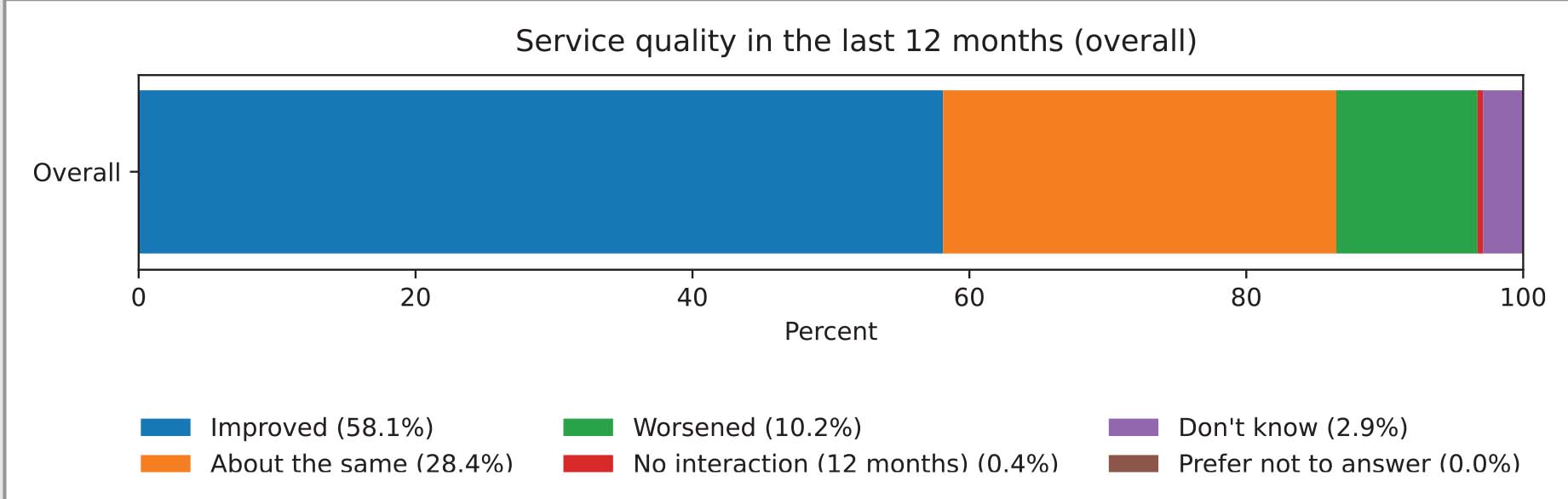
The most positive finding is that nearly 58.1 percent of citizens feel that the quality of government services has improved. A total of 1,688 respondents reported “significant improvement” or “some improvement” in services. This suggests that efforts by various government bodies to enhance service delivery are gradually being reflected in citizens’ lived experiences. The overall trend of public opinion shows a steady tilt in a positive direction.
However, it would be premature to call this improvement “broad” or “complete.” Around 28.4 percent of respondents said there has been no change and that conditions remain “the same.” Meanwhile, 10.2 percent reported a deterioration in service quality. In other words, nearly 40 percent of citizens are either dissatisfied with the pace of improvement or have not felt any meaningful change in the state’s presence in their lives.
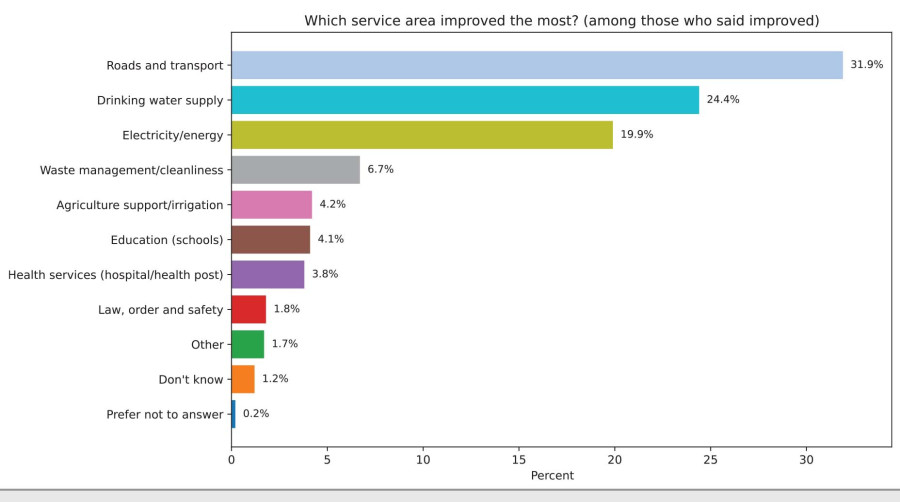
Among those who perceived improvement, 76.2 percent primarily pointed to positive changes in roads, transportation, drinking water, and electricity supply. These four pillars of physical infrastructure are seen as key indicators of service improvement. Specifically, 31.9 percent cited roads and transportation, 24.4 percent drinking water, and 19.9 percent electricity or energy as areas of progress.
This suggests that the government has been more focused on visible, tangible “hardware” development that directly affects daily life. Respondents also recommended prioritizing these areas in the future, underscoring the persistent public demand for physical infrastructure.
Yet the enthusiasm visible in infrastructure is not mirrored in social development sectors. Satisfaction is notably weak in education and health—considered foundational pillars of social progress. Only 3.8 percent reported improvement in health services and just 4.1 percent in education. That citizens do not feel improvement in these critical sectors raises serious questions about government investment and policy priorities.
Similarly, only small percentages reported improvement in waste management (6.7 percent), agricultural support (4.2 percent), and law and governance (1.8 percent). This suggests that while attention has been concentrated on physical construction, the “software” aspects of governance—social services and institutional quality—remain overshadowed.
Citizens’ social backgrounds also influence how they perceive government services. The older the respondent, the more likely they were to perceive improvements in drinking water services. Among youth aged 18–20, 19.3 percent noted improvement in drinking water, compared to 30.1 percent among those above 60.
Conversely, younger respondents (12.4 percent of those aged 18–20) were more likely to see improvement in school education, whereas only 2 percent of those above 40 shared this view. This indicates that younger citizens are more sensitive to changes in education, while older citizens are more attentive to basic services like water and electricity.
Gender differences are also apparent. Men (24.3 percent) reported greater satisfaction with electricity and energy services, while women (27 percent) were more positive about improvements in drinking water. Regional differences further shape perceptions: in Gandaki Province, 39 percent praised improvements in drinking water; in Karnali, 31.2 percent emphasized progress in electricity supply; in Bagmati Province, some improvement was noted in waste management and sanitation.
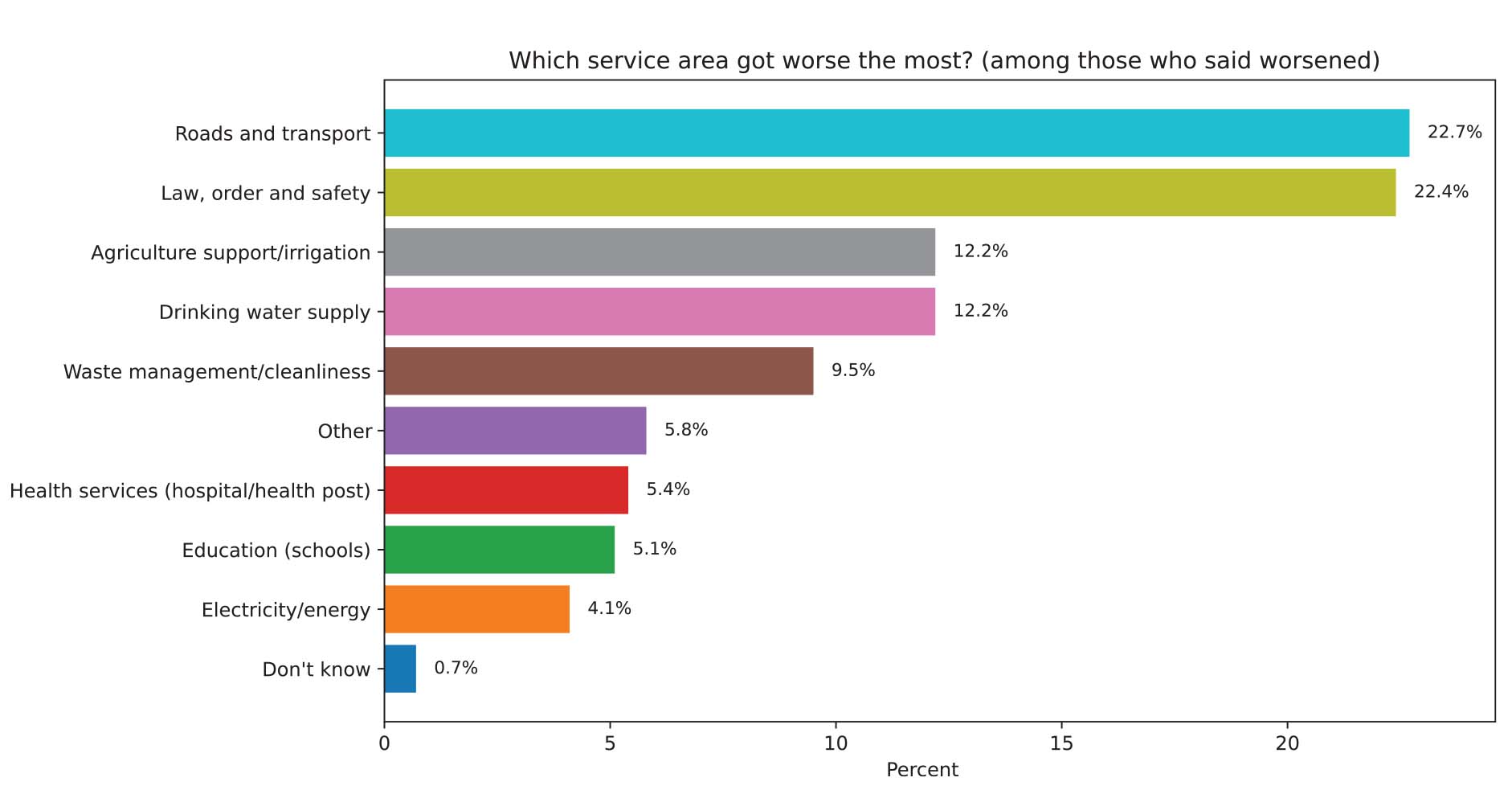
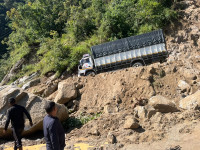
An intriguing and contradictory finding concerns roads and transport. On one hand, it is considered the most improved sector; on the other, it tops the list among those who believe services have deteriorated. Among the dissatisfied 10.2 percent, 22.7 percent said roads and transportation had worsened the most.
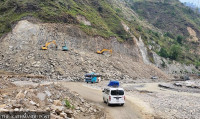
Ongoing but incomplete road projects, environmental pollution during construction, and poor construction quality appear to be major factors. The gap between citizen expectations and actual service quality has made the same service feel like a “boon” to some and a “burden” to others.
Respondents also expressed concern about security and law and order. About 22.4 percent of those who said services had deteriorated reported that law, governance, and security conditions were worse than before. The low percentage of perceived improvement in this sector, contrasted with high dissatisfaction, signals problems in citizens’ sense of legal protection and state presence. Concerns were also raised about agriculture, waste management, and health, suggesting continued obstacles in realizing the democratic dividend.
One key conclusion emerges from the survey: claims of “improvement” based solely on statistics are not enough to win public trust. The 58 percent who feel improvement must grow toward 80–90 percent, while the dissatisfaction of the remaining 40 percent must be meaningfully addressed. Targeted reforms are particularly necessary in transportation, security, and law enforcement.
Without transformative change in social sectors—especially education and health—as well as in governance practices, achieving comprehensive improvement will remain difficult. A deeper analysis of where and why citizens are dissatisfied is essential to making service delivery more accountable and effective. Ultimately, when the government claims improvement, the real question is whether that improvement is lost in the dust of road construction—or reflected in the kitchen tables and sense of security of ordinary citizens.




 26.19°C Kathmandu