Deuba loyalists’ lack of enthusiasm piles pressure on Congress candidate Mahar
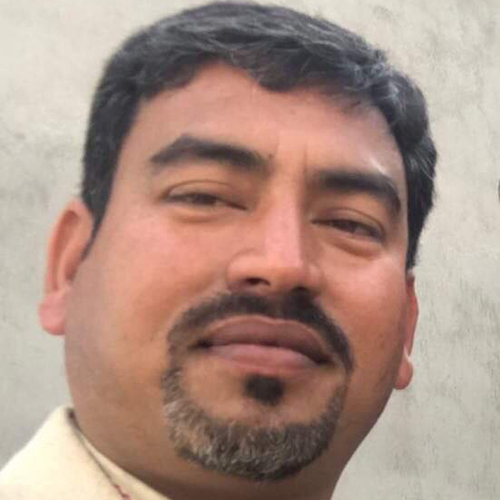
The former prime minister’s absence from electoral race dampens mood in the traditional Congress stronghold as rivals sense rare opening in Sudurpaschim. Sher Bahadur Deuba and Nain Singh Mahar Post file photos
Matelagaun of Ganyapdhura-1 in Dadeldhura, the birthplace of former prime minister Sher Bahadur Deuba, would normally come alive with political activity on the eve of an election. This time, however, the mood seems markedly subdued.
On Friday, the Deuba families of the former prime minister’s hometown were engaged not in campaign preparations but in constructing a temple dedicated to their ancestral deity near a ravine below the settlement. The contrast with previous elections was striking.
For more than three decades, elections in Dadeldhura resembled a festival for Nepali Congress supporters. Villagers recall campaigning enthusiastically for months, travelling from house to house, urging voters to support Deuba, who represented the constituency continuously since 1991.
“This is the first election when we feel hardly informed or mobilised,” said Karna Bahadur Deuba, a relative of the former prime minister. “Earlier, we would campaign tirelessly and only return home after the vote count was completed. Now there is no excitement. I do not even feel motivated to vote.”
The lack of enthusiasm stems largely from Deuba’s absence from the electoral contest. For decades, voters in Dadeldhura viewed elections as a formality, assuming Deuba would ultimately emerge victorious regardless of the competition.
Local residents also expressed dissatisfaction over the circumstances surrounding his exclusion from the race following leadership changes within the Congress.
“He was sidelined at this stage of his life, and despite saying he wished to contest one final time, he was denied a ticket,” said another relative, Dammar Bahadur Deuba. “People here feel deeply hurt.”
Across much of Dadeldhura, similar sentiments prevail among long-time Congress supporters. Seventy-nine-year-old Tekraj Awasthi of Behta recalled that election seasons once generated unmatched energy in the district.
“For us, elections meant Sher Bahadur Deuba’s victory was certain,” Awasthi said. “Even opposition supporters believed he would win. This time, without him as a candidate, the outcome feels uncertain.”
During the 2022 general election, Deuba spent several days in the constituency addressing meetings across Bagbazar, Navadurga, Ganyapadhura, Ajaymeru, Bhageshwor and Parashuram. His speeches were typically brief and avoided personal attacks, yet his dominance remained unquestioned.
“Many voters used to say casting votes for others was meaningless because Deuba would win anyway,” said local resident Hari Prasad Bhandari. “That belief helped him secure huge victory margins.”
Deuba, a five-time prime minister and seven-time Member of Parliament, began his parliamentary career from Dadeldhura in 1991, winning more than 70 percent of the vote. He went on to win every subsequent election he contested from the constituency—in 1991, 1994, 1999, 2008, 2013, 2017 and 2022—even during periods when his party suffered nationwide setbacks.
In both the 2008 Constituent Assembly election, dominated by Maoist influence, and the 2017 general election fought under a strong communist alliance, Deuba retained his seat. He also won from additional constituencies in Kanchanpur and Kailali in different elections, underscoring his political stature in Sudurpaschim.
Party insiders say the Dadeldhura district committee had recommended Deuba as the sole candidate for the constituency this time as well. However, political developments following the party’s special general convention altered the equation, eventually pushing the leader out of the parliamentary race.
His withdrawal has left Congress cadres across Sudurpaschim Province disheartened. Many believe the end of Deuba’s electoral journey marks the close of an era in regional politics.
The immediate political impact is being felt by Congress candidate Nain Singh Mahar, who now faces the challenge of mobilising a traditionally loyal but demoralised support base.
Congress supporters admit that the reduced involvement of Deuba loyalists has complicated Mahar’s campaign. Mahar, however, insists that internal differences are gradually narrowing.
“The people of Dadeldhura who respect Deuba are committed to democratic values,” Mahar said. “The Congress will remain united, and victory is achievable regardless of who the candidate is.”
He added that he had initially prepared to contest from another constituency, as Deuba’s candidacy was widely expected. “Only after the announcement that Deuba would not contest did I begin preparations here,” he said, claiming that party unity was improving lately.
Local observers believe Mahar’s success will depend largely on whether he can win the confidence of Deuba’s traditional supporters.
“If Deuba had contested, voters would feel they were electing a future prime minister,” said Ramesh Kumar Joshi, a teacher in Dadeldhura. “Compared to him, Mahar naturally appears less influential, but he is still an experienced Congress leader.”
Support from the Nepali Congress (BP) faction could also prove decisive. Provincial president Karunakaran Bhatta indicated that electoral cooperation remained possible if ongoing unity discussions progressed positively, though he emphasised that Mahar must first gain grassroots trust.
Meanwhile, rival candidates view Deuba’s absence as a rare political opportunity. Tara Prasad Joshi, elected as an independent provincial assembly member in the previous election and now contesting under the Rastriya Swatantra Party (RSP), said changing political dynamics had strengthened his prospects.
“ Congress’s internal divisions and Deuba’s exit have opened space for alternative leadership,” Joshi said.
Another contender, Mansingh Mal of the Nepali Communist Party, also claimed growing electoral momentum, arguing that communist influence remained strong in areas such as Parashuram and Alital in the inner Madhesh belt. He pledged to prioritise employment generation, infrastructure development, healthcare and education if elected.
Dadeldhura’s political geography remains divided, with Ganyapdhura and Bhageshwor rural municipalities, and Amargadhi municipality of the district traditionally regarded as Congress strongholds, while left parties maintain influence in parts of Ajaymeru and Navadurga rural municipalities.
Yet, for many voters, this election feels fundamentally different. Without Sher Bahadur Deuba on the ballot for the first time in more than three decades, Dadeldhura faces an unfamiliar contest—one defined less by certainty and more by political transition.
Whether Mahar can transform loyalty to Deuba into votes for the Congress will likely determine the outcome in a constituency long synonymous with one man’s political legacy.




 13.13°C Kathmandu