



 19.12°C Kathmandu
Sun, Apr 26, 2026
National
Prior public remarks do not automatically disqualify probe officials, top court says
Orders to ensure impartial appointments in future inquiry commissions.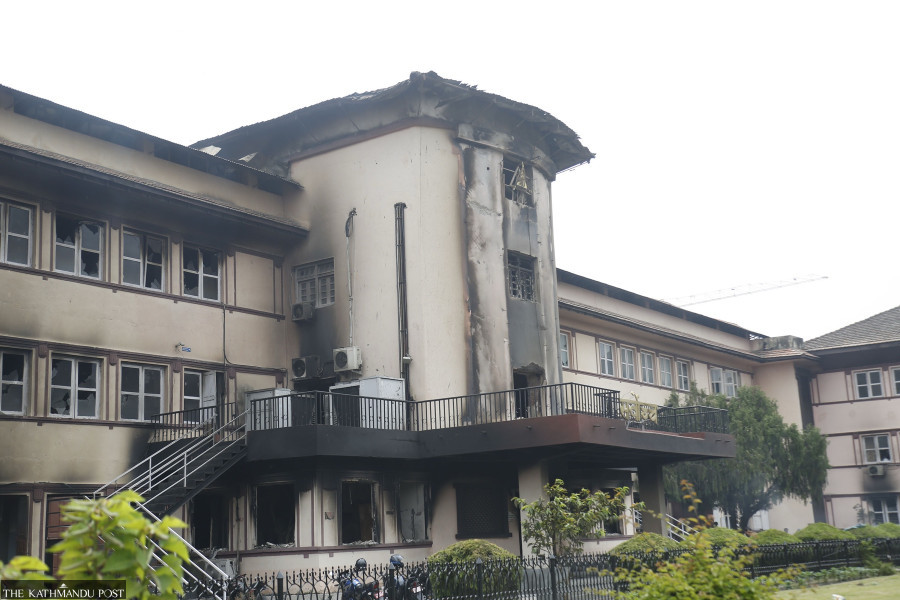
bookmark
Post Report
Published at : February 27, 2026
Updated at : February 27, 2026 14:15
Kathmandu
Prior public expressions, including on social media, do not automatically disqualify a person from serving on an inquiry commission, the Supreme Court said, stressing that impartial performance is key to establishing a commission’s legitimacy.
A full bench of Justices Manoj Kumar Sharma, Nahakul Subedi and Nripa Dhwoj Niroula made the observation in its verdict on a writ challenging the eligibility of officials appointed to the high-level investigation commission probing the incidents of September 8-9. The court had delivered its decision on December 26 last year, quashing the writ petition. The full text of the ruling was made public on Friday.
The court said that while public statements made before appointment may raise questions about neutrality, they do not by themselves prove a lack of qualifications prescribed by law. It noted that officials appointed under the Commission of Inquiry Act, 1969 must carry out their duties in a fair and prejudice-free manner for the commission’s purpose to be justified and its report to gain acceptance and credibility.
Referring to commission chair Gauri Bahadur Karki, the court said that although his public expressions appear to raise questions about impartiality, there is no indication that he lacks the legal qualifications for appointment.
The judgment states that accepting responsibility to investigate matters on which one has already expressed views is a matter of personal ethics and moral judgment. It adds that unless actual bias, conflict of interest or abuse of authority is proven in performance, the decision to accept or decline an appointment should remain within the individual’s sphere of self-restraint.
The court also issued a directive order to the government, Office of the Prime Minister and Council of Ministers, to ensure that future appointments to inquiry commissions on matters of public importance are made in a way that does not invite questions over impartiality and that upholds public trust and institutional credibility.
“Expressing a conclusive view publicly before a decision or investigation begins weakens confidence that the subsequent process will be conducted with an open mind,” the court said in the full text.



Most Read from National
Home Minister Gurung resigns amid scrutiny over financial conduct
China presses Nepal to keep distance from Tibetan and Taiwanese activities
Industrialist Golchha arrested in Kathmandu
Home minister faces criticism online — and within his own party
Trump envoy Gor visiting Nepal amid intensifying US-China diplomatic contest in Kathmandu
Editor's Picks
Inside the Rs 3.73 billion fraud investigation shaking Nepal’s business elite

How Nepal silences women in public life
Prime Minister Balendra Shah resets Nepal’s diplomatic posture in a single day
Nepali woman left for a caregiving job in Israel. She ended up in Palestine

EV demand in Nepal is growing but so is cost
E-PAPER | April 26, 2026

×