The Bihar government has proposed a new high-speed expressway connecting Pashupatinath Temple in Kathmandu with Baidyanath Dham in Deoghar and has forwarded the proposal to the central government for approval.
Presenting the Road Construction Department's budget for 2026–27 in the assembly, Jaiswal said the proposed 250-km-long Pashupatinath-Baidyanath Dham High-Speed Corridor will start from Kathmandu, pass through Bhimnagar and Birpur, and enter India at Supaul district in Bihar, according to the PTI, an Indian news agency.
"The corridor will then pass through Madhepura, Saharsa, Khagaria, Munger and Banka districts of Bihar before reaching Baidyanath Dham in Jharkhand's Deoghar district," Jaiswal was quoted by the news agency.
The project is being described as the Pashupatinath–Baidyanath Dham High-Speed Corridor.
According to the PTI, the primary objective is to directly connect Nepal's revered Pashupatinath temple with Baidyanath Dham, promoting religious tourism and cultural exchange, he said.
The greenfield expressway is planned to be around 250 km long. It will start in Kathmandu and move towards Bhimnagar and Birpur before entering India through Supaul district in Bihar.
In Bihar, the road will pass through the districts of Madhepura, Saharsa, Khagaria, Munger, and Banka. It will then enter Jharkhand and end at Baidyanath Dham in Deoghar district.
The corridor will directly link Nepal, Bihar and Jharkhand through a continuous high-speed road. The expressway would also boost economic activity in several districts of Bihar and Jharkhand and strengthen regional connectivity, he added.
At present, the road journey between the two temple towns covers more than 500 km and takes nearly 13 to 14 hours. Once the expressway becomes operational, the distance is expected to shrink to about 250 km. Travel time may fall to around two to three hours.
Officials say this will lower fuel use and reduce road congestion on existing routes.
The project's primary objective is to connect two major Shiva shrines and promote religious tourism between India and Nepal. Faster access is expected to benefit hotels, transport operators and small businesses along the route.
Districts such as Supaul, Madhepura, Saharsa, Khagaria, Munger, and Banka may see increased trade and new job opportunities, according to Indian media reports.
A separate service road has also been proposed between Sultanganj and Deoghar for pilgrims who walk during the Nepali month of Shrawan.
The proposed corridor will also link with other planned highways in eastern India, including the Raxaul–Haldia and Darbhanga–Amras routes.
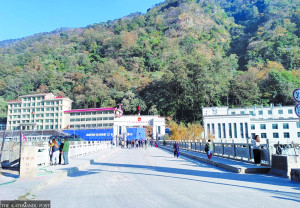
The minister stated that more than 550 km of roads have already been built along the India–Nepal border. The new expressway is seen as the next step in strengthening cross-border road infrastructure.
If approved soon, construction could be completed within five years, according to state officials.
Jaiswal was quoted by PTI as saying that the state government is initiating construction on the Raxaul-Haldia and Darbhanga-Amas expressways to develop a robust road connectivity network in eastern India. He also informed the House that, under the India-Nepal Border Road Project, a total of 554.08 km of road is being constructed in Bihar.
The minister said the completion of these projects will facilitate movement across the border areas and deliver significant benefits to the state in trade, tourism, and security.




 13.27°C Kathmandu