Leaders discuss good governance, party politics and Gen Z movement at Kantipur Conclave
Speakers call for political reform, innovation, decentralisation and accountability, linking the Gen Z movement to failures in governance. Panelists of Kantipur Conclave's session titled " Policy, Politicians and Leadership" Angad Dhakal/TKP
Political leaders engaged in a wide-ranging debate on policy, leadership and the state of Nepal’s democracy during the concluding session of the Kantipur Conclave 2026 on Tuesday.
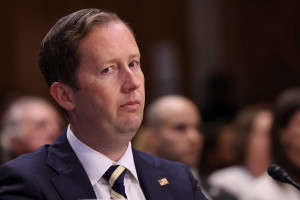
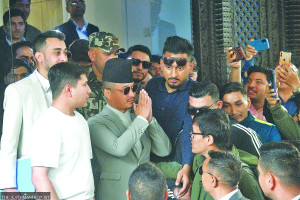
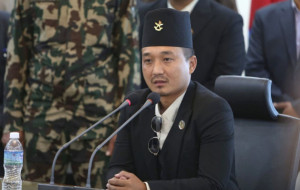
The final session, titled ‘Policy, Politicians and Leadership,’ moderated by Kantipur Daily editor-in-chief Umesh Chauhan, had Nepali Congress general secretary Pradip Paudel, CPN-UML deputy general secretary Yogesh Bhattarai and former education minister Sumana Shrestha as the panelists.
Speaking at the session, Shrestha questioned the entrenched belief that once individuals enter politics, they must remain in it for life. She warned that such thinking encourages politicians to cling to power at any cost.
Shrestha also argued that Nepal must challenge the long-held narrative that politics cannot exist outside political parties and emphasised that innovation in Parliament is urgently needed.
She expressed concerns about the unchecked growth of social media, saying its use had expanded rapidly without adequate education or public discussion. While noting that social media had empowered citizens and reduced election costs, Shrestha cautioned that misinformation spreads far faster than positive content.
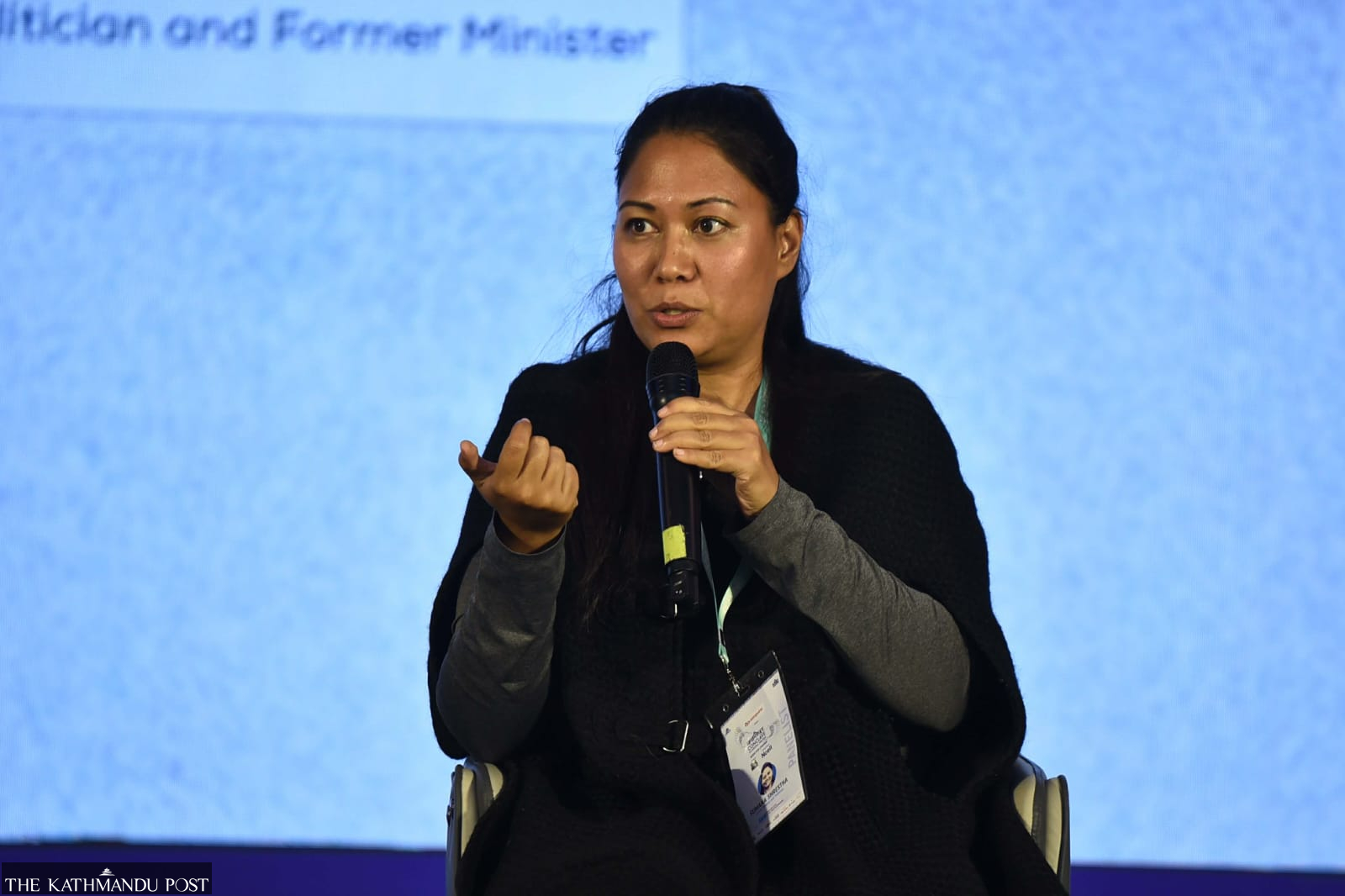
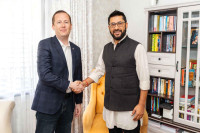
Sumana Shreshta Angad Dhakal/TKP
The former education minister called for education for children, parents and citizens on responsible use, including awareness of digital content’s health impacts and the growing risks of deepfakes.
“We have never been taught how to behave or survive in the virtual world,” she said.
On governance, Shrestha said those responsible for suppressing protests while in power must be held accountable. Referring to the state response to the March 28 protest at Tinkune and the Gen Z movement on September 8–9, she asked why no action had been taken despite the use of state resources. She warned that failure to punish those responsible would only entrench impunity and lead to repeated abuses.
She pointed out that most of the reports of the probe commissions were not made public, citing concerns that they could cause unrest if the recommendations were executed.
Nepali Congress general secretary Paudel said that politics must move beyond merely raising questions and focus on finding solutions that guide society in a positive direction. He linked the emergence of the Gen Z movement directly to failures in good governance.
“The Gen Z movement was born out of a lack of good governance, and we have understood it politically,” he said, stressing that public trust could only be restored through accountability, clarity of policy and effective governance.
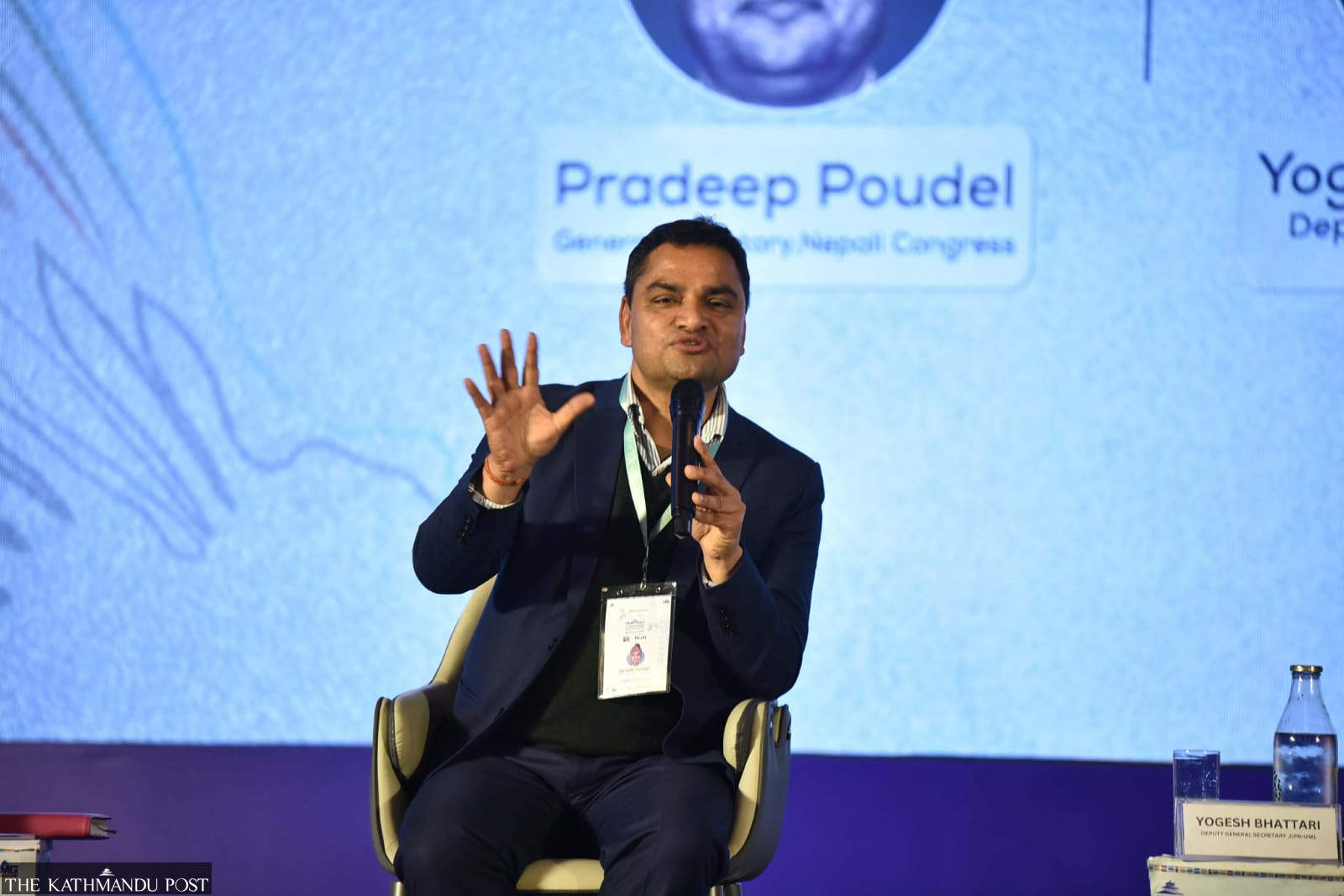
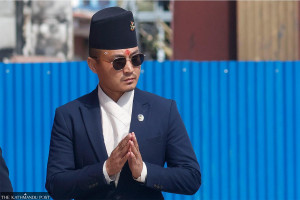
Nepali Congress general Secretary Pradip Paudel Angad Dhakal/TKP
Paudel acknowledged that despite significant political changes since 1991, the absence of good governance had overshadowed the achievements made so far. He said that internal debate within parties was essential to address these shortcomings.
Paudel also maintained that the Congress had undergone not only a leadership change but had also become clearer in its policy direction, arguing that the party should not be judged solely by its past.
Describing the Gen Z movement as a warning rather than disorder, Paudel said the party had moved forward by recognising its mistakes.
He also called for an investigation into the cash found at the residence of former party president Sher Bahadur Deuba, noting that Deuba himself had requested a probe. Paudel added that Deuba should have spoken publicly only after the investigation.
UML deputy general secretary Bhattarai said democracy could not be strengthened if power remained centralised within political parties.
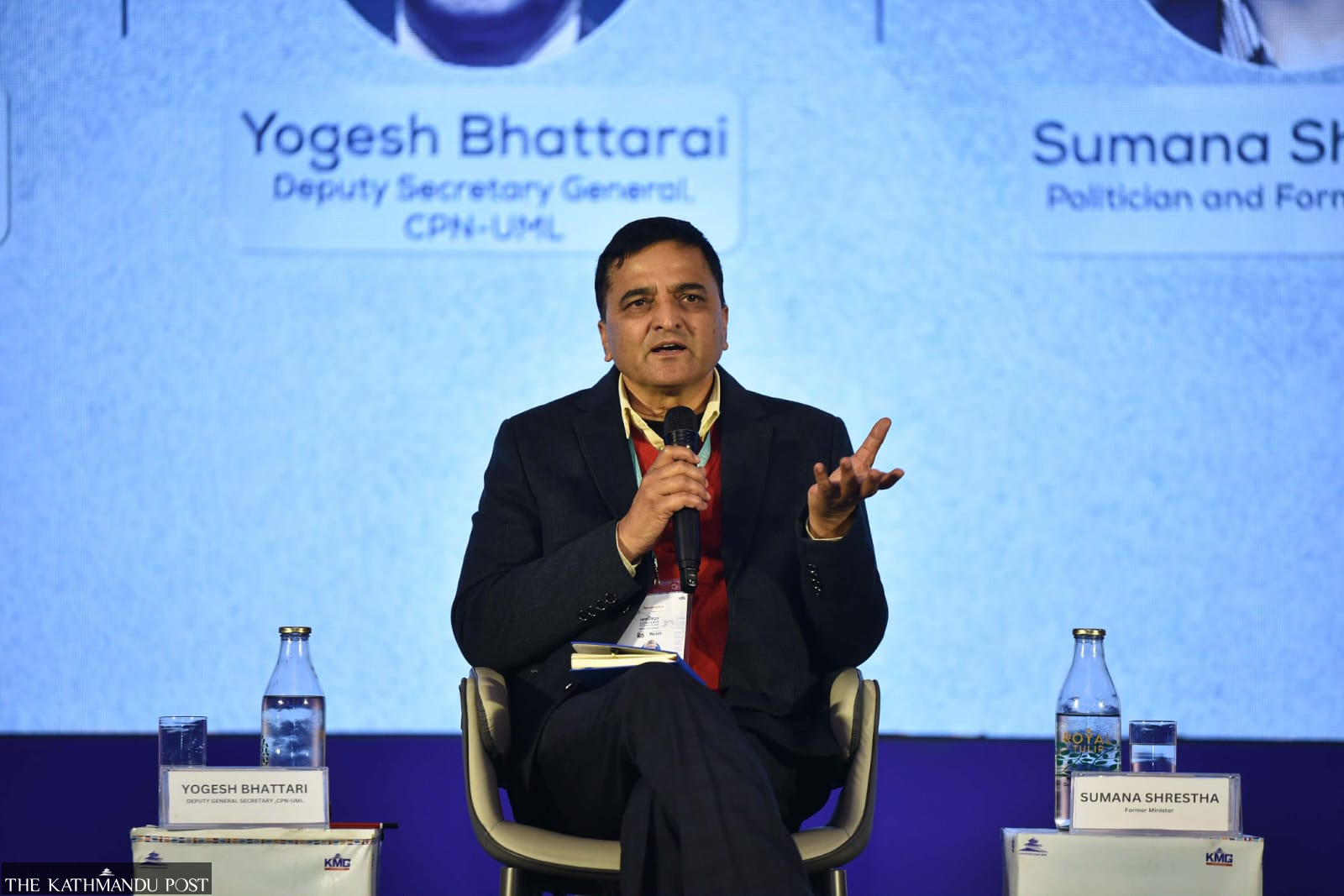
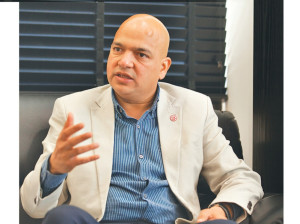
CPN-UML deputy general secretary Yogesh Bhattarai Angad Dhakal/TKP
He argued that true democratisation required decentralisation of authority, including within party structures. He also said the Gen Z movement had altered the country’s objective conditions, requiring political thinking to adapt accordingly.
Reflecting on candidate selection, Bhattarai said receiving a party ticket did not automatically validate the system that produced it. He acknowledged that while grassroots sentiments were largely respected, leadership preferences had prevailed in some cases.
“Even if I get a ticket, the system my party follows can still be wrong,” the UML deputy general secretary said.




 18.12°C Kathmandu