Kantipur Conclave opens with Shirin Ebadi lauding Gen Z revolt
Leaders and young activists call for inclusive dialogue, accountability, and reform as country faces political and economic uncertainty. Nobel Peace laureate Shirin Ebadi making a keynote speech at Kantipur Conclave in Lalitpur on Monday. To her right is her interpreter. Dipen Shrestha/TKP
Kantipur Conclave 2026 began on Monday in Kathmandu with Nobel Peace Prize winner Shirin Ebadi lauding Nepal’s youth movement for democracy and reform. The two-day event brings together political leaders, policymakers, intellectuals, and Gen Z activists from Nepal and abroad to debate contemporary challenges and explore solutions for the country’s future.
Kantipur Media Group (KMG) Chairman Kailash Sirohiya opened the two-day conclave, where he framed the event as a platform for informed public dialogue at a time of political and economic uncertainty.
Sirohiya said a conscious society is built on accurate information, debate and dialogue. He stressed the need for sustained public engagement amid growing political and economic uncertainty.
He said KMG has consistently promoted platforms for discussion on issues of national importance alongside its daily journalism.
“The distinctive feature of the Kantipur Conclave is that it brings national, regional and international concerns together on a single platform, with Nepal at the centre. We believe there must be an inclusive public debate on shared concerns. Reaching the fifth edition [of the conclave] reflects continuity, trust, participation and collaboration.”
Sirohiya said Nepal has long faced political instability, weak institutions, a crisis of trust, and economic pressures. At the same time, new public awareness has also been emerging, he added.
“Recent protests, dissatisfaction and civic voices are raising fresh questions for the state and political leadership about their direction, method and leadership,” he said.
He noted that questions are being asked across society, from villages to cities, young people to senior citizens, and from the streets to digital platforms, but meaningful answers remain absent. Rhetoric, slogans and attractive promises alone cannot address citizens’ aspirations.
“What Nepal needs today is a calm, fact-based, honest and outcome-oriented national dialogue,” Sirohiya said. “Our commitment is to make the Kantipur Conclave a meaningful platform for that purpose.”
He said the conclave is not merely a formal conference but a national initiative aimed at steering the country from uncertainty towards clarity and collective solutions. The forum will host open discussions on politics, governance, the economy, federal implementation, the impact of information and algorithms, changing forms of citizen voice, and regional and international geopolitics.
Democracy and dissent
Nobel Peace Prize winner and human rights activist Ebadi, delivering the keynote address, highlighted the challenges of upholding democracy and protecting human rights in countries governed by rigid ideologies.
Focusing on Iran, her home country, Ebadi said citizens have protested for democratic freedoms and women’s rights for more than four decades, often facing arrests, suppression and violence.
“In Iran, laws are based on the religion chosen by the state, rather than reflecting the will of the people,” she said, stressing that governments should not prioritise ideology over citizens’ rights and voices.
She said Iran’s youth continue to organise and demand change despite repression. “Despite all the hardships, our younger generation has not remained silent,” Ebadi said. “From an early age, they discuss politics, question the government and monitor the state’s actions. They do not give up.”
Ebadi described repeated protest waves met with imprisonment, violence and executions. Recalling unrest a month ago, she said several young protesters were killed by security forces. She traced the roots of Iran’s crisis to the 1979 revolution, which she said created an authoritarian religious regime and entrenched harsh laws.
She described discriminatory policies based on gender, religion, and minority identity, alongside widespread corruption.
Despite Iran’s vast natural resources, much of the population lives below the poverty line.
Recalling the September 2022 protests triggered by a young woman’s death in police custody, Ebadi said security forces used live ammunition and even raided hospitals to detain the injured and medical workers.
Turning to Nepal, Ebadi praised the September 2025 Gen Z movement that mobilised young people to demand accountability and democratic reform.
“The movement in Nepal caught my attention. I looked closely at why they protested, and I am happy that it was for democracy. I wish to pay heartfelt tribute to those who lost their lives during the protests,” she said.
She encouraged young people to engage electorally, saying voting is a concrete means to influence change. While global citizens are increasingly asserting their rights, she said lasting reform requires participation and solutions, not only protest.
“Young people cannot expect that merely raising their voices will resolve everything. They need to participate, come up with solutions, and be part of the change,” Ebadi said.
Citing global movements including Iran’s “Woman, Life, Freedom” campaign, she emphasised that democracy depends on protecting minority rights and ensuring governments remain accountable to citizens.
Tracing the roots of Gen Z protests
Speakers at the session “From Protests to Possibilities” emphasised the role of young people in challenging oppression and demanding freedom, accountability, and social justice in their societies.
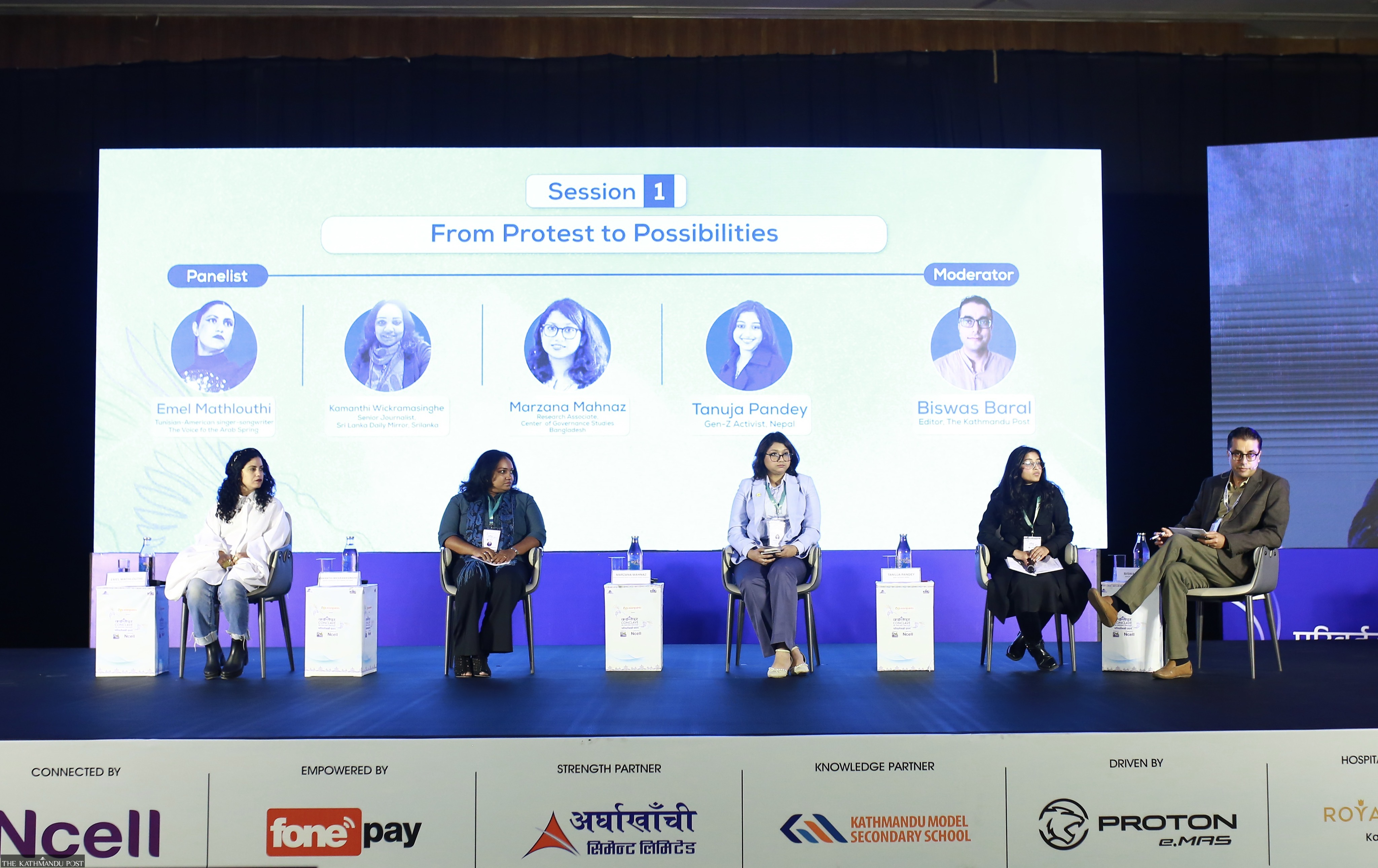
The session featured Tunisian-American singer Emel Mathlouthi, Sri Lankan journalist Kamanthi Wickramasinghe, Bangladeshi researcher Marzana Mahanaz, and Nepali Gen Z activist Tanuja Pandey. It was moderated by Biswas Baral, Editor of The Kathmandu Post.
Panellists at the Kantipur Conclave session titled ‘From protest to possibilities’, on Monday. Dipen Shrestha/TKP
Mathlouthi, known for her song “My Word Is Free”—which became a symbol of the 2010 Tunisian revolution or Arab Spring—said she began performing the song in 2007 to give a voice to those silenced under decades of dictatorship in Tunisia.
“I realised early on that I could be the voice for people who couldn’t have one,” she said, describing her frustration with the self-censorship and oppression young people faced under authoritarian rule.
Wickramasinghe discussed Sri Lanka’s 2022 uprising that led to the fall of the Rajapaksa regime. She said the movement began with economic hardships and prolonged power shortages that mobilised the middle class, eventually drawing broader participation.
“It was a 120-day protest marked by creativity, resilience, and the demand to end corruption and nepotism,” she said.
Mahanaz highlighted growing fears among Bangladesh’s minority communities amid rising fundamentalism. She noted that protests have fostered a new awareness and sense of accountability, even as Islamist political parties attempt to influence student-led movements.
“Our people are now more aware and resilient, willing to question authority,” she said.
Mahanaz said people in Bangladesh have begun to actively seek accountability from those in power, particularly after the student-led movement in 2024.
She said the protests in July 2024 marked a turning point in public consciousness. “After the July 2024 demonstrations, people have become more aware,” Mahanaz said. “They are showing resistance and resilience that were not visible before.”
Mahanaz said citizens are increasingly realising that they have the right to question authority and demand accountability, even as false narratives and rumours continue to circulate alongside this growing political awareness.
Pandey spoke on Nepal’s Gen Z movement, which she described as a class-struggle initiative addressing economic inequality, party reform, and social media censorship.
“Our demands were organic, rooted in frustration with systemic failure,” she said, adding that the movement drew inspiration from global youth protests but was driven by local realities.
Pandey said populism poses a serious threat to democracy, arguing that a culture of unquestioning leadership has contributed to repeated cycles of protest in Nepal.
She said society often shields leaders from scrutiny, creating conditions that eventually lead to unrest. She said even new faces in leadership must be questioned. “There is a tendency to worship leaders,” Pandey said. “We must question new leaders as well. Populism is dangerous for democracy. It only makes the situation worse.”
Pandey said asking questions alone was not enough and stressed the need to institutionalise movements to make them sustainable. She said Nepal has experienced protests every decade but has failed to systematically learn from them. “We have to learn from past movements,” she said. “Institutional knowledge must be preserved and connected across generations.”
Revisiting power and history
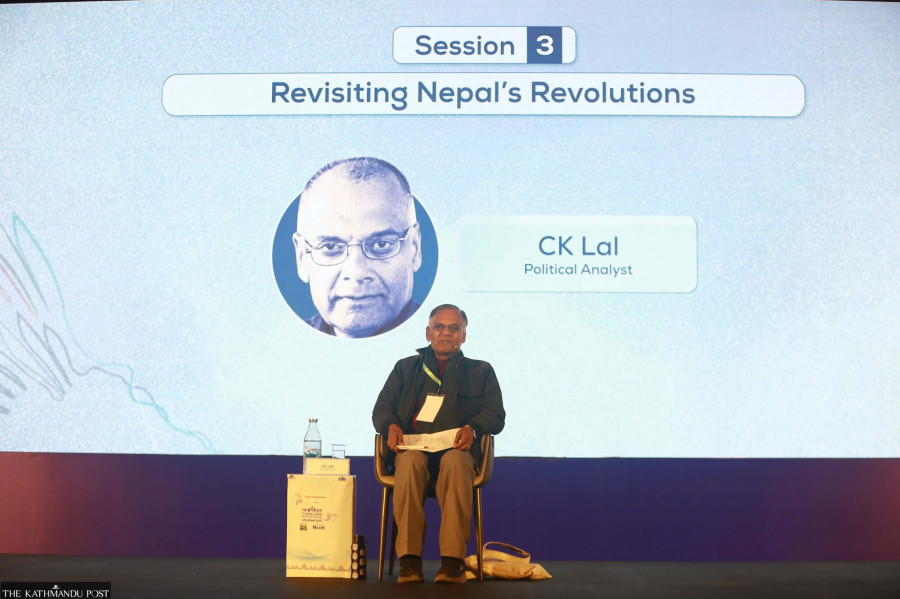
Political analyst CK Lal argued that Nepal continues to operate under a deeply rooted power-centric governing culture rather than a constitutional rule-of-law framework.
Speaking during the session “Revisiting Nepal’s Revolutions,” Lal said governance traditions established by King Prithvi Narayan Shah and later reinforced by Jung Bahadur Rana still shape political behaviour.
After the conquest of Kathmandu in the late 18th century, Lal said, King Prithvi Narayan institutionalised the idea that those in power could rule according to their will. Jung Bahadur Rana later strengthened this approach by consolidating authority through force.
Post file photo
“This power-driven principle became deeply entrenched and shaped our collective mindset. Historians often narrate this as stories of great men, and we have yet to move beyond that framework,” Lal said.
Although the Sugauli Treaty created expectations of constitutional governance, Lal said Rana rule prevented that transition, reinforcing the belief that authority flows from force rather than legal legitimacy.
He added that human behaviour is shaped by geography, history, economic systems and culture, arguing that change is inevitable — but its pace and direction remain critical questions.
A symbol of youth protest
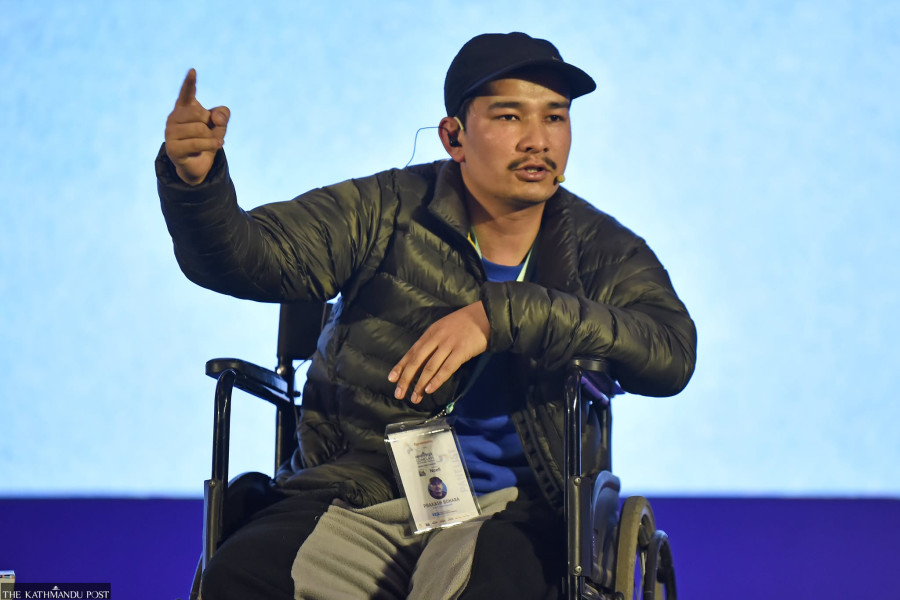
In another session, Prakash Bohara, a Gen Z activist injured during the September 8 demonstration, described joining the movement in hopes of change for the next generation.
Speaking in the session “Gen Z Revolt: Story of a Shoe,” Bohara said he had returned after serving with the Russian army and was preparing to apply for work abroad when he joined the protest.
“I felt I had to contribute to the new generation,” he said.
Post Photo
He recounted being shot near Parliament and undergoing months of treatment, with a blood-soaked white shoe later becoming a symbol of the uprising.
Bohara said he was initially encouraged by official remarks on accountability but expressed disappointment over the lack of action against those responsible for violence.
He argued that limited domestic opportunities push many youths toward dangerous foreign employment. “The state’s weakness has made foreign employment a compulsion for youths,” said the 28-year-old from Dailekh.




 14.69°C Kathmandu