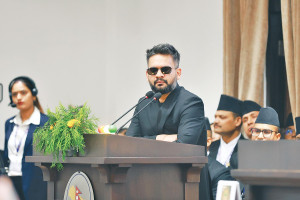
The Kantipur Conclave 2026 entered its second day in Kathmandu on Tuesday, with discussions set to focus on pathways for democratic reform, accountability and the role of institutions in responding to public dissent.
Day 2 opened with “Public Discourse in the Age of Algorithms,” examining the intersection of digital platforms and public discourse. Panellists include AI scientist Dovan Rai, Barakhari editor-in-chief Prateek Pradhan, Pathao Nepal Managing Director Asimman Singh Basnyat and political figure Nisha Adhikari.
A “People’s Panel” will feature medical entrepreneur and activist Durga Prasai, political commentator Rishi Dhamala, Khushbu Oli and journalist Santosh Deuja, focusing on how non-traditional voices have entered mainstream debate.
The session “Nepal in Multipolar Crosshairs ” will bring experts from China, India and the United States to discuss Nepal’s geopolitical situation. Panellists include Gao Liang of Sichuan University’s Nepal Centre, Indian researcher Sneha Kumcha, Pacific Forum regional director Robert York and CNAS executive director Mrigendra Karki.
In “New Voices of Republic,” Gen Z activists Raksya Bam, Majid Ansari, Pradeep Gyawali and youth candidate Ajay Kushwaha will debate youth leadership, legitimacy and nation-building, as the session is moderated by Kantipur journalist Daya Dudaraj. This will be followed by a session featuring all seven provincial chief ministers who will debate “Federalism: Structure or Delivery Mechanism?”
The concluding session, “Policy, Leaders and Leadership,” will feature youth leaders from major political streams discussing leadership transition and political culture. The panellists are Nepali Congress General Secretary Pradeep Paudel, UML Deputy General Secretary Yogesh Bhattarai and former minister Sumana Shrestha
Day 1 of the conclave opened in Kathmandu with Nobel Peace Prize winner Shirin Ebadi highlighting the role of youth movements in defending democracy and demanding reform. Addressing the conclave, Ebadi drew parallels between global struggles for rights and Nepal’s own Gen Z movement, praising young Nepalis for mobilising around accountability and democratic values. She urged youths to move beyond protest and engage in electoral and institutional processes to achieve lasting change.
Discussions on the first day focused on youth-led protests, power structures and historical legacies shaping governance. In the session “From Protests to Possibilities,” speakers from Nepal and abroad examined how young people have challenged oppression and demanded accountability in different contexts.
Another session revisited Nepal’s political history, with analyst CK Lal arguing that a power-centric governing culture continues to overshadow constitutional rule.
The day also featured personal accounts from the Gen Z movement, including injured protester Prakash Bohara, whose story symbolised the human cost and unresolved questions surrounding the protests.




 22.04°C Kathmandu