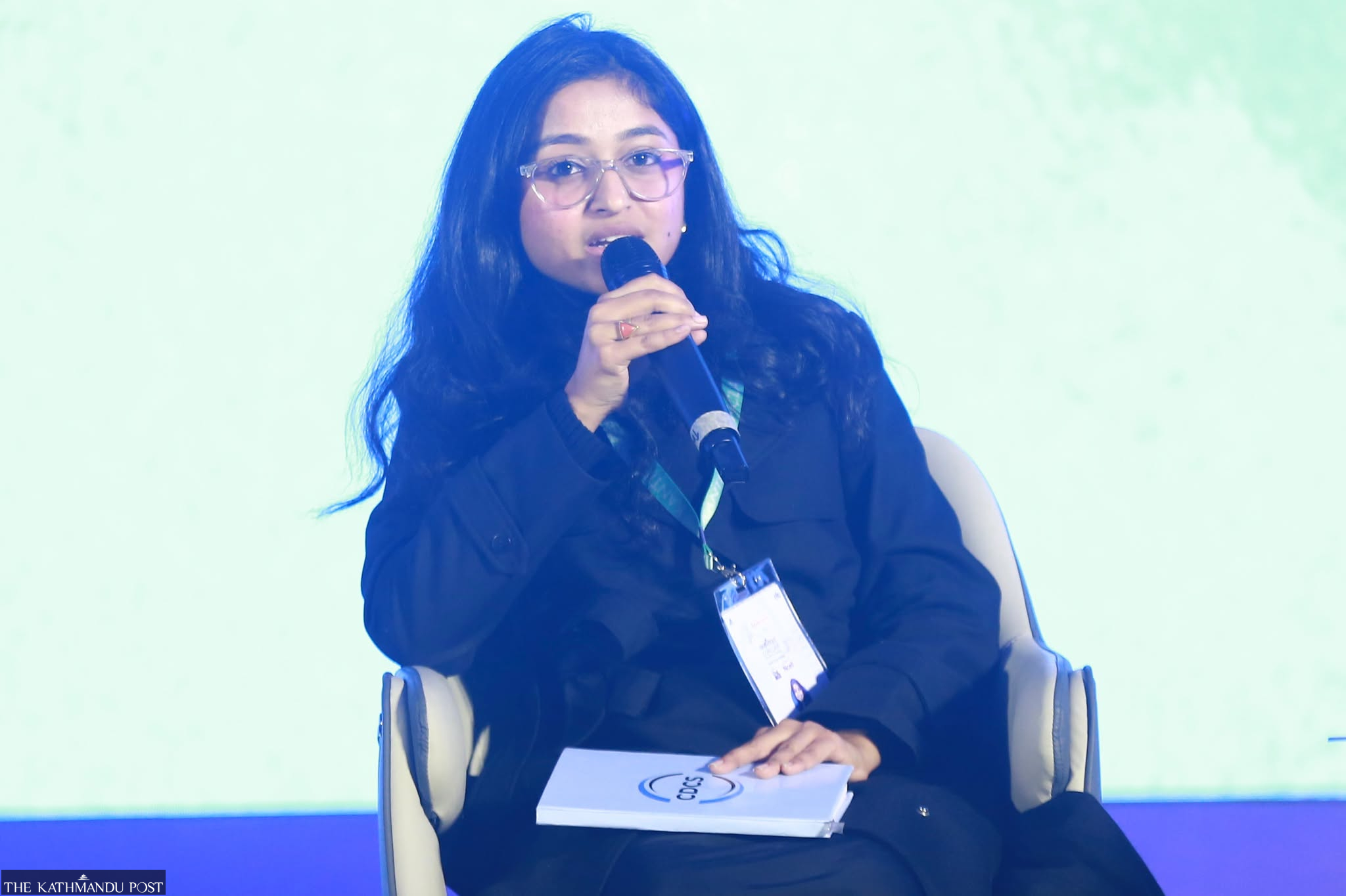
Speakers at the session “From Protests to Possibilities” at the Kantipur Conclave 2026 emphasised the role of young people in challenging oppression and demanding freedom, accountability, and social justice in their societies.
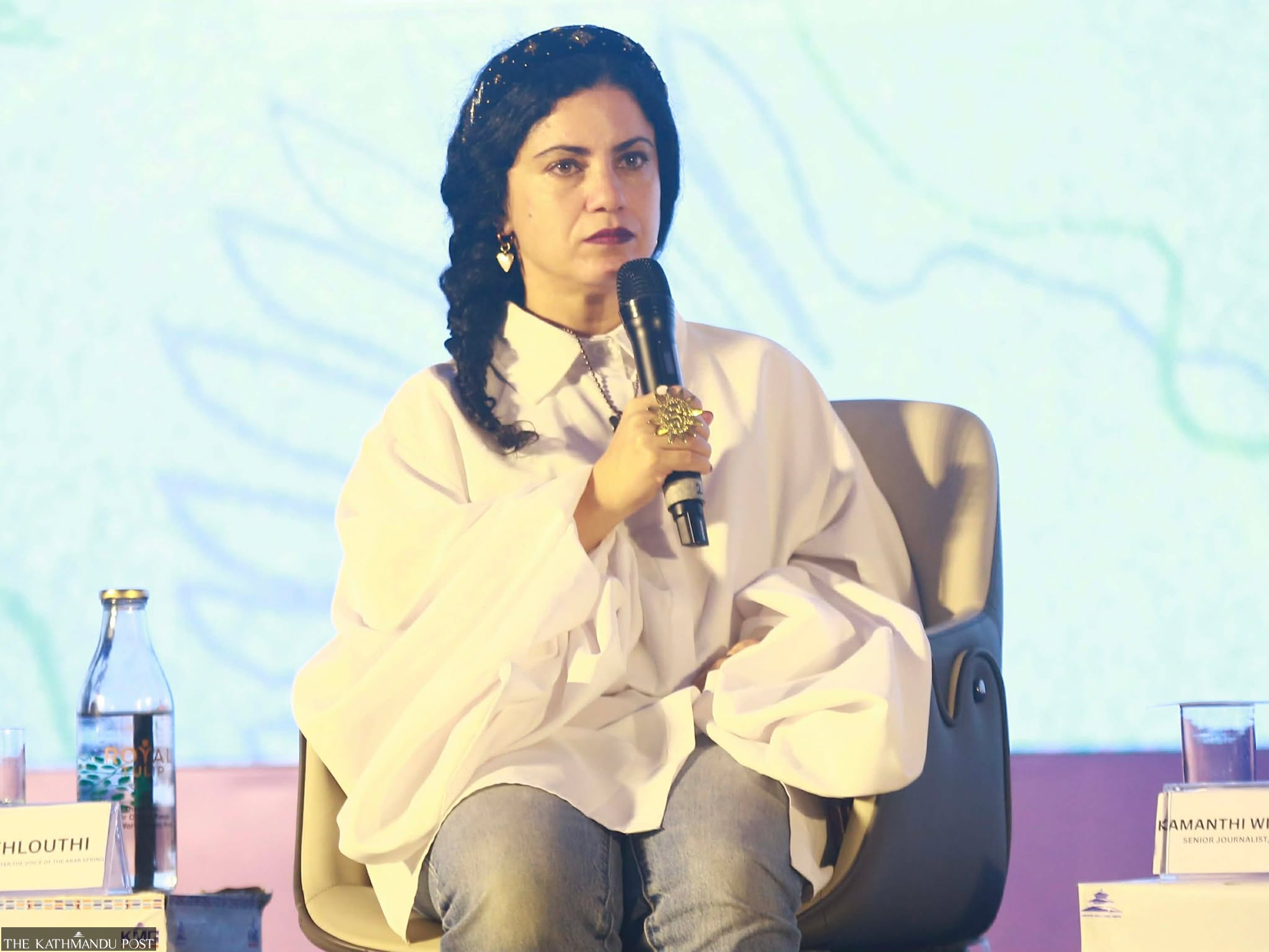
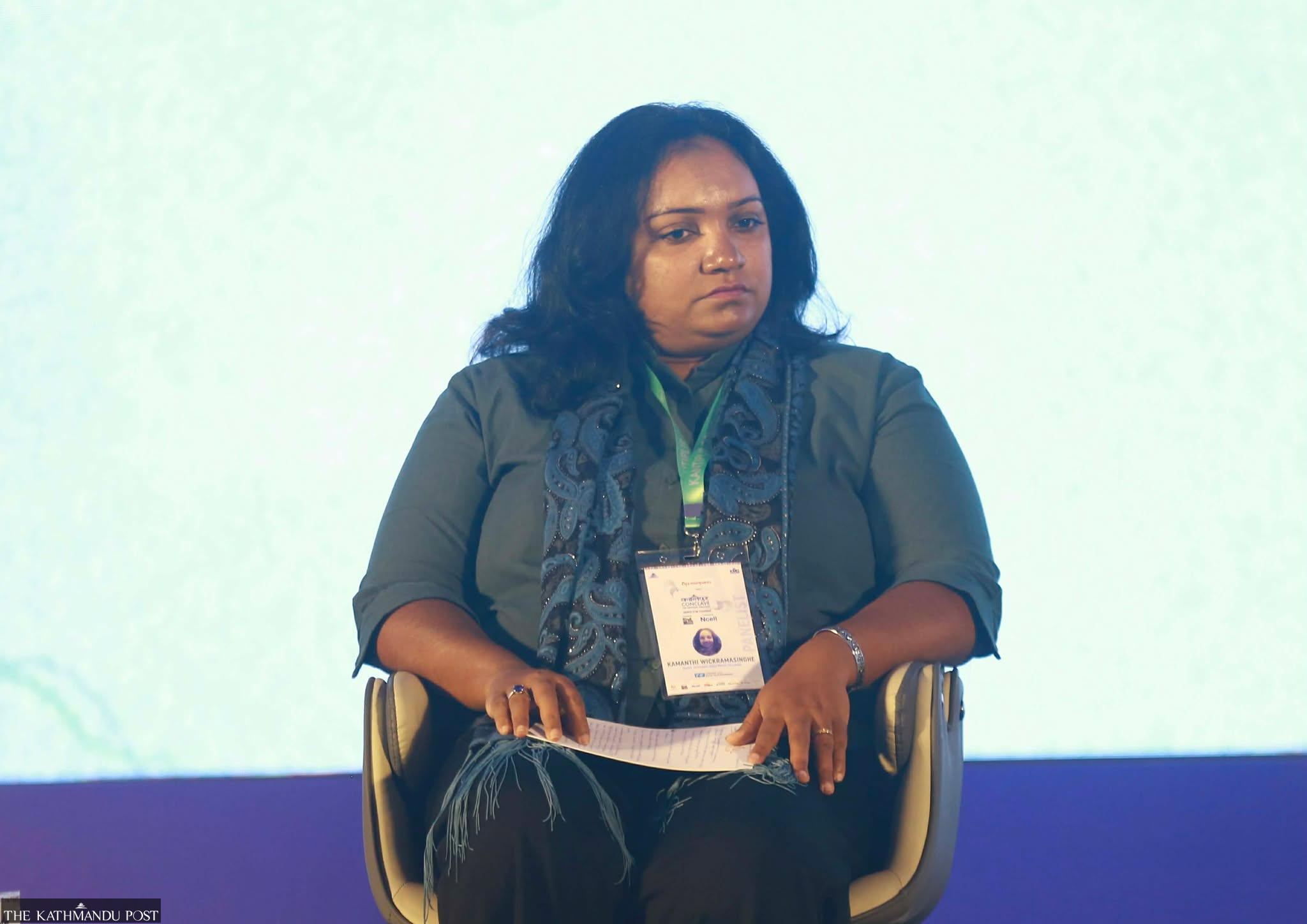
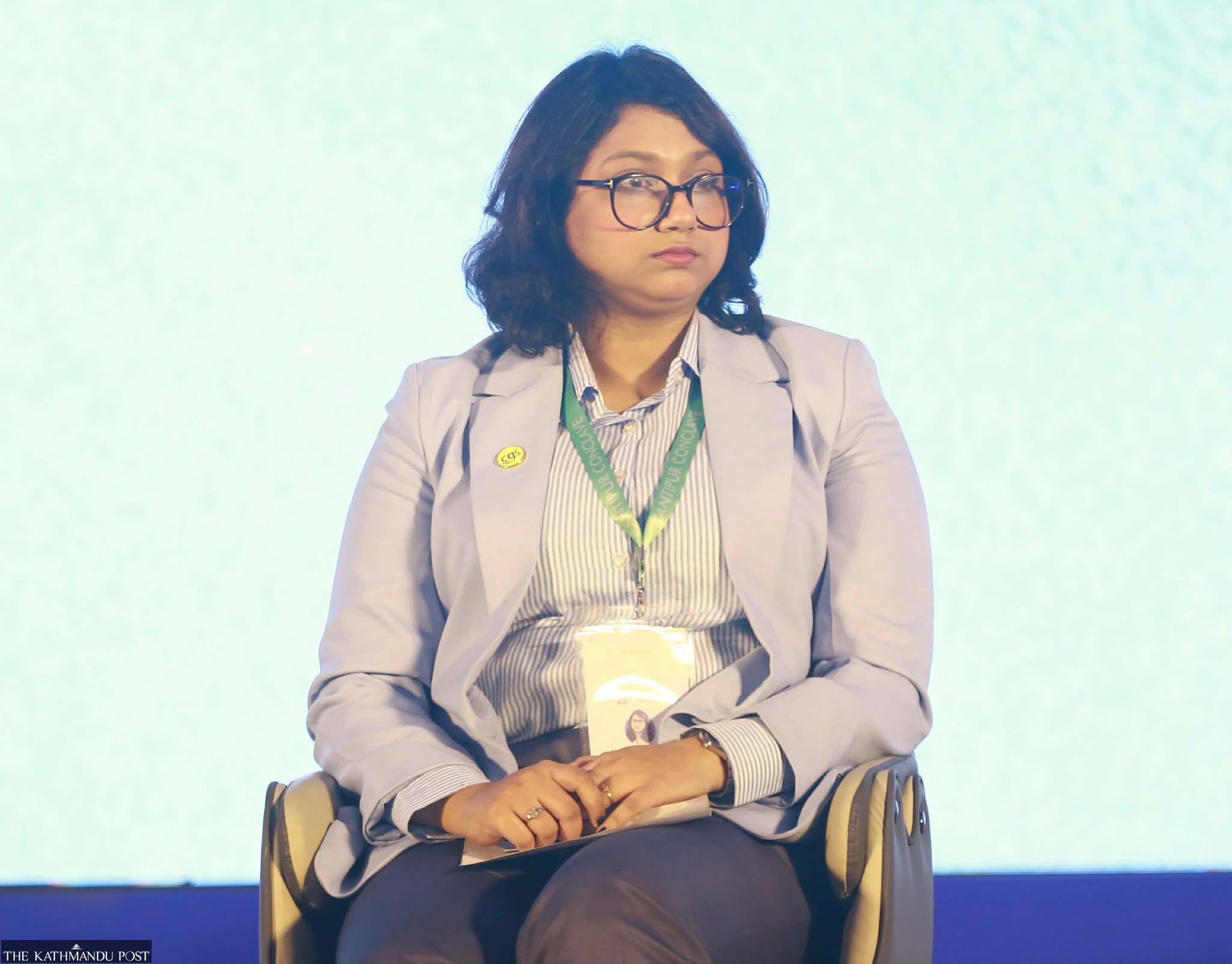
The session featured Tunisian-American singer Emel Mathlouthi, Sri Lankan journalist Kamanthi Wickramasinghe, Bangladeshi researcher Marzana Mahanaz, and Nepali Gen Z activist Tanuja Pandey.
Mathlouthi, known for her song “My Word Is Free”—which became a symbol of the 2010 Tunisian revolution or Arab Spring—said she began performing the song in 2007 to give a voice to those silenced under decades of dictatorship in Tunisia.
“I realised early on that I could be the voice for people who couldn’t have one,” she said, describing her frustration with the self-censorship and oppression young people faced under authoritarian rule.
Wickramasinghe discussed Sri Lanka’s 2022 uprising that led to the fall of the Rajapaksa regime. She said the movement began with economic hardships and prolonged power shortages that mobilised the middle class, eventually drawing broader participation.
“It was a 120-day protest marked by creativity, resilience, and the demand to end corruption and nepotism,” she said.
Mahanaz highlighted growing fears among Bangladesh’s minority communities amid rising fundamentalism. She noted that protests have fostered a new awareness and sense of accountability, even as Islamist political parties attempt to influence student-led movements.
“Our people are now more aware and resilient, willing to question authority,” she said.
Mahanaz said people in Bangladesh have begun to actively seek accountability from those in power, particularly after the student-led movement in 2024.
She said the protests in July 2024 marked a turning point in public consciousness. “After the July 2024 demonstrations, people have become more aware,” Mahanaz said. “They are showing resistance and resilience that were not visible before.”
Mahanaz said citizens are increasingly realising that they have the right to question authority and demand accountability, even as false narratives and rumours continue to circulate alongside this growing political awareness.
Pandey spoke on Nepal’s Gen Z movement, which she described as a class-struggle initiative addressing economic inequality, party reform, and social media censorship.
“Our demands were organic, rooted in frustration with systemic failure,” she said, adding that the movement drew inspiration from global youth protests but was driven by local realities.
Pandey said populism poses a serious threat to democracy, arguing that a culture of unquestioning leadership has contributed to repeated cycles of protest in Nepal.
She said society often shields leaders from scrutiny, creating conditions that eventually lead to unrest. She said even new faces in leadership must be questioned. “There is a tendency to worship leaders,” Pandey said. “We must question new leaders as well. Populism is dangerous for democracy. It only makes the situation worse.”
Pandey said asking questions alone was not enough and stressed the need to institutionalise movements to make them sustainable. She said Nepal has experienced protests every decade but has failed to systematically learn from them. “We have to learn from past movements,” she said. “Institutional knowledge must be preserved and connected across generations.”
The session was moderated by Biswas Baral, editor of The Kathmandu Post.




 22.44°C Kathmandu