Election code applies to diplomats and foreign organisations
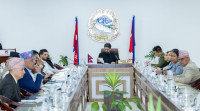
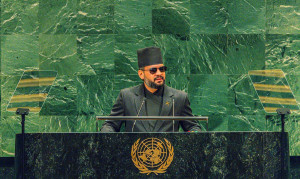
Foreign secretary advises the representatives to avoid inaugurations, foundation-laying events, surveys, feasibility studies, grant disbursements, or providing vehicles, buildings or materials for political purposes. Photo: Courtesy of Ministry of Foreign Affairs
The government on Thursday asked Kathmandu-based diplomatic missions, United Nations agencies, international organizations and development partners to respectfully observe and implement the election code of conduct.
Ahead of the March 5 snap parliamentary elections, the Ministry of Foreign Affairs organised a general briefing for diplomatic missions, United Nations Agencies and international organisations based in Kathmandu and updated them on election preparations, the election code of conduct, and related issues.
Foreign Secretary Amrit Bahadur Rai briefed 33 diplomats, officials and representatives on key aspects of the elections.
“In particular, they (diplomatic missions) are requested to refrain from activities that may be perceived as influencing the electoral process,” said Rai in his briefing. “These include, but are not limited to, inaugurations, foundation-laying ceremonies, surveys, feasibility studies, grant disbursements, or the provision of vehicles, buildings or materials for political purposes.”
Rai said the diplomatic missions are strictly prohibited from participating in political party events, providing funds or material support, or using technologies—including artificial intelligence and digital platforms—for promotion or advocacy for or against any party or candidate.
The Election Commission has imposed an election code of conduct effective from January 19 and asked a wide range of stakeholders, including the three tiers of government, ministers, constitutional bodies, government employees, security agencies and personnel, political parties, candidates, media and others to adhere to it. Thursday's briefing aimed to ensure the diplomatic community effectively follows the code.
The commission and the Ministry of Foreign Affairs will jointly monitor the activities of the diplomatic missions and foreign organisations and report on compliance. A joint secretary and one under secretary from the Ministry of Foreign Affairs are already working with the Election Commission to monitor activities of the diplomatic community, said foreign ministry officials.
“The Election Commission is well advanced in its preparations and remains confident of conducting the elections in a free, fair, credible and safe environment. Following the nomination of candidates for both electoral systems, the overall electoral environment has been marked by enthusiasm and active participation,” said Rai.
The commission will provide a comprehensive technical briefing to diplomatic missions about one week prior to the polling day, he said.
Rai also urged the diplomatic community to take an active part in election observation, saying it is a vital pillar of the electoral process that ensures credibility, integrity and public confidence.
So far, four international organisations and 37 national organizations have been accredited for election observation, said Rai. Invitations have also been extended to the Federation of Election Management Bodies of South Asia (FEMBOSA) and to partner countries with whom the Election Commission maintains institutional cooperation.
“The government of Nepal reiterates its firm commitment to facilitating the effective election observation, in accordance with laws and established norms… all necessary logistical and operational arrangements will be made by the Election Commission of Nepal, as may be appropriate,” he said while urging the Kathmandu-based diplomatic community to participate in election observation.
According to the foreign secretary, the Election Commission has prepared Election Day Guidelines, which have been formally communicated to the diplomatic community through the Ministry of Foreign Affairs.
“To ensure smooth coordination with relevant authorities, liaison officers will be designated to facilitate observers. Diplomatic missions and international organisations are requested to adhere to the established customary and procedural guidelines related to election observation.”
Rai also stated that election security remains a top priority and all national security agencies—including the Nepali Army, Nepal Police, Armed Police Force Nepal, the National Intelligence Department, and the Election Police—will be mobilised.
The Ministry of Home Affairs will lead election security operations under a three-layered security system with civilian command, he told diplomats. Senior foreign ministry officials, spokesperson of the Election Commission of Nepal, Narayan Bhattarai and the Joint Secretary and the representative of the Ministry of Home Affairs were also present at the briefing.




 20.85°C Kathmandu