The Trump administration has continued to deport illegal immigrants, including Nepalis, staying in the US.
According to Director General at Department of Immigration Ramchandra Tiwari, the US deported a total of 553 Nepali citizens in 2025.
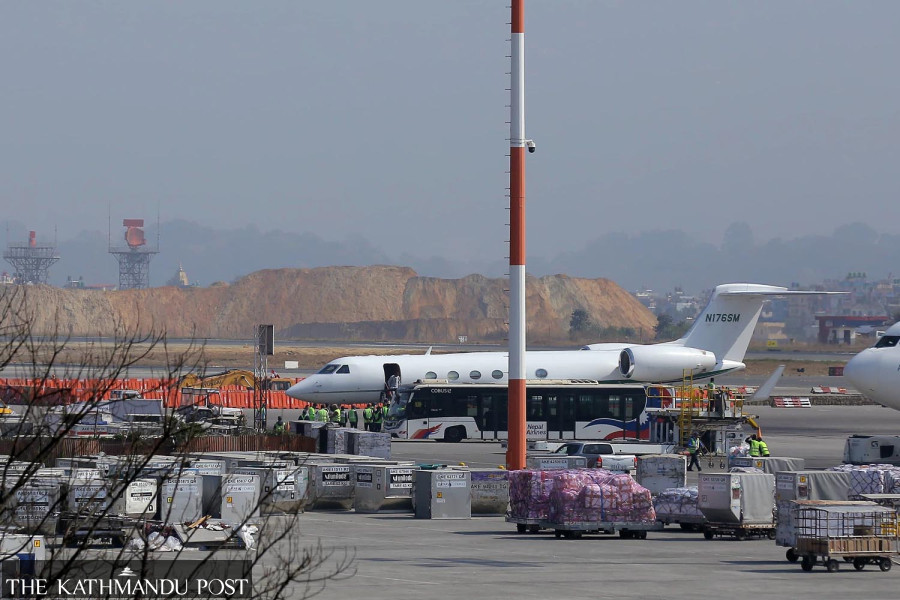
Meanwhile, on Tuesday, the United States deported 80 Nepali nationals via a chartered flight, he said.
According to Tiwari, the group consisted of 79 men and one woman.
Those deported include individuals who lacked proper documentation, were staying in the country illegally, or had violated US immigration laws.
Those who were deported were sent to the Human Trafficking Investigation Bureau of Nepal Police, Tiwari said. After questioning them, the bureau will hand them over to their families.
Of the 80 deported Nepalis, 10 were found to have no travel documents with them. The Immigration Department stated that the remaining 70 had no official documents and had been residing in the United States illegally.
The Nepali Embassy in Washington arranges travel documents for those who do not have them. A travel document is necessary for immigration purposes in case anyone does not have a valid passport.
The bureau also requested the deportees to file a complaint if anyone had illegally sent them to the United States.
The US government had deported 98 Nepali citizens in December last year and 80 in November.
According to a Nepali diplomat in Washington, as per the US immigration policy imposed after Trump became the President in January 2025, his administration started cracking down on illegal immigrants from different countries, including those who lack proper documentation, have overstayed their visas, asylum seekers and those who violated US laws.
The deportation, however, is not a new phenomenon; the US used to hand over illegal immigrants on a regular basis in previous years too. But they expedited the crackdown after Trump came into power, the diplomat said.
And the US immigration court also delivers the verdict frequently, so the number of deported people has shot up, the official added.
“One good thing that happened after March 2025 is the number of Nepalis using the illegal route via Mexico to sneak into the US has come to zero.”
Hundreds of Nepali citizens would use what is commonly known as the ‘donkey route’, spending millions of rupees, to reach the US via Mexico.
Human traffickers and agents would arrange a longer, indirect and expensive route to traffic people from Kathmandu to various parts of the world before taking them to the US—if the mission is successful, that is.
Now the number of such travellers has come down to zero, the Nepali official at Nepali Embassy to the United States said. “This comes as a huge respite to Nepali citizens who risked taking such a dangerous path to enter America.”
In some cases, people who had obtained the US green card and student visa are also deported.
The official added that more Nepali nationals will be deported from the US because 34 percent Nepali living in the US are still dependent on the government's financial assistance, which means they are a burden to the US government.
Those 34 percent Nepalis do not have adequate income to live in the US, so they are dependent on the US government's financial support, food stamps, medicare and other facilities, the official added. “If the US government thinks that they are a burden, they may expel them anytime.”
Tightening the immigration rule, the Trump administration has recently decided to suspend processing for immigrant visas for applicants from 75 countries, including Nepal.
Effective from Thursday, the US Department of State is pausing all immigrant visa issuances to nationals of countries, including Nepal, whose immigrants have a high rate of collecting public assistance at the expense of US taxpayers.
According to the US Embassy in Kathmandu, starting on Thursday, Nepali nationals who are deemed otherwise eligible for a B1/B2 visa must post a bond of up to $15,000. At the time of interview, the consular officer will inform the applicant whether they are eligible for a visa and will provide instructions on how to pay this bond.
Immigrant visa applicants from the affected countries can apply and attend interviews, and the US Department of State will continue scheduling appointments, but no immigrant visas will be issued to these nationals during the pause.
“Applicants must not use any third-party website for posting the bond, nor pay a bond before instructed to do so by a consular officer,” said the US Embassy in a notice. “B1/B2 visas for nationals of Nepal cannot be issued until the bond has been paid. This requirement applies regardless of place of application.”
A US B1/B2 visa is a non-immigrant visitor visa for temporary travel to the United States.
There are around 5,000 Nepali nationals who are living in the US under the arrangements of temporary protected status and their case is also pending in the US court.




 14.81°C Kathmandu