Nepal on alert after Nipah cases found in India’s West Bengal state
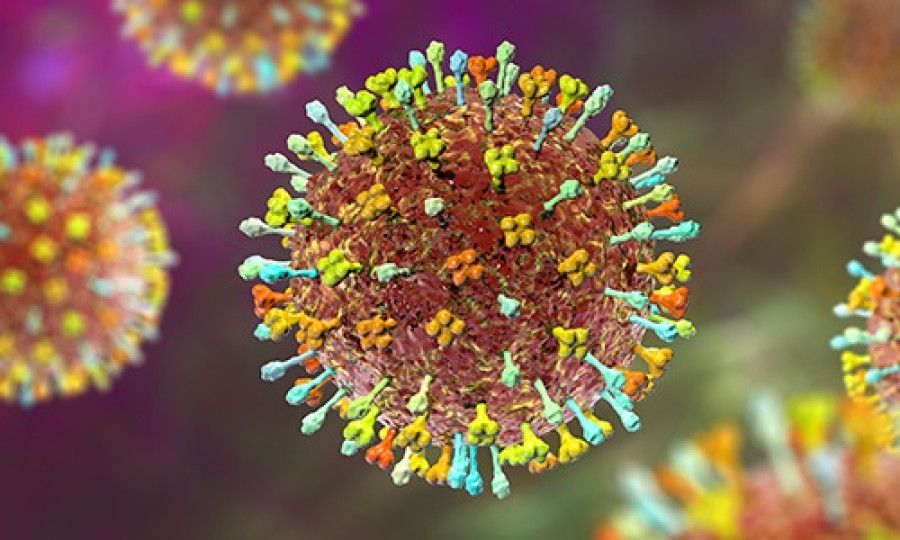
Officials say cross-border movement heightens risk of spread of the disease, which is highly fatal and has no cure. The Nipah virus. Photo: European Centre for Disease Prevention and Control’s website
With reports of an outbreak of the Nipah virus in the bordering Indian state of West Bengal, officials at the Epidemiology and Disease Control Division said on Tuesday they will alert all relevant agencies about the looming risk of spillover of the deadly disease. The disease has a fatality rate of 40-75 percent, according to the WHO.
The division convened a meeting of relevant officials in the afternoon and decided to wait for an alert under the International Health Regulations before deciding on further preventive measures.
“We are aware of the news of an outbreak of the Nipah virus in West Bengal, and have discussed the measures to be taken,” said an official at the division, asking not to be named, as he is not authorised to speak to the media. “We will alert all agencies concerned about the risk and direct them to take preventive measures.”
At least two suspected cases of Nipah virus were detected at the Virus Research and Diagnostic laboratory at the All India Institute of Medical Sciences, Kalyani, in West Bengal on Monday, according to Indian media reports. The infected patients are reported to be healthcare workers, and are undergoing treatment and in “very critical” condition.
Doctors say just like the coronavirus, Nipah is a zoonotic virus, which is transmitted from animals to humans. But Nipah is far more deadly than the coronavirus that has wreaked havoc throughout the globe. Transmission generally occurs when people come in direct contact with infected animals or through the consumption of the meat of infected animals.
But cases of human-to-human transmission of the virus have also been reported in many places, including in India, among the families and caregivers of the infected people.
Officials said Nepal is at risk of a Nipah virus outbreak, as fruit bats, the virus's primary hosts, may also be present in Nepal. West Bengal shares a land border with Nepal’s Koshi province, where hundreds of people cross daily.
“We will alert the health desks set up at Kakadvitta land crossing and other health desks set up at various land crossings and international airports,” said the officials.
Doctors say that most of the symptoms of the Nipah virus are similar to those of Covid, but in the case of Nipah infection, the condition of the patients deteriorates quickly.
The Nipah virus was first detected in 1999, after farmers and others who came into close contact with infected pigs in Malaysia and Singapore developed severe respiratory problems and brain inflammation. According to the US Centres for Disease Control and Prevention, nearly 300 people were diagnosed with the disease then, and more than 100 of them died.
India’s West Bengal recorded the deadliest Nipah virus outbreak in 2001, in which 66 people were infected, and 45 of them died. The virus resurfaced in 2007 when five people were infected, and all died.
The virus claimed 17 lives in Kerala of India, in 2018. Between 2018 and 2025, outbreaks were reported almost annually in Kerala. The deadly virus has resurfaced in West Bengal after a 19-year gap, according to media reports.
Experts said that authorities should take the issue seriously as the virus is far deadlier than the coronavirus, with up to a 75 percent death rate in humans.
“The virus is much more deadly than most other respiratory viruses,” said Dr Sher Bahadur Pun, chief of the Clinical Research unit at the Sukraraj Tropical and Infectious Disease Hospital, Kathmandu. “Even if the primary hosts of the virus are fruit bats and pigs, which are also available in our country, this virus is transmitted from human to human through secretions and excretions.”
Doctors say that fruit bats from India, which carry the Nipah virus, can easily enter Nepal due to the proximity and similar environments. Moreover, there is a high likelihood that any disease seen in India will enter Nepal due to the free movement of people between the two countries, doctors say.
The World Health Organisation said that although the virus has caused only a few known outbreaks in Asia, it infects a wide range of animals and causes severe disease and death in people, making it a public health concern.
Doctors say most of the symptoms of the Nipah virus match those of other regular viruses, including the coronavirus, which increases the chances of misdiagnosis.
There is no treatment for the Nipah virus at present. Health workers provide symptomatic treatments only, according to them.
They say the incubation period of Nipah infection is 4 to 14 days, and symptoms include fever, headache, convulsions, and respiratory and neurological problems.
There is no treatment for the Nipah virus at present. Health workers provide symptomatic treatments only.




 17.29°C Kathmandu