The first edition of ‘What’s next?’ kicks off in Kathmandu
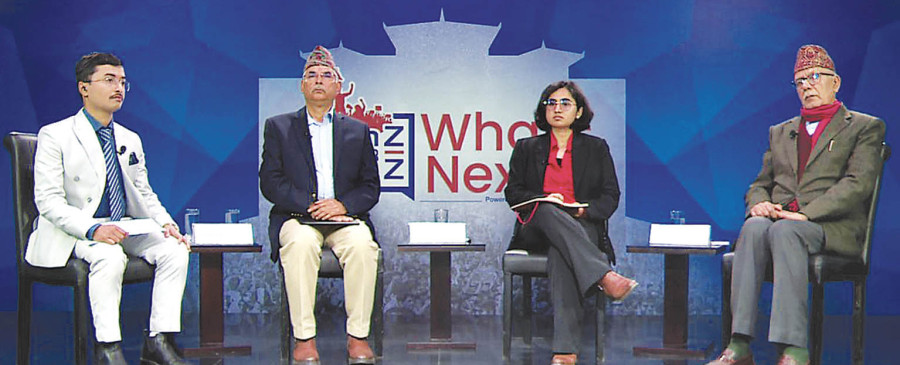
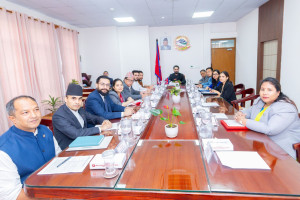
The event is KMG’s initiative aimed at engaging the public through evidence-based discourses and expert interaction. (From right) Panelists Neelkantha Upreti, Aakriti Ghimire, and Surendra Bahadur Shah at the interaction in Kantipur Media Group’s office at Tinkune, Kathmandu on Thursday. Post Photo
Gen Z for Gen Z, a Gen Zers-led initiative from Kantipur Media Group (KMG) on Thursday hosted a one-day event titled ‘‘What’s next?’’ at its Tinkune studio, bringing together activists, professionals and former officials to reflect on the September Gen Z protests, assess the interim government and discuss the challenges surrounding the March 5 snap parliamentary elections.
The event was organised by the Gen Z committee formed within Kantipur Media Group following the September 8 and 9 protests, which left 77 people dead, thousands injured and caused widespread damage to public and private property. The protests reshaped Nepal’s political landscape and eventually led to the formation of an interim government under former chief justice Sushila Karki, mandated to conduct early elections in March.
Despite the formation of the interim administration, uncertainty continues to dominate public discourse. Questions persist over the credibility of the traditional political parties, the unity of newly emerged forces, the capacity of state institutions and whether snap polls will be held on the scheduled date. The Gen Z committee said the event aimed to counter misinformation, encourage evidence-based debate and rebuild public trust in the media.
The interaction began with an overview of the Gen Z movement’s evolution and subsequent fragmentation, presented by committee coordinator Biken K Dawadi.
The first panel dialogue, titled ‘‘Gen Z Roadmap’’, was moderated by Daya Dudraj and focused on the causes of public unrest, the interim government’s performance and expectations from the Gen Z movement. The panel consisted of Rakshya Bam, coordinator of the Gen Z Front; Majid Ansari, a law student and social commentator; and Bikash Rasaili, an activist involved in the farmers’ movement and a member of the Gen Z Movement Alliance.
Responding to questions about the growing polarisation among new political forces, Bam said, ‘‘The new forces should work together, we’ve the protest mandate and we have given it to every party and it is published in gazette as well, so if they don’t include the issues of the Gen Z movement, then how can they ask for votes?’’
When asked whether the newly formed political equation could address the movement’s core demands, Ansari said. “They say they will address the demands of young people, but the question is what kind of youths they are talking about.’’ As there are all kinds of youths, from those who want to dismantle federalism to those who are protecting it.
He also criticised the seven-point agreement made public by the emerging alliance, saying it appeared deliberately vague. ‘‘They’re playing safely. The agreement is not clear,’’ Ansari said.
The second panel. ‘‘Countdown to elections’’, was moderated by Kiran Poudel. The panel included former chief election commissioner Neelkantha Uprety, former additional inspector general of Nepal Police Surendra Bahadur Shah, and Gen Z activist Aakriti Ghimire.
Speaking on challenge, election preparedness and security, Uprety said comparative analysis with past elections is difficult but defended the police’s capacity to manage election security. He added, ‘‘The challenge this time is we’re not able to grant access to those who’re abroad to utilise their right to voting.’’
Shah addressed concerns about police neutrality and accountability during elections, stating that officers are bound by law and institutional codes of conduct. ‘‘Police will work by being accountable to the Constitution, government policy and citizens,’’ he said, adding that problems in policing were largely structural rather than individual.
Ghimire reflected on the agreement between the interim government and Gen Z representatives, cautioning against viewing elections as the sole outcome of the movement. She said,‘‘We’re forming a Gen Z Council as another step towards institutionalising dialogue on youth demands.’’
She also stressed the need for clarity from political alliances. “It’s not enough to say ‘we are together’. Gen Z needs to know what is non-negotiable for them, especially when it comes to education and governance,” she said. It’s time to rethink political ideology, philosophy without losing social awareness.
The Gen Z committee plans to continue facilitating similar public discussions in the coming months, helping foster a more informed citizenry during a period of political transition.




 28.33°C Kathmandu