Road expansion from Kakarbhitta in Jhapa to Laukahi in Sunsari has neither progressed as expected nor ensured safe conditions along construction zones.
The ongoing project to upgrade the East–West Highway into an Asian Highway-standard four-lane route has been moving at a sluggish pace, with poor conditions reported along the under-construction stretches from Kakarbhitta in Jhapa to Laukahi in Sunsari.
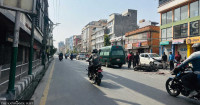
Travellers have faced frequent problems—dust clouds when the roadbed is left dry, and slippery surfaces when water accumulates. Diversions created for construction have also increased the risk of accidents.
On December 20, two young men—25-year-old Bhupal Adhikari of Bhadrapur-9 and 25-year-old Tishtrak Subedi of Bhadrapur-7—lost their lives after a motorcycle crash at a diversion near Giribandhu Tea Estate in Birtamod. The same day, a scooter skidded on a slippery section near the NMC Dairy area in Mechinagar, leaving one person injured.
Such incidents have continued amid what many describe as negligent construction management. Nearly two years after the contract was awarded, only around 30 percent of the work has been completed. The contract period runs until February 2, 2027, leaving about 13 months to complete the remaining work—roughly 70 percent.
The Kakarbhitta–Laukahi expansion is funded through an 84.9 percent (USD 300 million) loan from the Asian Development Bank, with Nepal contributing 15.1 percent. Although 120 kilometres were meant to be contracted, only 95.76 kilometres—up to Labhipur in Sunsari—have been awarded so far.
The agreement for 95 kilometres of road and associated bridges was signed on October 19, 2023, but work began late. The project was divided into eastern and western sections. The eastern stretch covers 45 kilometres from Kakarbhitta to Sitapuri in Kamal Rural Municipality, and the western stretch 50.76 kilometres from Kerakha west to Labhipur.
Ashray Mahat, engineer of the eastern section office, said that road and small culvert construction under Package 1 is 31 percent complete. Bridge construction over the Kankai, Ninda, and Biring rivers has reached just 22 percent. He said work has been delayed due to shortages of construction materials and difficulties relocating electricity poles in urban areas. Only 5 kilometres of the road have been blacktopped so far, and that too in only two lanes, against a target of blacktopping 30 kilometres by mid-July.
The Cohec–CREGC–Tundi JV holds the Rs5.97 billion contract for bridge construction, while Everscon–Kalika JV is executing the Rs10.06 billion roadworks contract.
Progress in the western section—from Sitapuri in Jhapa to Labhipur in Sunsari—is also slow. Jagat Prajapati, the project chief, said that the 50.76-kilometre stretch, covering 10 kilometres in Jhapa, 35 kilometres in Morang, and 5 kilometres in Sunsari, was divided into three packages. The 40-kilometre Sitapuri–Gothgaun segment is 30 percent complete, while the 10.76-kilometre Gothgaun–Labhipur segment has seen only 15 percent progress.
The latter includes major urban zones such as Itahari, where the relocation of more than 2,000 electricity poles has been significantly delayed—fewer than 500 poles have been moved so far—directly affecting roadwork timelines.




 14.76°C Kathmandu