Palpa farmers get livestock ultrasound services at home
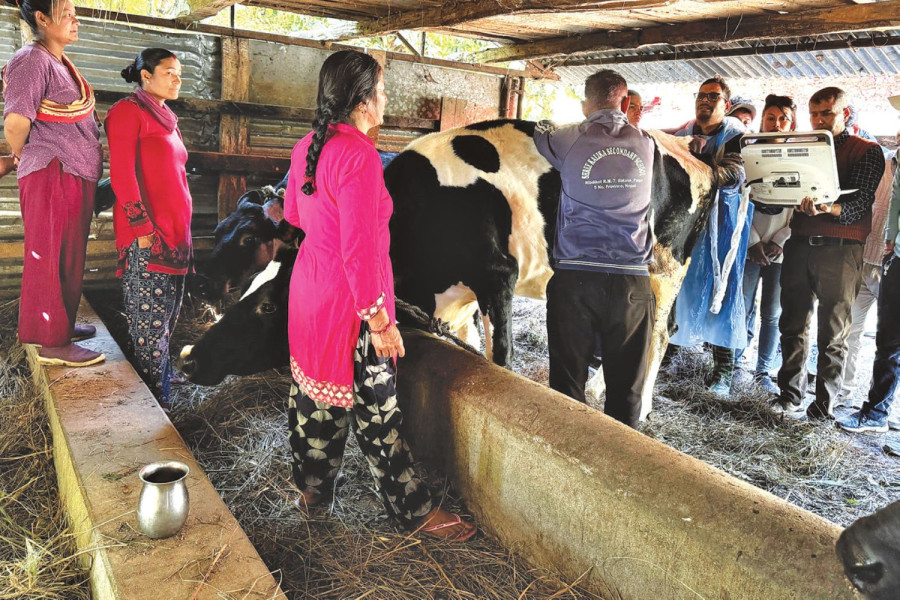
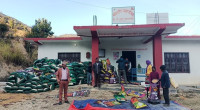
For the first time in the district, veterinarians carry advanced diagnostic machines into village sheds to detect infertility and reproductive disorders in cattle. Farmers are delighted to see veterinarians arriving at their sheds with ultrasound machines. Post Photo: Madhav Aryal
Kamala Nepali of Ribdikot–3 could hardly believe what she was seeing. A team of veterinarians had arrived at her cowshed carrying a machine she had only ever associated with hospitals. Within minutes, her cows were undergoing tests to detect reproductive disorders and infertility, right inside the shed where she feeds and milks them every day.
“I was surprised to see such machines in my cowshed,” Kamala said. “Although we have been raising livestock for years, we did not know that such technology had been developed.”
She said she felt relieved and encouraged after her animals were examined and treated at home, with medicines provided on the spot. “At a time when many people are giving up livestock farming, it makes me happy to learn that treatment is possible through such technology,” she added.
Similar reactions were echoed across Ribdikot Rural Municipality as, for the first time in Palpa district, a livestock health camp reached farmers’ sheds with portable ultrasound machines. The initiative allowed veterinarians to test cows and buffaloes for reproductive abnormalities and infertility without requiring farmers to transport animals to distant service centres.
Sita Kunwar of Dabaka in Palungmainadi, Ribdikot–7, was equally astonished when the team arrived at her shed. “A team of veterinarians with new technology came to my shed for the first time. I had never seen anything like this before,” she said. “They did a video X-ray on the animals, just like it is done on humans.”
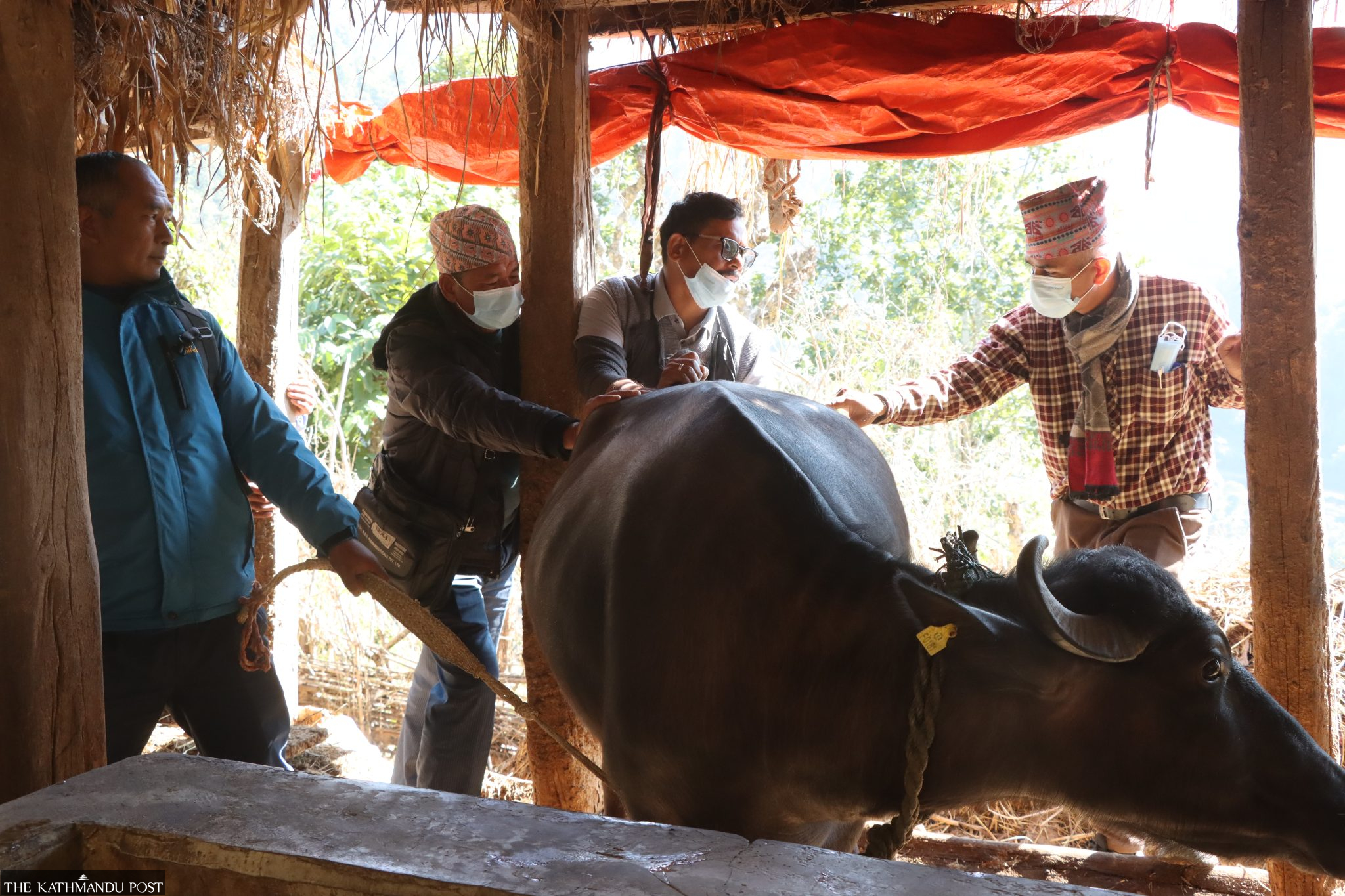
Post Photo: Madhav Aryal
Kunwar had artificially inseminated two of her cows and was unsure why one of them had not conceived. The ultrasound examination provided immediate clarity. “After this examination, it became clear that one of them was not pregnant,” she said. “It was the first time I saw a video X-ray like that done on people, but for animals.”
The two-day livestock health camp was organised by Ribdikot Rural Municipality under its Ribdikot Agriculture Project two weeks ago. Veterinarians visited farmers’ sheds in Khyaha, Deurali, Khasyauli Bhairavsthan, Kusumkhola and Palungmainadi, carrying ultrasound machines to conduct pregnancy checks and identify infertility and other reproductive disorders.
Geeta Nepali, chief of the municipality’s Livestock Services Section, said the use of advanced diagnostic technology marked a significant shift from traditional livestock healthcare practices.
“This is the first time such modern technology has been used in this way in the district,” she said. “Farmers were delighted to see veterinarians arriving directly at their sheds with ultrasound machines.”
According to Narayan Bahadur Karki, chairman of Ribdikot Rural Municipality, the camp was designed to address a major but often overlooked challenge in livestock farming.
“Infertility and reproductive disorders directly affect farmers’ income, but these problems often go undiagnosed due to lack of access to proper services,” he said. “At this camp, pregnancy checks and identification of infertility were carried out using modern technology, which is far more reliable than traditional methods.”
Anshu Pradhan, a veterinarian with Heifer International, said the camp combined treatment with farmer education.
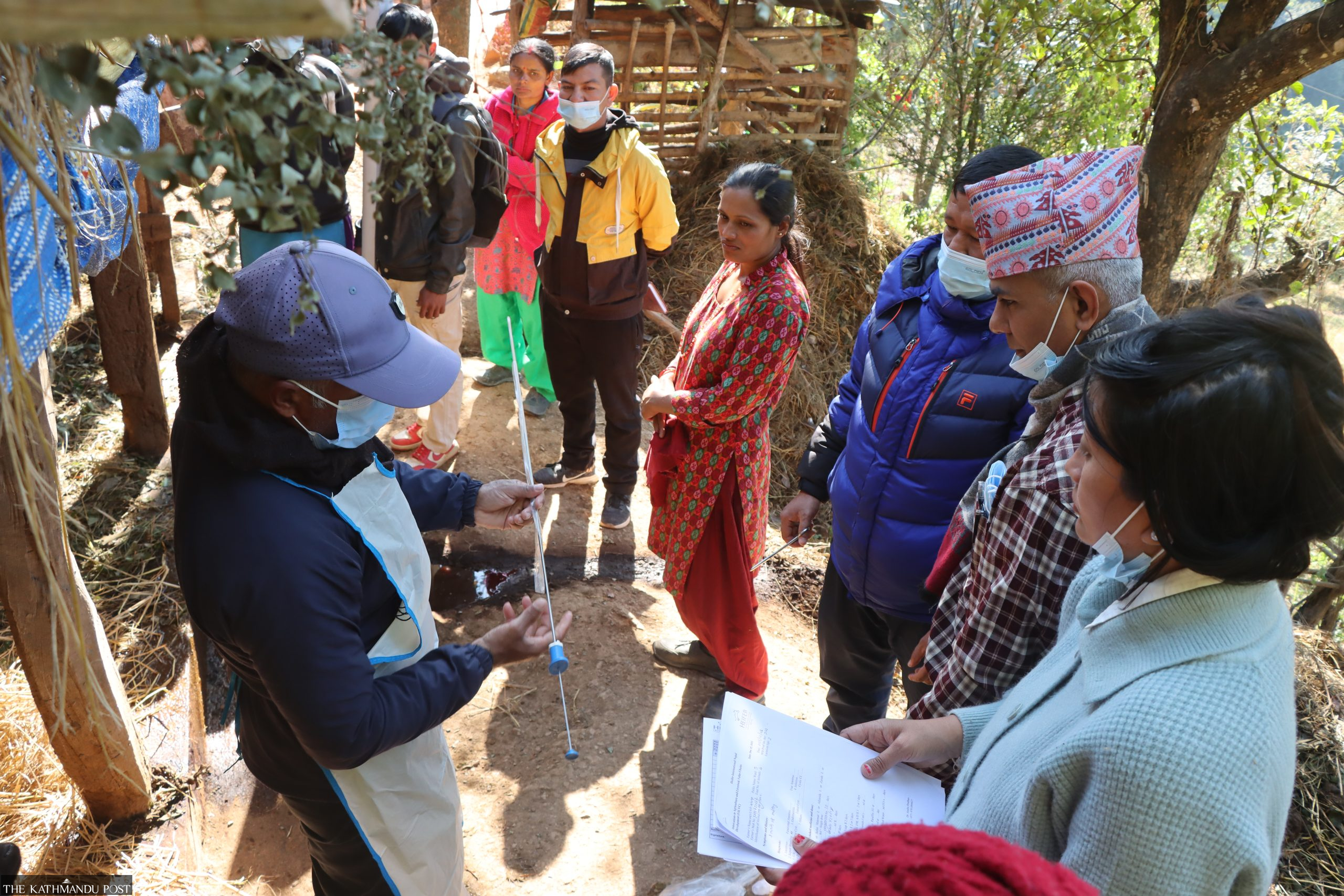
“For two days, skilled veterinarians treated animals at farmers’ sheds and also informed farmers about reproductive disorders and ways to manage infertility,” she said. “Early diagnosis can save farmers from repeated losses and unnecessary expenses.”
The rural municipality has been promoting livestock farming by distributing cows and buffaloes to farmers on subsidy. To ensure that both subsidised livestock and animals raised independently by farmers remain productive, Heifer International Nepal has provided financial and technical support for improved animal healthcare.
Post Photo: Madhav Aryal
Chandra Rana, a veterinarian with the Rural Economic Development Association (REDA) Palpa, said his organisation has long been working with village-level farmers to address livestock-related problems.
“We have been trying to solve farmers’ problems for years,” he said. “But the difference is clearly visible now that we are reaching farmers’ sheds with video X-ray technology. Farmers can see the problem with their own eyes and understand the treatment better.”
During the two-day camp, veterinarians conducted ultrasound examinations on 19 animals directly at farmers’ sheds and addressed identified problems. The camp followed a policy of providing prompt, on-site services, with technicians visiting the concerned shed as soon as livestock owners reported issues.
The team included veterinarian Anshu Pradhan from Heifer International; Milan Chaudhary from the National Animal Breeding Center, Banke; Chandra Rana from REDA Palpa; and Geeta Nepali from the Ribdikot Rural Municipality’s Animal Development Section, along with other technical staff. Most of the cases involved infertility and reproductive disorders, which were either treated immediately or referred for follow-up care.
Ribdikot Rural Municipality says the initiative reflects its broader commitment to strengthening agriculture and livestock as the backbone of the local economy. To fulfil its pledge of “building a prosperous Ribdikot through agriculture,” the municipality has been investing tens of millions of rupees annually in the sector.
It invested Rs15 million in the fiscal year 2023–24 and Rs14.14 million in 2024–25. Heifer International contributed Rs5.21 million in 2023–24 and Rs4.76 million in 2024–25.
Before organising the camp, Heifer International held discussions with the rural municipality’s executive body and technicians from ward-level animal development sections to ensure coordination and local ownership. Officials say similar camps may be expanded in the future if the positive response from farmers continues.
For farmers like Kamala Nepali and Sita Kunwar, the experience has already changed how they view livestock healthcare. What once seemed distant and inaccessible has now arrived at their doorstep, offering not just treatment, but renewed confidence in continuing livestock farming in their villages.




 20.77°C Kathmandu