The commission formed to investigate the government’s brutal crackdown of the September 8-9 Gen Z protests has requested a one-month extension of its term. It is also preparing to summon the then prime minister KP Sharma Oli and his home minister Ramesh Lekhak for questioning over the protests, in which 77 people, including many unarmed youths, were killed.
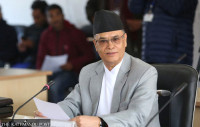
During a meeting with Prime Minister Sushila Karki at Singha Durbar on Wednesday, commission officials requested the extension, said Gauri Bahadur Karki, its chair.
The commission was formed on September 21 with a three-month deadline, which is set to expire soon. As the deadline approaches while the process of recording statements is still ongoing, the officials have sought more time.
As a part of its inquiry, the commission has been recording statements from security officials and other individuals connected to the crackdown.
The commission has already questioned a number of police officers deployed during the protests and has been conducting broader inquiries with people from different sectors.
After the meeting with the prime minister on Wednesday, Karki told the media that the current timeframe is insufficient to complete the work. He said Prime Minister Karki responded positively to the extension request.
The government has already decided to expand the scope and terms of reference of the commission in accordance with the agreement reached last Wednesday between representatives of the government and Gen Z groups that led the September protests.
As per the Cabinet decision, the commission has been given additional authority to conduct investigations into allegations of human rights violations—including extrajudicial killings—arising from the excessive use of force during the demonstrations, to ascertain facts, and to recommend criminal accountability.
Likewise, it has been tasked with distinguishing, without prejudice, and investigating violent acts carried out in a premeditated and organized manner with criminal intent, and to submit a report.
In addition, the commission can conduct screening investigations within 15 days in cases where individuals were investigated or charged solely for participating in the movement. The government plans to release individuals from custody or detention based on its recommendations.
The commission has already questioned Army Chief General Ashok Raj Sigdel; former home secretary Gokarna Mani Duwadai; Inspector General of Nepal Police Dan Bahadur Karki; former inspector general of Nepal Police Chandra Kuber Khapung; and then chief district officer of Kathmandu, Chabbi Lal Rijal.
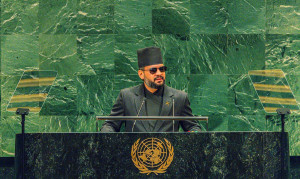
The Karki commission is preparing to summon then prime minister Oli and his home minister Lekhak to question them about the crackdown, the resulting deaths, and other aspects of the September 8-9 protests. After 17 unarmed youths were gunned down outside the federal parliament on the first day, the protests escalated and spread across the country, causing extensive damage to both private and public property.
Public targets included Singha Durbar complex, federal parliament building, the Supreme Court, and several police stations and other government offices, while private targets included the Hotel Hilton, Bhatbhateni Supermarket branches, banks, and media houses.
The commission has already informally spoken with Lekhak and communicated to him that he may be summoned next week. Lekhak resigned on September 8 after 21 people including some school students were killed by police at New Baneshwar. The commission, however, is yet to speak to Oli, who has publicly refused to assume even moral responsibility for the deaths.
Oli was the prime minister when Gen Z protesters took to the streets after the government imposed a blanket ban on multiple social media sites. Along with opposing the ban, they called for an end to rampant corruption in the country.
After dozens of deaths of September 8 and further casualties and widespread destruction on September 9, when protesters also began surrounding the prime minister’s residence, Oli resigned and was airlifted by the Nepali Army to a barracks in Suketar, Makawanpur.
Besides refusing to take moral responsibility for the deaths and destruction, Oli has repeatedly termed the Karki commission “unconstitutional and illegal”. The commission has imposed movement restrictions on Oli, Lekhak, Duwadi, Rijal and former chief of intelligence department, Hutraj Thapa and they cannot leave the Kathmandu Valley without permission. Oli has been openly refusing to appear before the Karki-led commission.
An official at the commission said they are working to issue summons to Oli. The process will begin with an official approach, and if he refuses, the commission will approach the police, who will send a notice to his residence in Gundu, Bhaktapur. If still he refuses to accept the notice, it will be pasted at his residence. If Oli ignores the police notice, a public notice will be published in a national newspaper asking him to appear before the commission.
“But we have not discussed arresting him at this stage, because we have to complete the due process first,” the official told the media.
When asked what the commission would do if Oli and Lekhak refused to appear, Karki replied, “What happens later will be dealt with later.”
The commission’s spokesperson, Bigyanraj Sharma told journalists that he expects Oli and Lekhak to appear before the commission to record their statements. “Please be assured, they will come to give their statements soon.”
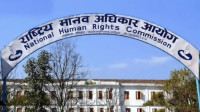
Meanwhile, the National Human Rights Commission has already recorded former home minister Lekhak's statement regarding his role in the Gen Z protest crackdown.
After quizzing the government officials and security personnel tasked with the security arrangements, the constitutional human rights watchdog, on Friday, recorded Lekhak’s statement. “He was in the commission for more than two hours,” said a senior official involved in the investigation. During questioning, he denied ordering the Nepal Police to open fire on youths on September 8, the first day of the protest, when 19 people were killed.
Having resigned on the first day of the protest, Lekhak expressed his ignorance about how the violence flared up on September 9. The commission has also called then Prime Minister Oli and foreign minister Arzu Rana Deuba for their statements. Deuba has agreed to be at the commission on December 23, as per the official. “Oli’s secretariat has informed us that he could be available after a week as he is currently busy with the party’s general convention,” said the official.
As per the commission sources, the investigation team has talked to around 150 people including chiefs of the Nepal Police and Armed Police Force and senior Nepal Army generals. The probe committee led by Lily Thapa, a member of the commission, has also talked to the injured in the protest, Gen Z leaders, and families of the deceased.
Investigators say no one in authority has taken responsibility for the human casualties, as expected. Their refusal does not mean they will be spared if they had some hand in violence, they said.
Thapa said they are in the final phase of investigation. “Except a few, we have recorded the statement from everyone, who is a direct or indirect stakeholder of the protest. The report will be out soon,” said Thapa without elaborating.
In a brief monitoring report made public on September 26, the constitutional human rights watchdog said the first half of the first day of protests on September 8 was peaceful. “Incidents of arson, followed by the deaths of protesters in police shootings later in the day, resulted in violence. Monitoring revealed that the deaths caused by police firing on the first day led to indiscriminate arson and vandalism on the second day,” read its preliminary report.
The commission said the report is based on its continuous monitoring of the situation across the country during and after the Gen Z protests, which were launched to demand an end to corruption as well as good governance.




 15.26°C Kathmandu