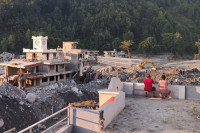
The nights of October 4 and 5 brought disaster to Rajduwali, Ilam-10, when a sudden flash flood in Maikhola (stream) swept through the settlement in minutes. Homes, fields, and crops were washed away, leaving residents with only their lives and the memory of that night.
Sukmaya Tamang, who lost her home completely, said, “At that moment, we could save nothing but the clothes we were wearing. Now we are surviving under a tarpaulin.”
A total of 34 families were displaced. Three months later, many still live on the riverbed under tarpaulins, facing cold winds and an uncertain future.
The NGO Help Nepal Network has built temporary shelters for 14 families, but residents say the corrugated sheet structures provide limited protection against Ilam’s harsh winter. Dukpa BK said, “We’re just managing to survive the nights. The cold is intense, and the shelter feels too weak.”
Minister of Physical Infrastructure Kulman Ghising had promised Rs50,000 for temporary shelter and Rs400,000 for house construction during his visit on October 12. The ward office also assisted victims in opening bank accounts. Yet many families say they have received no relief. “The ward asked us to open accounts, promising money. Now they say the Rs50,000 cannot be given. There is no clarity,” said Amrit Rai.
The ward office told victims that families with NGO-built shelters cannot claim the Rs50,000. Sur Bahadur Gurung expressed frustration, “The NGO built our shelter, but the government relief should still come. How can a shelter replace that?”
Funds for permanent housing—Rs400,000—are only available to families who already own land within the ward. Laxmi Maya BK said, “First, we are told to buy land, then we can get Rs400,000. We don’t even have money to buy land. How can we build a house?” She added that victims should be provided housing where they currently live.
Most flood-affected families in ward 10 do not own land. Gurung said, “It’s clear the government has no intention of giving us money. We need houses here, and we won’t leave this land.”
Ward Secretary Ravindra Ghimire confirmed that 14 temporary shelters were built with NGO support, but some families still live under tarpaulins. He explained that government rules prevent double benefits. Families with shelters built by the NGO cannot receive the Rs50,000, though the Rs400,000 grant for permanent housing is available to eligible families, he said.
Chief District Officer Sunita Nepal reiterated that victims can choose one form of support. She added that families without houses but with land outside the ward may also access the Rs400,000 grant. “Those who already have a house cannot receive the grant,” she said.




 25.92°C Kathmandu