The Supreme Court has taken an exception to the prolonged delay in the nearly two-decade old Gaur massacre case.
Issuing a full text of the verdict passed on August 19, the top court has directed the Nepal Police and the District Police Office, Rautahat to immediately proceed with the investigation in the deadly 2007 incident.
“Not registering the complaint and showing reluctance in investigating such a serious incident gives the impression that the system is biased against the victims,” reads the full text. “This makes victims feel they are being denied justice.”
The division bench of justices Til Prasad Shrestha and Nityananda Pandey asked why the case had been allowed to remain idle for so long. Even though the case was filed in April 2007, it has been gathering dust in the district police office ever since.
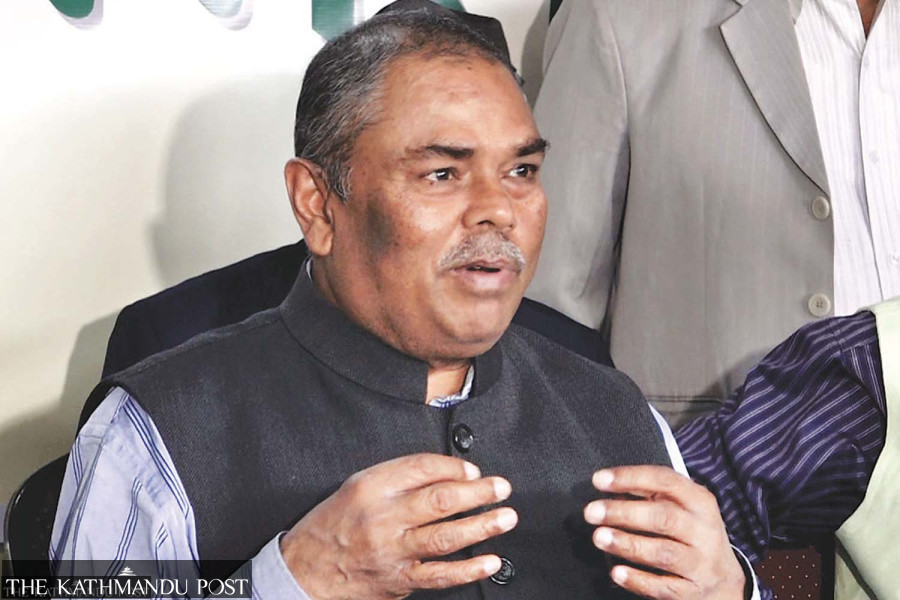
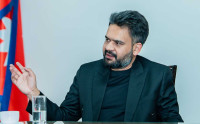
The case, filed in April 2007 by Tribhuvan Sah and others, named 113 individuals, including senior politicians such as then Madhesi Janadhikar Forum Nepal (MJF-Nepal) chief, Upendra Yadav, who is now Janata Samajbadi Party-Nepal chair, as defendants in the massacre. Others named included former lawmaker Baban Singh and several Madheshi leaders.
With this ruling, law enforcement is now legally bound to pursue the long-stalled Gaur investigation which successive governments have been ignoring for a long time. The victims have long been pressuring successive governments to investigate the perpetrators. They also ignored the recommendations from the National Human Rights Commission, which has implicated Yadav, among others.
The commission, in January 2023, recommended that the government probe Yadav among 129 others in connection with the Gaur massacre and take action if he is found guilty.
The constitutional rights watchdog concluded that the killings of more than two dozen people were well orchestrated and both the then MJF-Nepal and then CPN (Maoist) were aware of possible violence.
On March 21, 2007, as many as 27 individuals associated with the Maoists were brutally killed and another 115 were injured in the incident.
As neither party took an initiative to averting the violence, the commission has also decided to draw the attention of Pushpa Kamal Dahal, then Maoist chairperson; Prabhu Sah, then general secretary of the Madheshi Mukti Morcha of the Maoist party; Bindesh Yadav, Rautahat district chief of the then ‘People’s government’, the administrative wing of the Maoist party; and Upendra Yadav, the then MJF-Nepal chairman.
The commission had concluded that the investigation was delayed due to over politicisation of the incident which led the police and the district attorney to refrain from probing. “They should publicly commit not to repeating such heinous crimes in the future,” it had said.
The commission had also directed the government to take departmental actions against then Rautahat district police chief Yogeshwar Romkhami; then chief district officer Madhav Prasad Ojha; Superintendent of Police Ram Kumar Khanal; deputy superintendent of Armed Police Force Dharmananda Sapkota; and sub-inspector Kamakhya Narayan Singh. “If they are not in service, don’t give them an opportunity in future government service,” the commission had said.
The commission also directed the government to provide compensation of Rs300,000 to the families of each deceased and free treatment for the injured. Though the government was asked to report to the commission within three months whether or not its recommendations had been implemented, no successive government abided by it. It is their legal obligation to follow the commission’s directives.
The incident had happened as the Maoists insisted on holding their mass gathering at the Rice Mill area of Gaur where the MJF-Nepal had already booked a spot as the venue for its mass meet.
Several human rights organisations came to similar conclusions. In its report in April 2007, the Human Rights Watch remarked that there was no doubt that most, if not all, of the killings could have been prevented.
“On 21 March the MPRF [Forum] leadership allowed hundreds of its supporters to file into Gaur, armed with prepared bhaatas, knowing that if used, they could be lethal. It also cannot be excluded that MJF-N supporters were carrying firearms,” the report said. At the minimum, the MJF-Nepal supporters were prepared to use lethal weapons and did so, it added.
The Maoists’ move of organising a rally at the same time and place as the MJF-Nepal, as it had done in other locations, was provocative, the human rights organisation reported. “Its cadres also brought at least one weapon and at least one socket bomb to the rally,” the report added. “After its own stage had been attacked, the Maoists mounted a violent charge in the direction of participants of the MJF-N rally and vandalised its stage.”




 17.6°C Kathmandu