A draft bill that would replace political figures with academics as university chancellors is being prepared as the government pushes ahead with the reform.
A taskforce led by Dev Raj Adhikari, chairperson of the University Grants Commission, is working on the bill, which will be submitted to the government next week. The taskforce has focused on two major legal reforms through the bill. First, a governance system, and second, a single service commission to recruit teaching and non-teaching staff.
“The draft will be finalised within a week,” said Adhikari. “We are revising the previous bill, incorporating necessary changes, rather than preparing an entirely new bill.”
Under pressure from various quarters, the then Pushpa Kamal Dahal government prepared a higher education bill in early 2024 that proposed removing the prime minister from the post of chancellor. However, it was envisioned that the role be transferred to the federal education minister for federal-level universities, and chief ministers would be the chancellor of provincial universities. Different provinces have established provincial universities, exercising the authority enshrined in the Constitution of Nepal.
The bill was criticised for contradicting the established principle that universities must be autonomous. The bill, however, was never tabled in parliament.
Separate Acts currently govern different universities. And except for newly constituted universities, most have the prime minister as a chancellor and the education minister as pro-chancellor.
Concluding that allowing the political figures to hold crucial university positions has led to overpoliticisation, education experts have long opposed it. Likewise, the High-level Education Commission formed by the government in 2o19 had also recommended removing the prime minister from the position of chancellor.
It suggested having a board of trustees as the supreme entity of any university. Such a board should have the authority to develop the academic, managerial and other essential policies. Under the board should be academic and executive councils to oversee academic and administrative matters.
As in renowned universities around the world, the board of trustees should be given the authority to appoint the chancellor and vice-chancellor, among other important officials, the report suggested.
Despite these recommendations, those in power have largely ignored the issue. Even with public commitments, politicians took no initiative to give up the top positions as that would end their monopoly over executive appointments in universities. Vice-chancellors, rectors and registrars hold the executive authorities, and over the years, major parties have shared these positions among themselves.
The incumbent non-political government, however, is working to end this decades-long practice.
Now both the education minister and the prime minister are strongly advocating removing themselves from the top two positions in universities. Since taking charge of the ministry, Mahabir Pun has repeatedly stated that removing the prime minister as chancellor is the first step towards improving the academic environment.
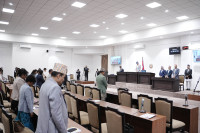
Speaking at Tribhuvan University’s senate meeting last week, Prime Minister Sushila Karki had said she was not even aware of the exact number of universities where she held the post of chancellor. She added, “What’s the point of holding the position that the prime minister is not aware of? Having the prime minister as chancellor only compromises the university’s autonomy.”
Officials at the ministry say the Adhikari-led panel was formed by the education minister with consent from the prime minister. They say two options are being considered to push the law forward. “It will either be issued through ordinance or registered in the National Assembly to be endorsed by parliament,” said an official.
Registering in the upper house would mean it will not become a law until the current government exits. However, the government would still be credited for taking an initiative on this crucial matter, said the official.
Binod Ghimire covers parliamentary affairs and human rights for The Kathmandu Post. Since joining the Post in 2010, he has reported primarily on social issues, focusing on education and transitional justice.




 19.73°C Kathmandu