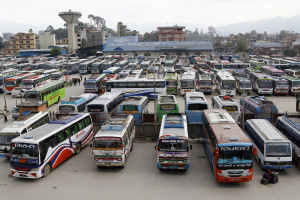
These are some of the best stories from The Kathmandu Post (February 29, 2020). In the last 11 years, a total of 7,467 Nepalis have died while working abroad as migrant workers, according to data from the Foreign Employment Board, the government body that works for the welfare of migrant workers. Post File Photo
Some of the big stories from today's The Kathmandu Post.
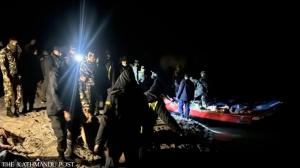
Hundreds of young, healthy Nepalis die sudden deaths in foreign lands. No one knows what’s killing them
Santosh Kumar Mandal had been working in Malaysia for three years as an industrial worker in a toy factory when his family began to ask him to come back. His father, Shani Lal, wanted to get Santosh married.
“We wanted him to come back, get married and settle down,” said Shani Lal. “Then, he could decide whether to go abroad again.”
But the Morang native refused; he wanted to work some more so he extended his contract by a year. On October 18 last year, before he left for work, Mandal reported a sharp pain in his chest. His fellow workers took him to the hospital, but Mandal died on a hospital bench, waiting for the doctor.
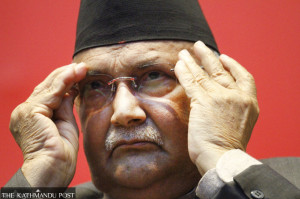
Oli is cornered in the ruling party and there is no one to blame but himself
When KP Sharma Oli returned to power in February 2018, he had a strong electoral mandate—a near two-thirds majority in Parliament. After the unification of his UML with the Maoists, Oli, as one of the chairs of the ruling Nepal Communist Party, became the strongest prime minister the country has had in recent times.
For two years, Oli ran the government and the party almost unilaterally, some might even say “with an iron fist.” But today, Oli is seeing shadows everywhere and a confrontation with Pushpa Kamal Dahal, the other party chair, threatens to derail his government.
Fate of Sagarmatha Sambaad hangs in balance amid virus fears
The rapid spread of the Covid-19 has meant that many international events have either been cancelled or could be in the near future. With speculation over major events like the Tokyo Olympics, there is concern about the first edition of Nepal’s Sagarmatha Sambaad, slated for the first week of April.
Though the government has yet to postpone the dialogue, as officials are still assessing the situation, experts in the field of health and international relations say that the government should rethink the Sambaad due to the large scale of the coronavirus outbreak, which, since December, has spread to 50 countries and six continents.
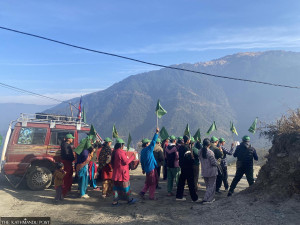
Tembathan is 110km from Kathmandu but feels like a world apart
Tembathan in Jugal Rural Municipality, Sindhupalchok, might be just 110km from Kathmandu but it feels a world apart.
“Anybody who visits the village for the first time gets amazed—as if they’ve just landed on a different country,” Saila Sherpa, a local leader, told the Post on a recent visit.
This, however, is not a fact to be cherished for the locals; it’s more a matter of shame, as Tembathan, along with two other villages in the rural municipality, Dipu and Tega, lack basic infrastructure facilities—there’s no electricity, no road connection, drinking water or a health post. It takes nearly a day to travel to these villages from Chautara, the district headquarters. The three villages collectively have 220 households. People depend on helicopters to get treatment during emergencies. The villages are virtually closed off from the outer world. This has prompted many to dub the villages the “Karnali of Sindhupalchok”.




 9.6°C Kathmandu