Nepal invites France and Germany to make final pitch for multi-million dollar security printing facility
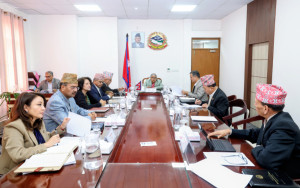
France and Germany will both be making a final presentation on August 7 to the Office of Security Printing for an exclusive contract regarding the setting up of a multi-million dollar security printing facility.
The invitation to both European countries to make their final pitch comes a month before the expiration of an existing memorandum of understanding with France on setting up the state-of-the-art security printing facility in the country. Senior officials from the Berlin-based Bundesdruckerei and the Paris-based IN Groupe (Groupe Imprimerie Nationale), both state-owned entities, have already submitted their financial proposals to the Ministry of Finance for a review, officials familiar with the development told the Post.
Bikal Poudel, head of the security printing division at the Ministry of Communication and Information Technology, confirmed to the Post that a final presentation is scheduled to take place on August 7 at his office. Poudel is, however, not aware of the financial and technical details of either proposal since those were submitted to the Ministry of Finance, he said. More here by Anil Giri.
Lack of clarity over ban on Malaysia leads to confusion among aspiring migrants
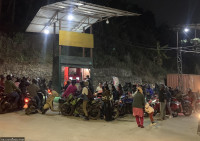
On Saturday morning, nearly 150 Nepali youths lined up inside the Battisputali-based Classic Overseas Manpower. The recruiting agency was conducting interviews for jobs in Malaysia, where the migration of Nepali workers has remained suspended for nearly 15 months now.
Following a tip-off that the agency was conducting interviews to supply workers to a Malaysian company, a team from the Department of Foreign Employment, led by section officer Kushal Baral raided the recruiting agency.
During the investigation, the team discovered that the candidates had been asked to pay as much as Rs150,000 for job at the Wawasan Packaging Enterprises in Malaysia. The interview was being conducted by recruiting agency officials and three representatives from the employing company. Chandan Kumar Mandal with the story here.
Once a blessing for the region, the Tinau is gradually turning into a curse
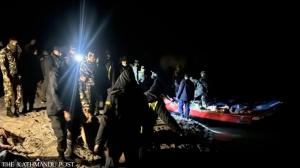
About four years ago, a flash flood on the Tinau river engulfed a settlement of 14 homes and swept away a suspension bridge along the Butwal-Devinagar road stretch. The homes were all made of bamboo and mud in the village of Kadaghari and though there was no human casualty, the families were forced to move. Despite being displaced, the residents returned to the same settlement and built makeshift houses once the monsoon ended.
The settlement had been established along the old course of the river, which it had abandoned. The Tinau’s water density lessens significantly during the winter and autumn but suddenly increases during the monsoon. The settlement is established every winter, when the river’s flow is weak.
“We don’t have any land we can call our own,” said Raju Nepali, one of the residents who returned to Kadaghari. “It’s not that we want to come back to the flooded area. We are compelled to move back and forth unless the government provides us with a viable alternative.” Amrita Anmol with the story here.
Arable land is shrinking, and so is paddy cultivation
Rapid unplanned urbanisation, crop diversification, and road construction are leading to diminishing paddy fields across the country, posing a significant threat to food security.
According to statistics from the Ministry of Agriculture, paddy is expected to be transplanted on 1.37 million hectares this year, a sizeable reduction from last year’s 1.55 million hectares.
This is the lowest paddy acreage in two-and-a-half decades, according to data compiled by the Post. In 2015, farmers transplanted paddy on only 1.36 million hectares as most of them stayed away from their fields when the country went into mourning for the thousands killed in the earthquake that year.
Between 1994 and 1995, the total area under paddy cultivation was recorded at 1.36 million hectares with Nepal suffering its worst recorded drought in 1994, affecting 35 districts in the western hilly and Tarai regions. More here by Sangam Prasain.
***
What do you think?
Dear reader, we’d like to hear from you. We regularly publish letters to the editor on contemporary issues or direct responses to something the Post has recently published. Please send your letters to [email protected] with "Letter to the Editor" in the subject line. Please include your name, location, and a contact address so one of our editors can reach out to you.




 9.89°C Kathmandu