ICYMI: Here are our top stories from Monday, July 29
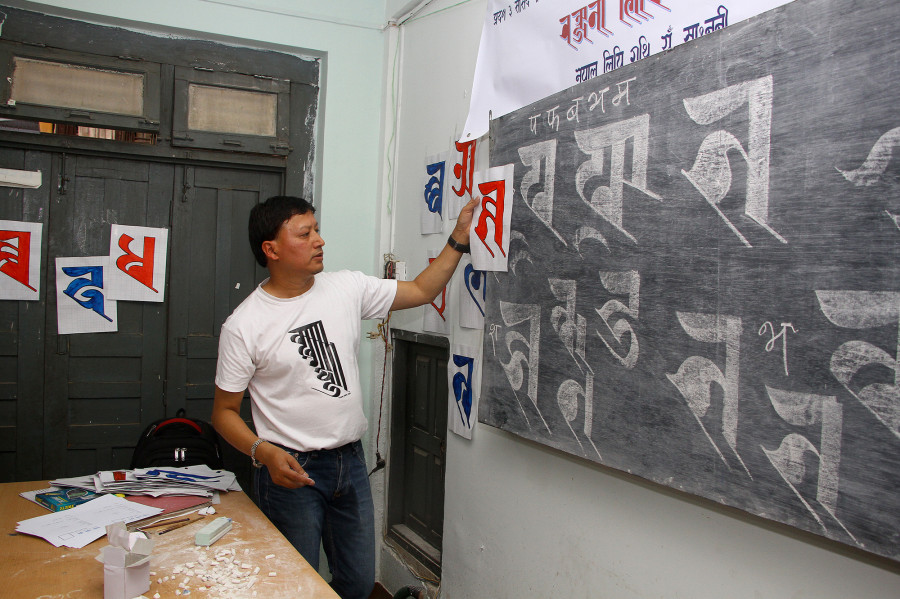
Here are some of the top stories from The Kathmandu Post (July 29, 2019). A teacher takes a class on Ranjana script in Jyatha, Kathmandu. Beeju Maharjan/TKP
Here are some of the top stories from The Kathmandu Post (July 29, 2019).
After being largely replaced by Devanagari, Nepal Bhasa scripts are making a comeback
Nepal scripts like Ranjana have a history that dates back millennia, but over the years, they’ve largely been supplanted by the Devanagari script and are no longer used as commonly as they once were. But young people like Shakya are rekindling interest in these scripts, giving them a modern context but also making certain these ancient alphabetic forms of writing don’t disappear.
Away from a society that judges, Nepali women are turning to Facebook for help
Women’s Room Reloaded is part of the vast ecosystem of private Facebook groups and pages aimed at people with interests and causes that range from environmentally sustainable lifestyles to the #MeToo movement. Such groups have had greater engagements since 2017, when Facebook began promoting these groups on its platform. These efforts, according to Mark Zuckerberg, Facebook’s CEO, are an attempt “to give people the power to build community and bring the world closer together.”
Patients who arrive at Bir Hospital are forced to return, and seek private care
Dozens of severely ill patients who come to Bir Hospital are forced to return without treatment or seek exorbitant private care because there simply isn’t enough room for patients at the oldest and one of the largest government-run hospitals.
Once renowned for its quality care at affordable rates, the hospital also offers free treatment for poor patients who travelled to Kathmandu from some of the most remote parts of the country. But with its failing management and crumbling infrastructure, not all poor patients can get treatment here.
Middlemen are raising vegetable prices even though there's no disruption in the supply chain
In most of the markets in the Kathmandu Valley, one thing is common nowadays: Each vegetable item costs over Rs100 per kg.
While traders say the flood and landslides in key vegetable producing areas has affected production, consumer rights activists say middlemen are hiking up prices on the pretext of natural disasters.
The average price of vegetables has soared up to 68 percent as compared to the same period last year.
The increase in prices has hit consumers the hardest. Some consumers said that prices had risen so high that Rs500 could buy hardly three items of vegetables nowadays.




 9.89°C Kathmandu