Frequent change of ministers and their desperate attempts to formulate new health policies during their tenure has affected the functioning of health system, especially in annual planning and prioritisation of works.
Frequent change of ministers and their desperate attempts to formulate new health policies during their tenure has affected the functioning of health system, especially in annual planning and prioritisation of works.
There are also fears that such haste decision and pressure from ministers to immediately bring out the policies might not serve and address the larger health needs and emerging health challenges in the country.
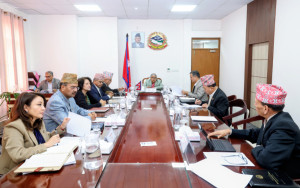
Recently, after assuming the top post at the Health Ministry, Giriraj Mani Pokhrel assumed the position of Minister of Health, he formed a high-level committee to draft new health policy in the changing context of implementation of constitution and federalism.
The committee led by Dr Mahesh Maskey, a public health expert and former ambassador to China, made public the first draft of the health policy for discussion and amendments. Following discussions in Province 3, the committee has submitted the revised version of the draft to the ministry.
The policy envisaged some popular agendas, including building a 15-bed hospital in each local unit while increasing taxes on tobacco products. It also proposes ensuring free basic health facilities at levels of health units—through primary health care centres to tertiary care and speciality hospitals.
However, on October 17, the government led by Prime Minister Sher Bahadur Deuba relieved all the Maoist Centre ministers of their responsibilities, leaving them without portfolio.
Deepak Bohora of the Rastriya Prajatantra Party was assigned the role of health minister who immediately formed another committee under his leadership to draft the new health policy.
The move has raised concern among experts that despite being a sound policy document, the “Nepal Health Policy: 2014” failed to address the issues of federalism and role of health systems.
“We tried to address a few shortcomings of the 2014 health policy. We have been in consultation with various stakeholders to improvise the document further,” said Dr Sarad Onta, who was a member of the policy drafting committee during Pokhrel’s tenure.
“But there is a new committee now and we are not sure how our works will be handled.”
Health Ministers have always been keen on formulating a policy during their tenure for political gains. Such tendency has been going on since 1991 when the former president Dr Ram Baran Yadav, who was the health minister at the time. Even today, Yadav hardly fails to mention that the policy was formulated during his tenure at public functions.
When Giriraj Mani Pokhrel became health minister in 2011, he had tried desperately to endorse the policy during his time at office.
However, successive ministers since, especially Rajendra Mahato had tried hard to finalise the policy as soon as possible. Mahato had reportedly threatened to expel some of the experts if they delay the drafting of the policy.
The Nepal Health Policy 2014 was eventually endorsed during the tenure of UML minister Khagaraj Adhikari.
Dr Yasobardhan Pradhan, who is in the policy drafting committee of incumbent minister Bohora, said the policy drafted by the Maskey-led committee had failed to garner ownership by the ministry and its subordinate units.
“Our policy will ensure the ownership by all units of health ministry, while addressing the issues of health in a federal set-up,” said Dr Pradhan.
When asked on such frequent efforts to change the health policy by ministers,
Dr Pradhan said each new minister would want to implement their own vision. “However, frequent change of ministers is a real tragedy,” he said.




 14.24°C Kathmandu