



 22.94°C Kathmandu

Thu, Oct 22, 2026
Money
Microfinance borrowers land on blacklist as sources dry up
More than 21,500 small borrowers were blacklisted in the last fiscal year, raising concerns that a system created to bring finance to poor households is leaving some of its most vulnerable users out of formal credit.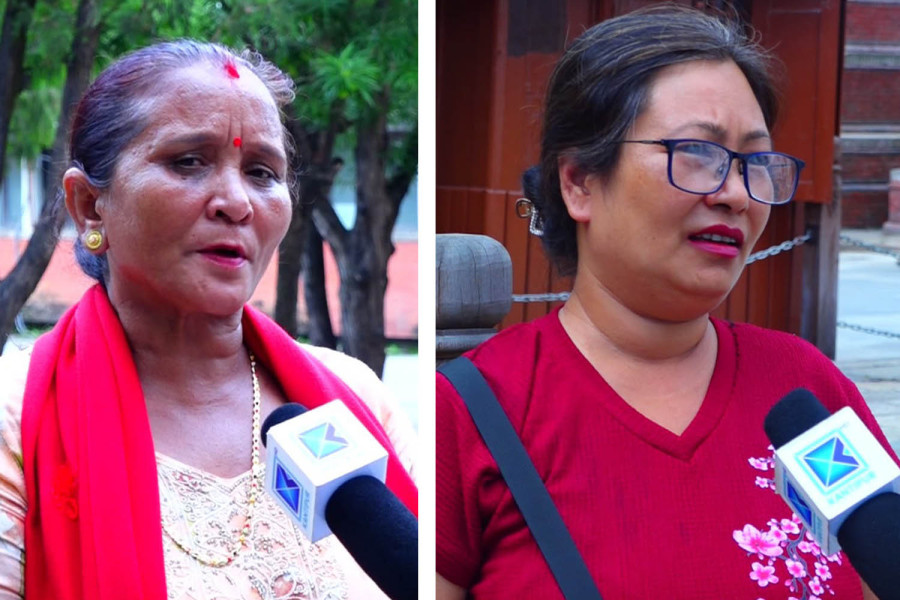
bookmark
Sudil Pokhrel
Published at : September 30, 2026
Updated at : September 30, 2026 07:18
Kathmandu
Maya Shahi of Tikapur-1 in Kailali has been dealing with microfinance institutions for two decades. She is now blacklisted by three of them. Banks will not lend money to her, and even relatives no longer trust her financially.
Shahi, who ran a hotel in Tikapur, had borrowed from two microfinance institutions and a savings and credit cooperative. During the Covid-19 pandemic, a six-month lockdown disrupted her business and she could not keep up with payment instalments. Before the pandemic, she had managed to make regular payments using income from her hotel and by borrowing from one microfinance institution to repay another.
When her income dried up due to pandemic-triggered lockdowns, she was unable to service her debt. When her financial situation deteriorated, the microfinance institutions that once competed to lend her no longer cared for her concerns.
Shahi is not alone. More than 21,500 small borrowers were blacklisted for failing to repay microfinance loans in the fiscal 2025-26 alone, accounting for about 36 percent of all borrowers blacklisted that year.
Experts point to several reasons for the rise: sluggish economic activity in recent years, falling market demand and incomes, tighter Nepal Rastra Bank (NRB) rules restricting borrowers from taking loans from more than two microfinance institutions, and misleading campaigns claiming that microfinance loans need not be repaid.
Prakash Kumar Shrestha, a former executive director of the central bank and former vice-chairman of the National Planning Commission, says part of the problem lies in the way microfinance institutions expanded in the past.
“As microfinance institutions expanded rapidly in number, they aggressively increased lending against targets. At the time, they failed to select borrowers in line with the principles and purpose of microfinance,” Shrestha said.
“After selecting borrowers, microfinance institutions should not only have provided loans but also helped them run their businesses. That did not happen, and this lapse contributed to the problem.”
Microfinance institutions were established to provide small, collateral-free loans, often backed by group guarantees, to poor and low-income households with limited access to formal financial services. The objective was to help them generate income and build livelihoods.
But experts say many microfinance institutions moved away from that purpose by haphazard lending, piling debt on borrowers and failing to provide support when borrowers ran into difficulty. Some borrowers also say lenders used intimidation and pressure rather than helping them restructure or manage their debts.
Commercial bank branches have now reached all 753 local units in Nepal, while microfinance institutions have expanded across the country. Yet the NRB’s Financial Literacy Baseline Survey, published in December 2022, found that nearly 72 percent of adults still relied on moneylenders, family or friends for savings or borrowing. The situation largely remains unchanged, according to the report’s findings cited in the debate over access to finance.
The survey also showed that despite government claims of expanding financial access and literacy, a majority of adults did not have access to the formal banking system. For many low-income households, cooperatives and microfinance institutions therefore remained the main formal sources of credit.
The problems in microfinance became more pronounced from 2022, around the same time the cooperative sector came under severe strain. As borrowers found it increasingly difficult to obtain loans from cooperatives and microfinance institutions, many low-income households were left with few alternatives.
When credit was readily available, small entrepreneurs often borrowed from one institution to repay the principal and interest to another. But when problems emerged in cooperatives, the central bank also introduced restrictions on borrowing from multiple microfinance institutions. That disrupted the cash flow on which many small businesses depended.
Bankers acknowledge that the break in cash flow has hit small borrowers hard.
“Problems in microfinance and cooperatives have not affected only small borrowers. Small and medium-sized enterprises, which form the base of the economy, have also been badly affected,” said Santosh Koirala, president of the Nepal Bankers’ Association. “This is one of the reasons why the economy has still not been able to regain momentum.”
Commercial banks’ branches may have reached most of the local units, but, Koirala, said microfinance institutions were the ones that reached deep into rural communities. The restriction preventing an individual from borrowing from more than one microfinance institution at a time deprived borrowers of cash.
Much of microfinance lending is based on group guarantees. Koirala said this structure can also contribute to blacklisting because when one member fails to repay, other members of the same group can potentially face consequences.
Dipendra Bahadur Chhetri, former governor, said the situation shows shortcomings in regulation.
Microfinance was conceived on the premise that banks and other financial institutions classified as A, B and C were unable to directly provide financial services to poor households. The sector initially performed effectively, but problems began when commercial banks were allowed to establish microfinance subsidiaries, according to Chhetri.
“This sowed the seeds of distortion in microfinance,” Chhetri said. “Unhealthy competition among microfinance institutions followed. In pursuit of higher profits, they did not adequately assess borrowers’ needs, repayment capacity, businesses or financial literacy. They began issuing loans simply by getting people to fill out forms.”
Easy access to money also encouraged some borrowers to spend without proper planning, Chhetri explained, adding that the resulting inability to repay had contributed to the increase in blacklisting.
He said the situation could have been contained if the central bank had regulated the sector more effectively at the time.
Microfinance in Nepal began with the establishment of the Rural Development Bank in 1992. There were only two microfinance institutions in 1992, but the number had risen to 91 by December 2019. It has since fallen to 52.
As borrowers struggled with debt, various groups representing microfinance victims emerged. Chhetri said some borrowers may also have stopped making payments after being encouraged or persuaded by such organisations, eventually leading to blacklisting.
The central bank itself acknowledges that regulation came late. Spokesperson Guru Prasad Poudel said the central bank had initially focused more on promoting microfinance than regulating it.
“In 2010, when we were closing the licensing process for A, B and C class institutions because we felt there were enough of them, we kept microfinance licensing open because banks and financial institutions had not reached rural areas,” Poudel said. “Because there was no integrated system for lending, we found that individuals were taking multiple loans.”
Only in the fiscal 2017-18 did the central bank require lenders to obtain borrowers’ credit information from the Credit Information Centre before extending loans, Poudel said. The centre began blacklisting borrowers only from the fiscal year 2020-21.
“We were late on this. Had we done it on time, this problem might not have emerged,” Poudel said.
Bijay Kunwar, spokesperson for the Credit Information Centre, said microfinance borrowers now account for a much larger share of those blacklisted than in the past.
“Nearly 40 percent of those currently on the blacklist are from microfinance institutions, whereas in previous years most were from banks and financial institutions,” he said.
As problems mounted in the microfinance sector, NRB formed a committee led by Shrestha to study the problems facing microfinance institutions and recommend solutions.
The committee found that one borrower had taken loans from as many as 23 microfinance institutions. In another case, one borrower had received up to Rs5.217 million through 22 loan accounts from 17 institutions. At the time, however, a microfinance institution was not allowed to lend more than Rs1.5 million to an individual, even with collateral.
The committee found that 81.8 percent of borrowers had got loans from only one institution, while the remaining 18.2 percent, or 418,722 borrowers, had taken loans from two or more microfinance institutions.
The NRB’s unified directive 2022 initially prohibited more than one microfinance institution from lending to the same borrower. The rule was later amended to allow borrowing from up to two institutions.
Borrowers’ groups, however, allege that 42 microfinance institutions continued lending to the same borrowers in violation of the central bank’s directive in pursuit of higher profits. They argue that indiscriminate lending by multiple institutions to the same individual is one of the main reasons why more borrowers ended up on the blacklist.
Shahi says borrowers were rarely told about the consequences of failing to repay.
“The group that guaranteed my loan also came to our villages and asked us to become members, saying we would get money,” she said. “Nobody told us that we would be blacklisted if we failed to repay the loan on time.”
Shahi said she eventually had to borrow from a moneylender charging exorbitant interest to repay microfinance loans. She also alleged that lenders seized household goods while attempting to recover the debt.
“First they took things from the house, even utensils,” she said. “But after I joined the movement, the harassment stopped.”
As the number of borrowers blacklisted rises each year, small entrepreneurs and low-income households are increasingly being shut out of further financial transactions. A programme originally designed to bring financial services to poor people in rural and remote areas has, critics say, become part of the problem after years of aggressive lending driven by competition and profit.
Sarita Shrestha, 51, of Bhimsensthan in Kathmandu, is another borrower now blacklisted because of microfinance debt.
She said she borrowed from about 47 microfinance institutions in 2015 and still had outstanding loans with 29 of them. Her total borrowing was about Rs1.5 million, which she says she can no longer repay in full.
In 2010, she borrowed Rs1 million from a moneylender to start a clothing business, but the friends who took the money absconded. She then turned to microfinance institutions to repay the moneylender. She later borrowed from one microfinance institution to repay another.
Since being blacklisted, she says all her financial transactions have effectively stopped.
“After being blacklisted, I faced a lot of humiliation in society,” Shrestha said. “I even thought about selling a kidney, but that did not happen. After I joined the movement, the harassment finally stopped.”
When she had no regular work or business, Shrestha worked for wages at a sock-making company.
“I knitted three pairs of socks a day, earning around Rs3,000 a month. But I had borrowed Rs100,000 and had to pay 24 percent interest,” she said. “My income was not enough, so I borrowed from another microfinance institution to pay the interest. That is how I ended up borrowing from so many of them.”
She also opened a snack shop to increase her income and improve her ability to repay the loans. But she said pressure from microfinance institutions to recover the debt eventually forced her to close the business.
Microfinance operators themselves acknowledge that the sector became increasingly focused on profits as it expanded.
“We also aimed to make profits once we started operating the institutions,” said Ram Bahadur Yadav, president of the Microfinance Bankers’ Association. “We increased lending as competition intensified. But the problem now is that even borrowers who are capable of repaying are refusing to do so. We are still trying to prevent those who genuinely cannot repay from being blacklisted.”
Microfinance operators also say campaigns telling borrowers that they do not need to repay their loans have contributed to the increase in defaults.
Some borrowers, after facing problems with microfinance institutions and then moneylenders, have turned to groups campaigning against loan repayment.
Those groups argue that borrowers should not be compelled to repay loans because microfinance institutions violated NRB’s directives and charged high interest rates. Three separate committees have been formed to represent microfinance victims.
Maniram Gyawali, chairman of the Struggle Committee against Microfinance and Financial Exploitation, claims that 9 million people have been affected by microfinance lending and that some borrowers have been driven to suicide. The claim was not substantiated in the report.
The longer borrowers remain unable to repay, the larger their outstanding principal and interest become. Borrowers, however, say the campaigns have eased pressure on them.
Yadav, of the Microfinance Bankers’ Association, said loan recovery has become increasingly difficult because of the campaigns.
“When campaigns wrongly tell people that they do not have to repay their loans, even those who can repay stop doing so,” he said. “As this trend increased, we were forced to put them on the blacklist.”
According to the Credit Information Centre, 170,000 people are currently blacklisted. Of them, 31,797, or about 18 percent, are from microfinance institutions. The ratio of blacklisted microfinance borrowers has been growing every year.
Over the past four years, 31,797 borrowers have been blacklisted by microfinance institutions, according to the centre. In the fiscal 2022-23, 710 borrowers were blacklisted. The number rose to 3,600 in 2023-24, 5,800 in 2024-25 and 21,600 in 2025-26.
The lending practices that failed to adequately assess borrowers’ backgrounds have also left microfinance institutions facing growing problems of their own. The sector’s non-performing loan ratio, which was below 3 percent before 2022, rose to 7.43 percent in mid-April 2023 and hit an average of 10.42 percent by mid-July this year.
Data published by the Nepal Rastra Bank on Tuesday showed that the non-performing loan ratio at Matribhumi Microfinance had reached as high as 26 percent. As lending expanded, the data also showed increases in borrowers’ involvement with multiple institutions and the number of loan accounts they held.
The rise in blacklisting reflects problems on both sides of the lending relationship. Microfinance institutions’ pursuit of profits and aggressive lending are part of the picture, while borrowers’ failure to use loans productively and the lack of timely information about the consequences of default have also contributed to the problem.
Greater transparency about borrowing limits, repayment obligations and the consequences of default at the time loans are issued could, according to the report’s findings, help reduce the number of borrowers on the blacklist.
Sudil Pokhrel
Pokhrel works in the economics bureau of Kantipur Television.



Most Read from Money
Nepal travel agents threaten to stop selling Thailand trips over visa rules

Why does an hour long flight to Dhangadhi cost more than a flight to New Delhi?
Malaysia rejects Nepal’s demand to open recruitment to all manpower agencies

No school, but a graduation cap for women dairy farmers
Nepal arrests four medical service providers as Malaysia recruitment row deepens
Editor's Picks




E-PAPER | October 22, 2026

×