



 14.81°C Kathmandu

Sat, Oct 24, 2026
Money
Lawmakers want a shorter governor term. Experts fear instability in central bank
Changes in legal provisions could undermine Nepal Rastra Bank’s independence and policy continuity, former governors warn.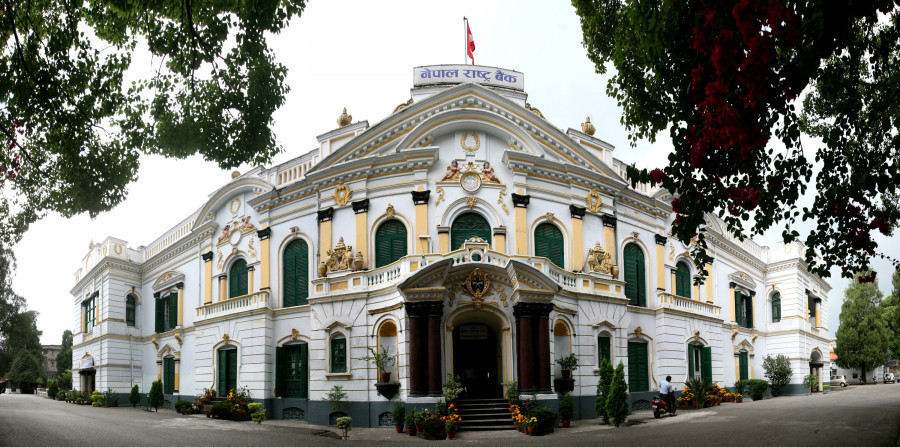
bookmark
Yagya Banjade
Published at : September 13, 2026
Updated at : September 13, 2026 21:01
Kathmandu
Nepal’s central bank governors have faced political pressure several times before. They, however, have found protection in the courts.
In April 2022, then Nepal Rastra Bank Governor Maha Prasad Adhikari was suspended by the Cabinet after resisting government intervention. He challenged the decision in the Supreme Court and returned to office after the court ruled in his favour. He went on to complete his five-year term.
The case was not the first time Nepal’s judiciary had intervened to protect the autonomy of the central bank. In 2000, the government removed then governor Tilak Rawal and appointed Dipendra Purush Dhakal in his place. Rawal challenged the decision, and nine months later the top court ordered his reinstatement.
Rawal said the court took seriously the government’s attempt to change the leadership of a sensitive institution without following due process. The episode was among the developments that led to the Nepal Rastra Bank Act 2002, which strengthened the legal basis for the central bank’s autonomy.
“That is why the 2002 Act was introduced to make the central bank independent,” Rawal said. “Because of the Nepal Rastra Bank Act 2002, all governors have been able to complete their terms.”
Yubaraj Khatiwada, who served as governor through four governments, also faced pressure from both the government and the anti-graft body during his five-year tenure. Yet he could not be removed before completing his term.
The protection offered by the law could now be weakened.
The parliamentary Finance Committee has proposed amendments to several provisions of the Nepal Rastra Bank Act, including the tenure of the governor and directors, eligibility for the top central bank post, the government’s power to issue directives to the bank and the timing of monetary policy announcements.
The draft bill has proposed a slew of changes and it has raised concerns among experts, who say the amendments could weaken its independence and leave its leadership more exposed to political interference. The most contentious proposal is to reduce the governor’s tenure from five years to three, while allowing the Cabinet to extend it by another two years based on performance.
Former finance minister and former governor Yubaraj Khatiwada said the change could make the central bank’s leadership unstable.
“Why should the tenure of the governor and directors be shortened?” Khatiwada said. “It appears the issue has come up because the government is uncomfortable with stable leadership at the central bank. We should not put Nepal Rastra Bank in the hands of short-term and unstable leadership.”
Under the committee’s proposal, the governor, deputy governors and three independent directors would initially serve three-year terms. The Cabinet could then decide whether to extend their tenure by two years.
Khatiwada said the existing five-year term was intended to provide continuity in monetary policy and allow the governor to operate independently. A governor can already be removed under existing law for misconduct, he said, making it unnecessary to introduce a shorter term with a discretionary extension.
“The two-year extension provision appears to bring the central bank under the government’s control by another route,” he said. “The issue is the stability of the central bank’s overall leadership. The governor’s term was set at five years to ensure policy continuity and make monetary policy predictable.”
Former finance minister and lawmaker Barshaman Pun also opposed the proposed change.
“A fixed five- or six-year term is appropriate because it gives the executive the opportunity to work independently,” Pun said. “Allowing a two-year extension appears to give the executive power to influence how the central bank is run.”
Former governor Bijaya Nath Bhattarai went further, arguing that the proposed system could allow successive governments to influence who remains in charge of the central bank.
“It is a policy of preventing someone they do not like from remaining governor for long and appointing their own people,” Bhattarai said. “The three-year term followed by a possible two-year extension is a tool for telling the governor, ‘We are your bosses. Your tenure will be extended only if we are satisfied with you.’”
If the intention is to strengthen the central bank, the focus should instead be on making the governor selection process more transparent and strengthening eligibility requirements, Bhattarai said.
“Let us make a law that prevents the appointment of political leaders, close associates or relatives,” he said. “Let us make the selection process transparent and credible, and allow a governor selected on merit to work without fear for at least five years.”
Former governor Chiranjibi Nepal similarly said the proposed shorter tenure appeared aimed at making it easier for governments to influence the central bank.
“The average tenure of central bank governors in many countries is around three to five years, although it varies,” Nepal said. “In Nepal, governments change frequently, while a governor can currently remain for five years. This appears to be an attempt to remove a governor appointed by a previous government.”
Finance Committee chair Krishna Hari Budhathoki defended the change, saying the aim was to link tenure to performance rather than weaken the central bank.
“We have introduced a three-plus-two system by linking the tenure of the governor and directors with performance,” Budhathoki said. “If a governor or director is performing well, there should be no obstacle to extending the tenure by two years. If someone is not performing well, they should not simply remain in office.”
The committee has also retained a provision allowing the government to issue directives to Nepal Rastra Bank on monetary, banking and financial matters.
The provision is not new. Section 106(c) of the Nepal Rastra Bank Act 2002 allows the government to issue directives to the central bank on currency, banking and financial matters. The provision was added through an amendment to the Act in 2016. Nepal Rastra Bank had proposed removing it from the revised bill, arguing that it could undermine the bank’s autonomy.
Former governor Bhattarai said retaining the provision would leave the central bank vulnerable to government pressure.
“If the government can issue directives and the central bank has to follow them, while its governor’s tenure can also be shortened, how can the institution be autonomous?” he said.
Nepal said governments in developing countries often seek greater influence over central banks, whereas institutions in advanced economies tend to have stronger safeguards for independence.
Khatiwada took a more measured view, saying the provision itself was not necessarily problematic as long as it was used appropriately. The intention, he said, was to ensure that fiscal policy and political programmes did not improperly dictate monetary policy.
The bill also changes eligibility requirements for the governor and directors. Candidates would need a postgraduate degree or equivalent qualification in fields including economics, monetary affairs, banking, finance, statistics, public administration, commerce, management, commercial law or accounting. They would also need at least four years of experience at a senior level in government, banking, academia or international economic and financial institutions.
The committee expanded the fields that qualify under the provision but retained the existing four-year experience requirement. Some lawmakers had proposed increasing the required experience to 10 years.
Another change would allow a serving commercial bank executive to become governor after a two-year cooling-off. The revised provision explicitly bars serving officials of banks and financial institutions, as well as chief executives who have left such positions but have not completed two years since leaving office.
The committee has also proposed reducing the shareholding threshold for eligibility. Anyone holding more than 0.5 percent of shares in a bank or financial institution would be barred from becoming governor, deputy governor or director. The current threshold is 5 percent.
The timing of monetary policy is also set to change. The committee has proposed that the central bank issue monetary policy on the first day of each fiscal year.
Former governor Nepal said the proposal was linked to the relationship between the annual budget and monetary policy, with the latter expected to support the government’s budgetary objectives.
But he warned that fixing a statutory date could create problems if the annual budget is delayed, as has happened in Nepal.
“In a politically unstable country like Nepal, if the budget cannot be presented on Republic Day (Jestha 15) and the delay continues, the question becomes whether the monetary policy should be issued on the prescribed date,” Nepal said.
Senior Nepal Rastra Bank officials have also expressed concern that the amendments could weaken the institution’s ability to operate independently. They consider the proposed changes to the governor’s tenure and the government’s power to issue directives particularly sensitive.
According to the officials, shortening the governor’s tenure could weaken leadership stability, increase the risk of political interference and ultimately divert the central bank from its core mandate.
The wider debate is also raising questions about why the Act is being amended in the first place.
Central bank officials say the original revision was driven mainly by three issues, including commitments made to the International Monetary Fund after Nepal came under pressure on its foreign exchange reserves during the Covid-19 pandemic.
As part of the IMF’s Extended Credit Facility, Nepal agreed to amend provisions under which the finance secretary sits on the central bank’s board and the government can issue directives to Nepal Rastra Bank. The finance minister and governor agreed to those conditions as part of the loan arrangement.
The central bank therefore prepared a draft amendment focused on three areas: removing the finance secretary from the board, removing the government’s power to issue directives, and expanding the legal definition of money to include a central bank digital currency.
But by the time the draft moved through the finance and law ministries, the House of Representatives and eventually the parliamentary Finance Committee, several additional issues had been introduced, according to central bank officials.
The two IMF-related provisions remain unchanged.
The proposal to remove the finance secretary from the central bank’s board was dropped after Finance Minister Swarnim Wagle objected to it, according to the officials.
Yagya Banjade
Banjade covers government finance, banking, capital markets, and the economy for Kantipur Daily.





Most Read from Money

Why does an hour long flight to Dhangadhi cost more than a flight to New Delhi?

Nepal travel agents threaten to stop selling Thailand trips over visa rules
Malaysia rejects Nepal’s demand to open recruitment to all manpower agencies

No school, but a graduation cap for women dairy farmers

Nepal arrests four medical service providers as Malaysia recruitment row deepens
Editor's Picks




E-PAPER | October 24, 2026

×