Heifer launches ‘Farm to Finance’ initiative to link women-led cooperatives with banks
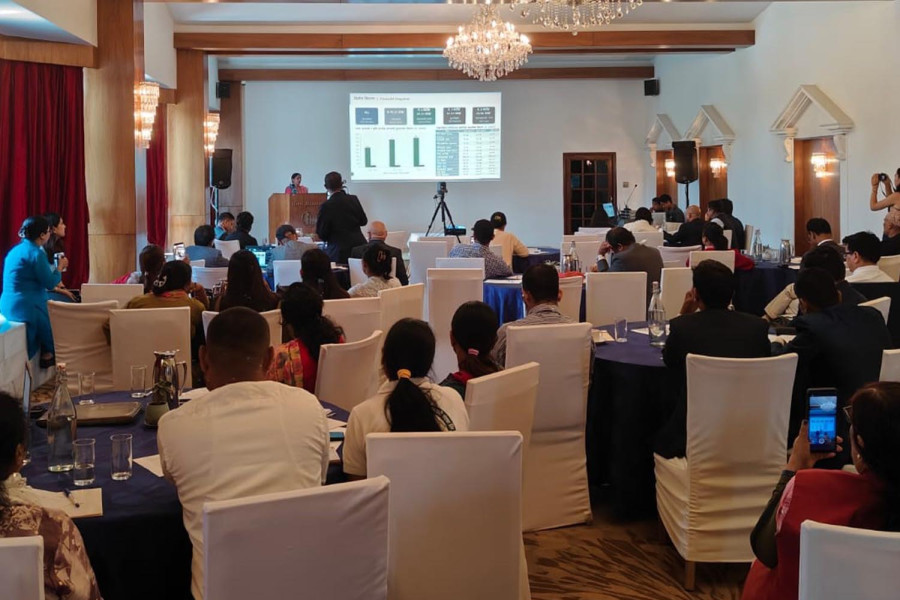
More than 300 women-led agricultural cooperatives take part in the first round as the programme seeks to bridge financing gaps and scale up rural enterprises. More than 300 women entrepreneur cooperatives from 18 districts affiliated with Heifer International Nepal participated in the first round of the selection process. Photo: Courtesy of Heifer International
Heifer International Nepal, which has long been engaged in Nepal’s dairy, livestock production and market development sectors, has launched the “Farm to Finance” initiative aimed at improving access to credit for women-led agricultural enterprises.
As part of the first phase of the programme, Heifer International Nepal organised a National Pitching Event in Kathmandu on Friday, bringing together women agricultural entrepreneur cooperatives, bankers, officials from the agriculture, forestry and environment sectors, buyers, exporters and development facilitators on a single platform.
The initiative is designed to help high-potential women-led cooperatives secure additional investment needed for business expansion. Under the programme, selected cooperatives present their business plans directly to banks and financial institutions, which then assess financing opportunities based on the viability and scalability of the proposals.
According to Heifer International, the programme aims to address the financing gap faced by rural women entrepreneurs by linking investment-ready cooperatives with potential lenders and strengthening their access to formal financial systems.
More than 300 women entrepreneur cooperatives from 18 districts affiliated with Heifer International Nepal participated in the first round of the selection process. These cooperatives were evaluated on criteria including profitability over the past three consecutive years, business growth, investment readiness and financial sustainability, according to officials.
From the initial pool, 30 cooperatives were shortlisted. Heifer currently works with women entrepreneur cooperatives in 44 districts across Nepal. Following further rounds of evaluation, 17 cooperatives advanced to the next stage, before the final selection of seven cooperatives.
The final seven included three cooperatives from Lumbini Province, one from Madhesh Province, one from Bagmati Province and two from Gandaki Province.
The 17 semi-finalists had collectively sought Rs250 million in loans for a six-month period, while the seven finalists requested Rs120 million in financing over one year.
At Friday’s pitching event, representatives of all seven cooperatives presented detailed business plans to banks and financial institutions, outlining how additional investment would be used to increase production, improve market access and expand operations.
Collectively, the seven investment-ready cooperatives sought Rs92 million in additional loans to support expansion plans.
Among them, Samunnati Cooperative of Lamahi in Dang, with 810 members, requested the largest loan amount of Rs40 million. Neelkamal Cooperative, also based in Dang and with 1,458 members, sought Rs15 million in financing. In Kaski, Pratibha Cooperative, with 610 members, requested Rs10 million.
Similarly, Haripur Cooperative of Sarlahi, with 874 members, sought Rs10 million, while Sakaladevi Cooperative of Nawalpur, with 998 members, also proposed a loan of Rs10 million.
Kamalamai Cooperative of Sindhuli, with 400 members, requested Rs5 million, primarily for branding and marketing of its products. Galdha Cooperative of Palpa, with 562 members, sought Rs2 million in financing.




 27.12°C Kathmandu










.png&w=300&height=200)