



 22.11°C Kathmandu

Mon, Oct 19, 2026
Money
A cashless shift in Nepal brings new ease and new risks
From QR codes to mobile wallets, digital payments are reshaping how Nepalis spend and save, even as rising fraud and cyber threats expose the limits of a rapidly expanding fintech system.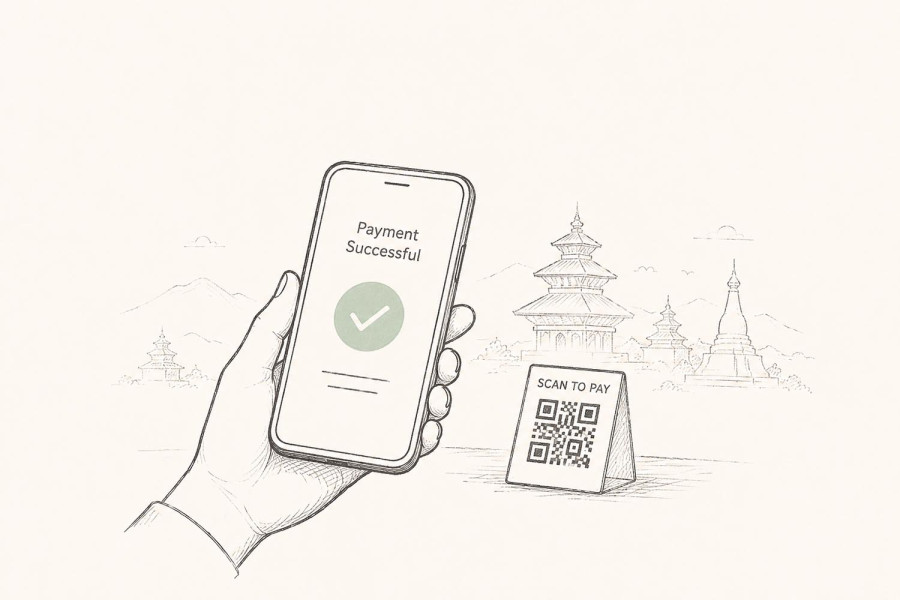
bookmark![]()
Central bank data show that QR-code payments exceeded 59.26 million transactions in a single month upto mid-June of the current fiscal year. Post file photo
Sajana Baral
Published at : June 17, 2026
Updated at : June 17, 2026 10:20
Kathmandu
Kathmandu entrepreneur Paru Ghimire runs her clothing business almost entirely through digital payments.
Through TikTok, she has sold 375 garments nationwide in two months. Customers pay via mobile banking, while she settles accounts with wholesalers the same way.
“If mobile banking did not exist, I could not run an online business,” she said. “For women with children, it makes it possible to work from home and manage transactions online.”
She no longer uses cash, and says digital records help her track income and expenses more clearly.
Ghimire’s experience reflects a wider shift in Nepal, where fintech platforms such as eSewa, Khalti, ConnectIPS and Fonepay have reduced reliance on physical banking and paperwork.
Pandemic accelerated digital shift
According to Santosh Tamrakar, managing director of business software company IMS Software Pvt Ltd, Nepal's move towards cashless transactions gained significant momentum after the Covid-19 pandemic.
“People can now purchase goods even when they are not carrying cash,” he said. “Technologies such as Fonepay and Nepal Pay have also helped retain money within Nepal while making transactions more transparent.”
Subash Sharma, executive director and spokesperson for F1Soft, said Nepal has already established a strong foundation for digital payments. F1Soft developed eSewa, the country's first digital wallet and payment gateway, in 2009.
Today, Nepal has 22 operational digital wallets. These platforms, along with mobile banking applications, generate transaction histories that banks can use to assess customers and provide collateral-free loans.
“Until now, we have mainly made spending easier,” Sharma said. “The next phase is helping people earn, save and invest money. Digital lending is only beginning. Fintech startups can explore many other sectors as well.”
Among Nepal's most successful startups, fintech companies consistently feature near the top. Both the volume and value of digital transactions continue to rise.
Nischal Adhikari, head of the Payment Systems Department at Nepal Rastra Bank, said this growth is positive for the economy.
“It increases the velocity of money and helps bring informal economic activity into the formal sector,” he said.
According to Adhikari, fintech has significantly improved cash flow management for businesses.
“In the past, merchants often had to wait before receiving payment for goods sold. Today, digital payments allow funds to arrive almost instantly. Businesses can better estimate cash flow and expand with greater confidence,” he said.
For individuals, digital transactions also provide immediate access to funds during emergencies, improving personal financial management.
“In cities and towns, people have largely stopped carrying cash,” Adhikari said. “QR payments are now accepted everywhere, from public transport to vegetable vendors and street carts.”
Beyond payments
While digital payments dominate Nepal's fintech landscape, the sector extends much further.
Fintech encompasses digital lending, remittances, electronic know-your-customer systems, e-commerce services and stock market tools.
Digital lending is gaining popularity. New startups are also entering areas such as digital insurance and AI-powered accounting services.
Nepal Rastra Bank recently expanded its digital lending guidelines to include micro, small and medium-sized enterprises.
Under the revised framework, businesses can obtain short-term digital loans of up to Rs500,000 for one year and longer-term loans of up to Rs1 million. Previously, electronic lending was primarily limited to salaried individuals or business-income accounts.
The central bank is also advancing plans for a Central Bank Digital Currency (CBDC).
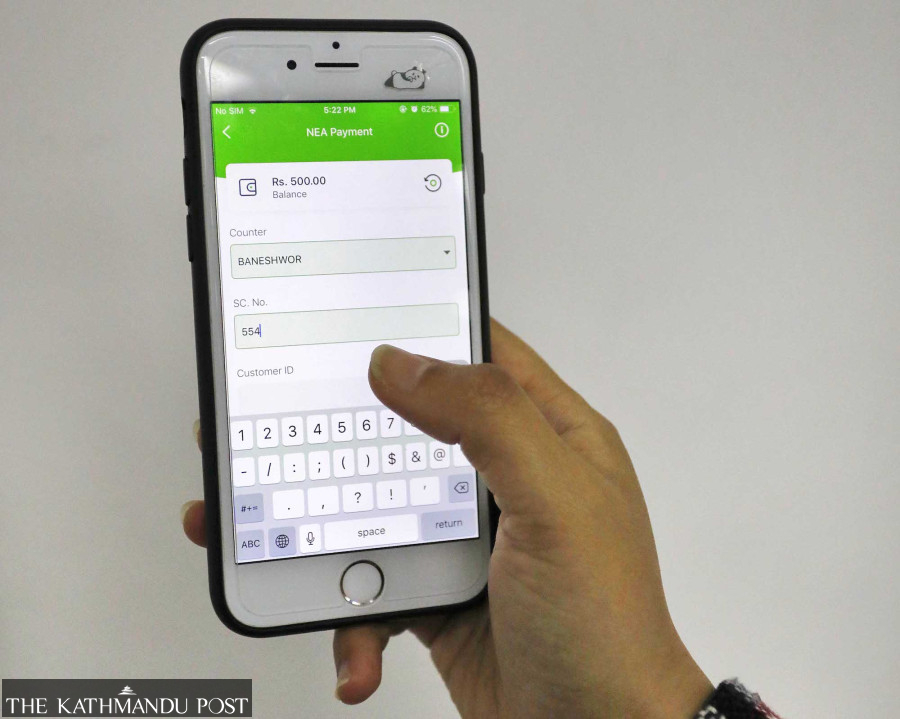
A prototype digital currency system was developed in August 2025 and is currently being refined. Officials say an initial version with limited functionality will be developed before wider deployment.
A CBDC would effectively create a digital Nepali rupee stored on mobile devices. Unlike current mobile banking or wallet systems, which require bank or wallet accounts, a CBDC could potentially allow citizens without bank accounts to participate directly in digital transactions.
However, Nepal Rastra Bank plans to introduce the currency for business use first before expanding it to the general public.
Growing risks
The fintech revolution has also brought new vulnerabilities.
Digital fraud has become increasingly common, affecting both businesses and consumers.
Ghimire described one scam frequently targeting online sellers.
“As soon as I upload a clothing video on TikTok, scammers sometimes post different WhatsApp numbers in the comments and ask customers to send payments there,” she said. “Recently, a customer ordered from me but mistakenly transferred money to a scammer.”
The incident highlights how easily users can be deceived when they fail to verify official seller profiles and contact details.
Another common scheme involves misleading advertisements on social media. Fraudsters promise free access to major events such as the ongoing FIFA World Cup and encourage users to click on suspicious links. In some cases, victims have lost substantial sums from their online banking accounts after downloading malicious applications.
One such victim, Anil Dangol Maharjan of Chabahil, said his bank account was emptied after he clicked a suspicious link in an advertisement and attempted to download an application.
According to Nepal Rastra Bank's Strategic Analysis Report 2024, one in every two people involved in cyber-enabled financial fraud is aged between 19 and 24, while one in three is a student.
Common fraud methods include fake parcel schemes, misuse of social media, fraudulent online platforms, one-time password scams and lottery scams.
Cybersecurity threats have also exposed weaknesses in institutional systems.
A cyberattack on then Laxmi Capital Market's server resulted in the leakage of highly sensitive personal information, including citizenship details and phone numbers, affecting around 100,000 people. The stolen data later surfaced on the dark web.
Fraudsters frequently create fake websites resembling legitimate banks and wallets. They send messages claiming users have won prizes or must urgently update their KYC details to prevent account suspension. These tactics are designed to steal usernames, passwords and one-time passwords.
According to Nepal Police's Cyber Bureau, most wallet-related complaints involve such phishing attempts.
Experts say reducing cyber risks requires both stronger security systems and more informed users.
Tamrakar advises users never to click on unknown links and never share one-time passwords with anyone.
“No bank or payment company will ever ask for your password or OTP,” he said. “And people should never believe messages claiming they have won a lottery.”
Most fraud, he added, stems not from weaknesses in payment systems but from user negligence.
Nepal Rastra Bank says it has launched multiple digital literacy and awareness initiatives while strengthening security standards across the financial system.
“Such fraud is not unique to Nepal. It happens worldwide,” Adhikari said. “No matter how strong technology becomes, risks will remain unless users themselves stay vigilant.”
He urged consumers to treat attractive offers and unexpected financial rewards with scepticism and to assume that fraud can occur at any stage of a transaction.
A booming sector
Despite the risks, fintech remains one of Nepal's strongest digital success stories.
Central bank data show that QR-code payments exceeded 59.26 million transactions in a single month up to mid-June of the current fiscal year, with a transaction value of more than Rs162.58 billion.
Mobile banking has become the country's most widely used payment channel, processing transactions worth Rs612.39 billion during the same period. Digital wallets such as eSewa and Khalti handled payments worth Rs53.01 billion.
The contrast with five years ago is striking.
In the corresponding period of fiscal year 2020-21, QR-code payments totalled only about Rs2.5 billion, mobile banking transactions stood at Rs48 billion and digital wallets processed roughly Rs10 billion.
“The biggest achievement is the growth of digital transactions and wider access to banking services,” Sharma said. “The fact that a country of around 30 million people now has roughly 60 million savings accounts demonstrates that progress.”
Various studies have identified the financial sector as the most successful pillar of Nepal's Digital Nepal Framework, a national initiative launched in 2019 to accelerate socio-economic transformation through technology.
A report by the World Bank Group and the International Finance Corporation noted that Nepal's finance pillar had achieved transformative results compared with other sectors under the framework.
According to the report, digital payments increased by 125 percent during the Covid period, rising from Rs280 billion to Rs620 billion between comparable periods of fiscal years 2019-20 and 2021-22.
Nepal Rastra Bank attributes the success to coordinated efforts by the government, regulators and the private sector.
“The transformation demonstrates what can happen when government agencies, the central bank and market participants work towards a common objective,” Adhikari said.
Analysts argue that Nepal now needs similar progress in digital infrastructure, agriculture, education, tourism, healthcare, urban development and energy. Greater digitisation and integration across these sectors, they say, will be necessary if the country's broader vision of a Digital Nepal is to become a reality.
If achieved, the result could be more efficient, transparent and accessible public and private services, making everyday life easier for millions of Nepalis.
Sajana Baral
Baral is a journalist with Kantipur Daily, covering communications and information technology.




Most Read from Money

Nepal travel agents threaten to stop selling Thailand trips over visa rules

Why does an hour long flight to Dhangadhi cost more than a flight to New Delhi?
Malaysia rejects Nepal’s demand to open recruitment to all manpower agencies

No school, but a graduation cap for women dairy farmers
Nepal arrests four medical service providers as Malaysia recruitment row deepens
Editor's Picks




E-PAPER | October 19, 2026

×