West Asia conflict could reverse Nepal’s human development gains: UNDP
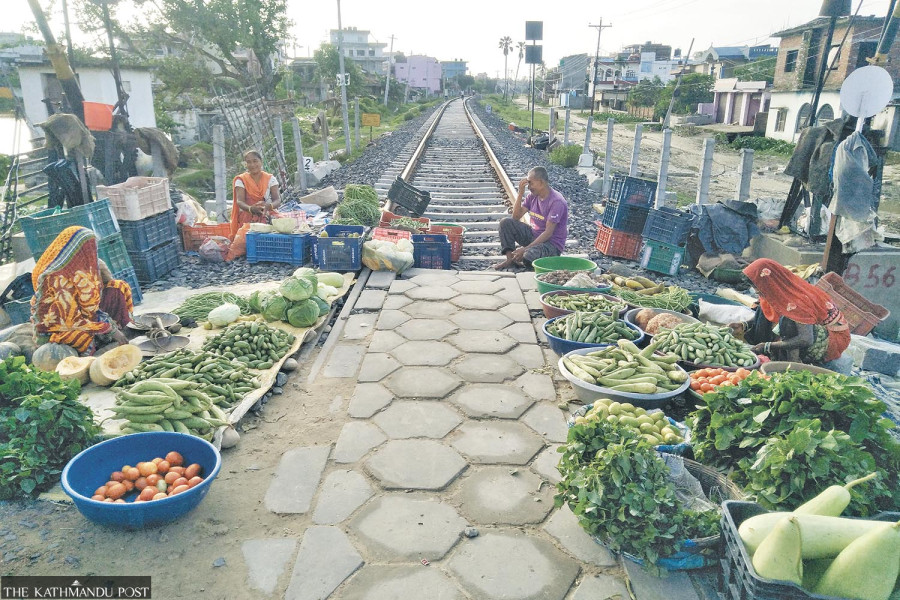
Report warns prolonged West Asia conflict may deepen poverty, disrupt remittance flows, raise food and fertiliser costs, and slow Nepal’s economic growth. An open-space local market in Janakpur. Post file photo
Nepal could lose between a week and a month’s progress in the Human Development Index due to the ongoing conflict in West Asia, as the country remains heavily exposed to external demand shocks, remittance inflows and imported inputs, according to a United Nations Development Programme report.
The preliminary assessment report, titled Military Escalation in the Middle East: Human Development Impacts Across Asia and the Pacific, published in mid-April, warns that Nepal and Pakistan face some of the highest risks of cumulative human development losses if the conflict persists.
The report says Nepal’s food security pressures could worsen due to a decline in remittance income as weaker Gulf economies reduce household purchasing power.
The military escalation has also disrupted sulphur shipments, a critical input for phosphate fertiliser widely used in agriculture. Rising sulphur prices and supply concerns, combined with efforts to secure alternative supplies, could further increase fertiliser costs for rice-based farming systems.
According to the report, such input-related vulnerabilities are particularly severe in countries where planting cycles and subsidy systems leave little room to absorb further shocks.
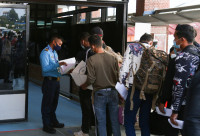
“In Nepal, employment vulnerability is closely tied to overseas labour migration, with around 80 percent of migrant workers going to Gulf countries and Malaysia,” the report states.
“If the disruption persists, constraints on labour mobility could affect employment prospects and household income for many migrant-dependent families.”
The UNDP simulation translates GDP shocks into changes in the income component of the HDI, while also adjusting health and education indicators in countries directly affected by large-scale destruction.
The findings are expressed in terms of years of human development progress lost relative to historical trends between 2013 and 2023. Losses are expected to be most severe in South Asia due to greater exposure to income and price shocks and weaker policy buffers, while East and Southeast Asia are projected to face comparatively smaller setbacks.
The report models three scenarios to estimate the conflict’s regional impact.
Scenario 1 assumes a 28-day disruption followed by an immediate return to pre-conflict conditions. Scenario 2 assumes the same initial shock followed by a four-month adjustment period, while Scenario 3 extends the adjustment period to eight months, reflecting more persistent economic effects.
“In lower middle-income countries like Nepal, an estimated 1,553 people could be pushed into poverty under Scenario 1, while the number rises to 3,994 under Scenario 2,” the report says.
Economist Puskar Bajracharya said a prolonged conflict would affect inflation, economic growth, trade and tourism, while weakening household consumption.
“The economic growth rate could fall to around 3 percent, below Nepal’s 70-year average growth rate of 4 percent,” Bajracharya said.
He warned that the next two years could see economic slowdown and rising poverty.
“A large section of the population is already hovering around the poverty line. Any prolonged economic shock could push many more people below it,” he said, estimating that between 25 and 33 percent of the population could fall into poverty if the conflict drags on.
“We can still create a cushion to minimise the impact by preparing a strategy for economic revival over the next two years,” he added.
The report notes that countries such as Nepal, India, Pakistan, Bangladesh and the Philippines are particularly vulnerable because remittance losses could weaken household incomes and reduce purchasing power.
According to Nepal Rastra Bank data, around 40 percent of Nepal’s total remittances come from Gulf countries. Nepal received Rs1.88 trillion in remittances during the first eight months of the current fiscal year.
In fiscal year 2024-25, Nepal received total remittances worth Rs1.70 trillion, including Rs673 billion from Gulf countries. The Gulf’s share of remittance inflows stood at around 39 percent in 2024-25, 38.9 percent in 2023-24, and 45.1 percent in 2022-23.
Nepal’s exposure is particularly high relative to the size of its economy. Remittances account for around 26 percent of GDP, while 41 percent of inflows come from 15 Middle Eastern countries. Additionally, 77.3 percent of migrants renewing labour permits are heading to the Middle East.
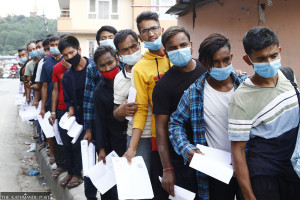
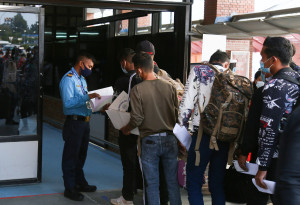
Around 1.9 million Nepali workers are currently employed in West Asia, including in Qatar, Saudi Arabia, Bahrain, Kuwait, the United Arab Emirates and Oman. Of the approximately 700,000 Nepalis leaving each year for foreign employment, around 450,000 travel to Gulf countries.
The report says South Asia is especially exposed because of its large population, high food expenditure, and sensitivity to remittance and energy price shocks. Pacific Island countries also face severe risks due to import dependence and fragile supply chains.
According to the UNDP estimates, output losses across Asia-Pacific could range from $97 billion to $299 billion, equivalent to 0.3 to 0.8 percent of the region’s gross domestic product.
South Asia is expected to account for the largest losses in both absolute and proportional terms, while East Asia could face substantial absolute losses but comparatively modest proportional declines.
Preliminary estimates suggest that a 1 percentage point decline in GDP growth could lead to a roughly 2 percentage point increase in unemployment among low-skilled workers, compared with around 1.5 percentage points for higher-skilled workers.
The report says the conflict is affecting people through multiple and reinforcing channels.
Energy remains the dominant transmission pathway, with 33 out of 36 countries assessed in the region reporting high vulnerability to oil-price shocks. More than 80 percent of crude oil and liquefied natural gas transiting through the Strait of Hormuz is destined for Asian markets.
Rising living costs are squeezing poor and near-poor households, while increases in food and fertiliser prices ahead of key planting cycles threaten to deepen food insecurity, particularly in South Asia and Pacific Island countries.
Employment losses are expected to be concentrated in informal sectors and micro, small and medium enterprises, with women, migrants and low-income households facing the greatest risks, according to the report.
Krishana Prasain is a business reporter for The Kathmandu Post covering markets. Before joining The Kathmandu Post in 2018, she spent 3 years in New Business Age magazine covering business.




 14.4°C Kathmandu