



 22.94°C Kathmandu

Thu, Oct 22, 2026
Money
Copycat Nepali brands face justice as court hearing begins
Only two of 11 companies respond to government notice; delays, weak enforcement blamed for rising infringement cases.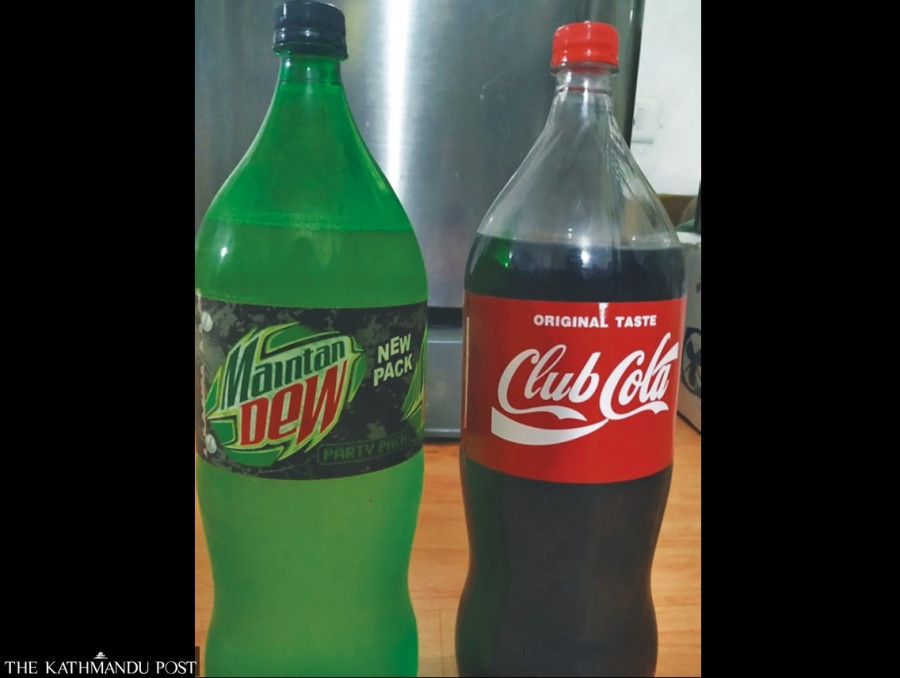
bookmark
Krishana Prasain
Published at : April 9, 2026
Updated at : April 9, 2026 19:57
Kathmandu
Out of 11 business firms summoned by the government to clarify alleged violations of trademark rules through a public notice, only two companies responded before the Wednesday deadline passed.
In the case of the remaining nine firms, the hearing will continue even in their absence. When defendants fail to present clarification, there is a high likelihood that the verdict will go against them, according to Shree Krishna Poudel, undersecretary at the law section of the Department of Industry.
As per the law, decisions on trademark infringement cases must be made within 90 days of filing. However, many such cases have remained pending for years, with some dating back over a decade. Poudel acknowledged that delays persist, largely because the department’s director general struggles to allocate sufficient time for legal matters alongside administrative responsibilities.
Among the respondents, Turbo Trek, Birgunj, against which the US-based Trek Bicycle Corporation filed a trademark infringement case, has submitted its clarification. The company has been accused of using a confusingly similar brand name and logo. The case was filed in April 2025.
Similarly, Om Mangalakali Textile Udyog in Kathmandu responded to a case filed by New Zealand-based Kathmandu Limited. The Nepali firm faces allegations of infringing on the “The Own Kathmandu” product brand. This case was also lodged in April 2025.
According to Poudel, the department has been handling trademark infringement cases since 2013, but the process remains sluggish. “It takes years to conclude such cases as the director general must handle both administrative and legal decisions. Due to the heavy workload, there is limited time to focus on legal proceedings,” he said.
Experts say outdated laws, weak enforcement provisions, and prolonged delays have emboldened companies accused of infringement, leading them to treat such cases lightly and often ignore official notices.
On March 18, the department published a list of 11 Nepali companies accused of violating trademark rules, asking them to submit written clarification supported by evidence.
Among the cases, Turner Entertainment Co, US, filed complaints against Naulo Foods Industries in Bharatpur, Chitwan, for allegedly copying the logo of its “Kingcorn Lottery” product, and against Pabitra Laxmi Food Products in Balkot, Bhaktapur, for imitating the “Jerry Cone” branding. These cases date back to October 2018.
Energy Brands Inc, US, lodged a complaint in September 2019 against Aqua Nepal Bisleri in Rupandehi over alleged infringement involving its “ANBS Good Drinks” branding.
Similarly, Coca-Cola Company, US, filed a case against Premium Organics for using a similar logo for its product “Palpal Cola”. It has also filed another complaint against Pathivara Food and Packaging Udhyog in Jhapa for copying its branding through labels such as “Cool Cola” and “Super Fantastic”. The latter case was filed in May 2019.
In another case, Germany-based Hugo Boss Trademark Management GmbH and Co KG accused Imaanur Fashion Ware Industries in Jhapa of copying its logo for products branded “Bass”. The complaint was filed in October 2019.
Zoom Communications, Inc, US, has also taken legal action against Kaveesh Marketing in Birtamod, Jhapa, for using a similar logo under the name “Kaveesh Zoom Cosmetic”.
Amid a growing number of disputes and the absence of a comprehensive legal framework, Nepal is preparing to introduce a new law on industrial property rights. The Industrial Property Rights Bill, 2025, had been tabled in Parliament but lapsed after the House was dissolved.
“As per the process, the bill will now be returned to the concerned ministry,” Poudel said. “It will be further discussed at the ministry and re-tabled in Parliament after Cabinet approval.”
The proposed legislation aims to establish a dedicated office to oversee intellectual property matters, including patents, trademarks, and industrial designs. It also proposes stricter penalties, with fines of up to Rs1.5 million—15 times the current maximum of Rs100,000. However, it does not include provisions for imprisonment, as intellectual property violations are treated as industrial rather than criminal offences.
If enacted, the new law will replace the outdated Patent, Design, and Trademark Act of 1965. Although the draft was prepared in 2019 by the Ministry of Industry, Commerce, and Supplies, its progress has been hindered by the Covid-19 pandemic and subsequent political instability.
Department data show that 356 cases—mostly related to trademark infringement—were registered in the last fiscal year, while 483 were resolved. In the first eight months of the current fiscal year, 382 new cases have been filed, but only 178 have been settled, indicating a growing backlog.
The trend suggests that new cases are rising faster than they are being resolved.
Earlier this year, Kentucky Fried Chicken (KFC), US, won a trademark dispute against a local brand, Krispy Krunchy Fried Chicken (KKFC), after a seven-year legal battle, with authorities ordering the imitation business to cease operations under its existing name.
In another notable case, Kansai Nerolac Paints, an Indian subsidiary of Japan’s Kansai Paints, was barred from entering the Nepali market for years after a local firm registered the “Nerolac” trademark. In 2020, following a six-year dispute, Kansai Nerolac Paints Nepal won its case against Rukmini Chemical Industries.
As consumer awareness remains low, many buyers struggle to distinguish between genuine and counterfeit goods, while cheaper prices make fake products attractive to cost-conscious consumers. This demand continues to fuel the proliferation of counterfeit goods in the market, according to consumer rights activists.
Krishana Prasain
Krishana Prasain is a business reporter for The Kathmandu Post covering markets. Before joining The Kathmandu Post in 2018, she spent 3 years in New Business Age magazine covering business.



Most Read from Money
Nepal travel agents threaten to stop selling Thailand trips over visa rules

Why does an hour long flight to Dhangadhi cost more than a flight to New Delhi?

Malaysia rejects Nepal’s demand to open recruitment to all manpower agencies

No school, but a graduation cap for women dairy farmers
Nepal arrests four medical service providers as Malaysia recruitment row deepens
Editor's Picks




E-PAPER | October 22, 2026

×