Fears over fuel supply boost demand for electric stoves
Escalating tensions in West Asia raise concerns about gas shortages, prompting consumers to turn to induction hobs, rice cookers, and compatible cookware. Shutterstock
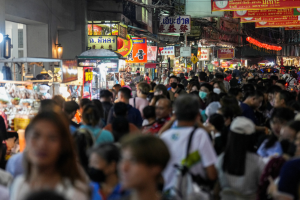
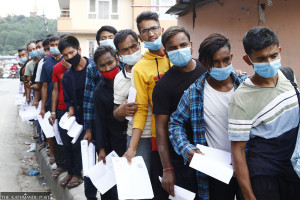
Amid the ongoing conflict in West Asia, consumers in many countries, including Nepal and India, are increasingly reporting difficulties procuring liquefied petroleum gas (LPG). For several days, consumers have been seen queuing with empty cylinders.
Even as Nepal Oil Corporation (NOC) claims the shortage is artificial, it announced plans to sell only half-filled cylinders to discourage hoarding, effective from Friday.
Conversely, the Indian government has maintained that there is no shortage and that gas distribution remains regular. Nevertheless, fearing a possible crisis, consumers have begun enquiring about electric stoves. Retailers, wholesalers and government-owned trading companies report a significant spike in demand.
Dharma Kumari Rajbanshi, head of the Thapathali-based provincial office of the Food Management and Trading Company (FMTC), said enquiries have surged recently. She explained that until now, the company supplied electric stoves mainly based on specific orders from government bodies or individuals.
“Until a few days ago, we were selling Baltra electric stoves for Rs 4,200. Due to war-related fears of gas shortages, many more people are now coming to ask about them,” she said.
Similarly, the proprietor of Neupane Electricity Shop in Shankhamul reported a rise in customers seeking induction hobs, compatible cookware and rice cookers. “It is likely due to the lack of cooking gas. The number of visitors coming to enquire and purchase has grown significantly compared to normal times,” he said.
Stakeholders say instability in fuel supplies caused by the Iran–US–Israel conflict is contributing to an artificial gas shortage. Experts believe electric stoves are the most viable alternative. Gunakar Bhatta, former executive director of Nepal Rastra Bank, emphasised that as the country is entirely dependent on imported petroleum, utilising domestic energy is essential.
“We can increase the use of firewood or electric appliances as alternatives to cooking gas,” Bhatta said. “While firewood has its drawbacks, we can certainly promote electric stoves in electrified areas.” He added that local municipalities must also play a role in reducing dependence on gas.
Consumption of induction stoves first rose notably during the 2015 earthquake and the subsequent unofficial Indian blockade. At that time, the Chinese government provided 10,000 induction hobs, which were sold by the state-owned Food Management and Trading Company for Rs 4,000 each. However, despite increased adoption, inconsistent power quality often forces consumers to keep both gas and electric options. High initial costs for specialised cookware also remain a deterrent for some.
Data from the Department of Customs for the first seven months of the current fiscal year reflects this upward trend. While 111,600 units were imported during the same period of the previous fiscal year, imports have risen to 132,000 units this year. In the 2025-26 fiscal year alone, 132,000 induction hobs worth Rs215.4 million have already been imported.
The government has encouraged the shift by offering customs concessions. Since the 2021-22 fiscal year, customs duty has been set at one percent, along with a 13 percent value added tax (VAT). Despite these tax cuts intended to pass savings on to consumers, many argue that retail prices have not declined proportionately.
The reliability of the power grid remains the final hurdle. While the government continues to reduce duties—from 15 percent in 2019-20 to the current one percent—consumers remain wary of power cuts. However, Hitendra Dev Shakya, managing director of the Nepal Electricity Authority (NEA), insists that reliability is improving.
“The demand for electric appliances is rising because the grid is becoming more dependable,” Shakya said. “Peak demand currently stands at around 400 MW. We encourage the use of clean, domestically produced energy.”




 13.9°C Kathmandu