Nepal set to allow Indian high-value notes after a decade-long ban
Currency reform comes as country seeks to revive tourism and reduce cross-border legal hassles for travellers. Gazette notice will be published soon, ending years of confusion. It’ll end the compulsion for migrant workers to bring home earnings in low-denomination notes. Shutterstock
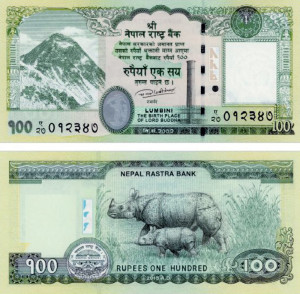
Nepal is preparing to allow the circulation of Indian currency notes above INR100 after India formally gave the go-ahead—nearly a decade after the high-denomination notes were banned in Nepal.
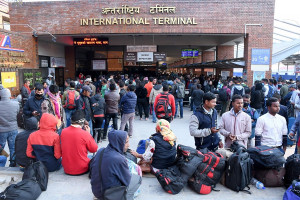
Officials say the decision will significantly ease currency-related hassles for Nepali migrant workers travelling to India, as well as students, pilgrims, medical visitors and tourists from both countries.
“We are in the final stages of opening up the notes,” said Guru Prasad Poudel, spokesperson for Nepal Rastra Bank. “We are preparing to publish the notice in the Nepal Gazette, and will then issue circulars to banks and financial institutions about the new rule.” He said the official date is yet to be confirmed, but the process is “in the final stage.”
India’s central bank, the Reserve Bank of India, amended its Foreign Exchange Management (Export and Import of Currency) Regulations on November 28. The amendment was published in India’s official Gazette on December 2.
According to the notification, individuals may take to Nepal and bring back to India Indian currency notes of any amount in denominations up to INR100. In addition, they may carry notes above INR100 up to a total value of INR25,000 in either direction.
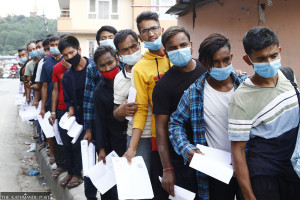
“This was our longstanding request and India responded positively,” Poudel said. “Large numbers of Nepalis travel to India for various purposes, and the currency restrictions have created difficulties for a long time, especially for migrant workers who earn in India.”
Many migrant workers are forced to bring home their earnings in low-denomination notes, making them more vulnerable to theft and pickpocketing during travel. A number of Nepalis have also been jailed for carrying INR500 and INR1,000 notes in the past.
The restrictions have hurt Nepal’s tourism sector as well, particularly casinos and hospitality businesses that cater to Indian visitors. Without the ability to carry higher-value notes, Indian tourists cannot spend freely, leading to lower revenues in border towns.
Tourism entrepreneurs say many Indians are unaware of the currency rules, leading to frequent arrests and fines.
“I haven’t heard the news officially, but if it’s true, it will be a big relief for all,” said Jotu Ram Chaudhary, senior manager at The Rubus Hotel in Dhangadhi. “The currency regulation has been strict. Nepalis and foreigners, including Indian tourists, are frequently arrested at border points as they don’t know the rules.”
He said several guests travelling overland have faced legal trouble simply for carrying Indian notes above INR100.
Most visitors to western Nepal—from Kailali and Bardia to Nepalgunj—come from cities like Lucknow and Delhi. Nepalgunj sees a particular boom in the summer months during the Kailash Mansarovar Yatra in Tibet. Currency restrictions have long been a major concern for these visitors.
Nepal, for its part, allows tourists—including Indians—to bring in up to US$5,000 or its equivalent in other convertible currencies without declaration. Larger amounts must be declared at customs, and visitors cannot take more than $5,000 out of Nepal.
However, travel trade entrepreneurs point out that the INR25,000 cap on higher denominations could still limit spending.
India’s revised rules also state that individuals may take Nepal’s currency to India or bring it back, subject to Nepal’s own limitations.
According to Poudel, Nepalis may carry up to Rs5,000 to India and other countries.
India is Nepal’s largest source of tourists.
A few months ago, Federation of Nepalese Chambers of Commerce and Industry President Chandra Prasad Dhakal urged the government to revise the currency limits for Indian visitors.
He noted that India has seen rapid economic growth, with some 15 million people joining the middle class over the past 15 years—particularly in regions bordering Nepal—creating significant tourism potential.
India’s currency policy has shifted several times over the past decade.
In February 2015, the Reserve Bank of India allowed Nepalis to carry INR500 and INR1,000 notes up to INR25,000. Before that, those denominations were banned in Nepal due to security concerns, and travellers could only carry up to INR100.
Then, on November 8, 2016, the Indian government demonetised INR500 and INR1,000 notes “to unearth unaccounted wealth and fight corruption,” replacing them with the INR2,000 notes.
Following this, Nepal’s Cabinet decided on December 13, 2018 to ban Indian notes above INR100, and Nepal Rastra Bank issued a circular on January 20, 2019 prohibiting Nepali travellers, banks and financial institutions from holding or trading such notes.
Efforts have been made to ease the burden through digital methods.
Since March 1 last year, Indian tourists have been able to make payments in Nepal using QR codes via mobile apps. While this has helped in urban areas, tourism entrepreneurs say the system remains unreliable in remote trekking and adventure destinations, where connectivity is poor. The problem has grown as more Indians venture into adventure travel and mountaineering.
Exact numbers for overland Indian arrivals are hard to establish. A Nepal Tourism Board study before the 2015 earthquake estimated that around 1.2 million Indians entered Nepal by land each year.
Officials now believe the number may have reached two million, though many are not recorded as tourists. By contrast, 317,773 Indian tourists arrived by air last year.
Overland Indian tourists stay an average of 5.8 days and spend around Rs11,310 per person, according to the study. These unregistered visitors keep border hotels busy, especially during the off-season months from June to August, when many travel to Nepal to escape the scorching heat in northern India.
Popular destinations—Bhairahawa, Chitwan and Pokhara—largely benefit from this seasonal movement.
Sangam Prasain is Business Editor at The Kathmandu Post, covering tourism, agriculture, mountaineering, aviation, infrastructure and other economic affairs. He joined The Kathmandu Post in October 2009.




 24.79°C Kathmandu