Private company starts import and supply of LNG in Nepal
Yogya Holding, a subsidiary of SG Group with an investment of around Rs600 million, started distribution from its plant in Simara, Bara a week ago. Photo: Courtesy of HardeepSPuri via X
In a first for Nepal, a private company—Yogya Holding—has started importing and supplying liquefied natural gas (LNG) in the country.
LNG is cooled to a liquid state for easier and safer storage and transport. By cooling it to about minus 162 degrees Celsius, its volume is reduced by about 600 times, allowing it to be shipped overseas on specialised vessels. Once it reaches its destination, it is re-gasified and delivered through pipelines.
To make it, natural gas is extracted from underground deposits and impurities like water, carbon dioxide, and sulfur are removed.
Yogya Holding, a subsidiary of SG Group with an investment of around Rs600 million, started import and distribution from its plant in Simara, Bara a week ago.
SG Group has been bottling and supplying liquefied petroleum gas (LPG) with brand names Everest Gas, Sahara Gas, Prima Gas, Sugam Gas Kamakhya Gas, Trisul Gas and Saipal Gas across the country. The group is also engaged in manufacturing gas cylinders.
“The plant has been established with technical support from the Indian Oil Corporation and has been set up under the Indian Explosives Act,” said Shiva Prasad Ghimire, chairman of SG Group. “We have plans to expand LNG plants to different parts of the country as per the demand.”
“We have also started supplying LNG to Bright Metal Industries, a nearby factory, through a pipeline. For a week, the metal factory has been operating with the LNG we supplied,” he said.
In the first phase, the company plans to import and supply LNG for industrial usage. In the second, it will supply compressed natural gas (CNG) for use by vehicles.
LNG is a clean, reliable, and cost-effective alternative to conventional fuels, he said. By introducing these energy sources to Nepal, SG Group is contributing to reducing carbon emissions, improving energy security, and promoting a greener future.
The state-owned Nepal Oil Corporation has an agreement with the Indian Oil Corporation to import and distribute kerosene, diesel, petrol, air turbine fuel and LPG. Other products can be imported and distributed by the private sector, Ghimire said.
According to Ghimire, the price of LNG is not costly given its efficiency. For instance, if a kg of LPG burns for an hour then LNG burns for 15 minutes more.
The customs duty on LPG is 5 percent while it is 15 percent for LNG. To promote clean energy, the government should reconsider the customs duty on LNG, he said.
“Since we are in the trial phase, discussion continues to minimise the cost of all components of the supply and distribution chain to fix the actual cost of LNG,” Ghimire said. The price will be reviewed fortnightly according to the international market.
LNG is being imported from the Indian Oil Corporation on tankers. The gas can be supplied through a pipeline but the storage needs to be of international standard, the company said. It can also be bottled in cylinders for supply.
The gas is used as a fuel for electricity generation, transportation (ships, trucks, buses), and for residential and commercial heating and cooking. Likewise, it is used in industry as a fuel for power generation and process heat, and as a raw material for products like plastics and fertilisers.
The fuel offers environmental benefits like reduced emissions of greenhouse gases and local pollutants, making it a cleaner-burning fossil fuel. It also provides operational advantages, such as increased energy density for transport, lower fuel costs, and greater energy security and reliability through diversified and global energy supply.
According to the Department of Customs, Nepal imported petroleum products worth Rs326.14 billion in the last fiscal year. The country imported LPG gas worth Rs62.58 billion in the review period.
According to The Hindu, an Indian newspaper, the consignment reached Yogya Holding’s facility on November 19. This is the initial consignment of a five-year deal between IndianOil and Yogya Holding to deliver 1,000 tonnes of LNG during the agreed period. The agreement was signed during the India Energy Week in February this year.
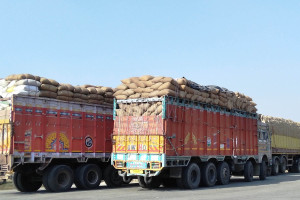
The LNG is being sourced from IndianOil’s Dhamra LNG terminal in Odisha and is being transported using cryogenic road tankers via the international border at Raxaul.
Krishana Prasain is a business reporter for The Kathmandu Post covering markets. Before joining The Kathmandu Post in 2018, she spent 3 years in New Business Age magazine covering business.




 27.61°C Kathmandu