Nepal’s cities lag rural areas in vaccinating children
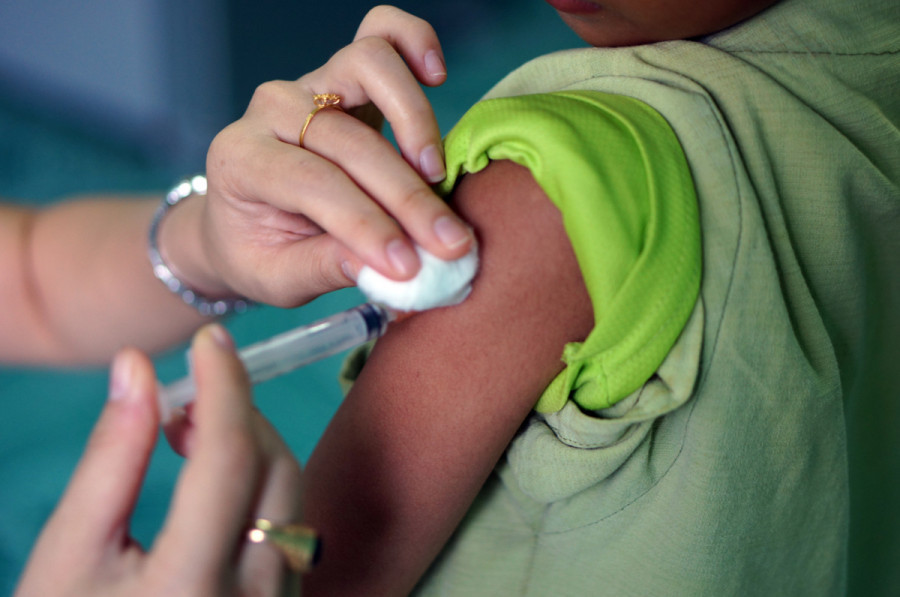
Officials say floating populations, slum dwellers, and migrant workers are among the biggest hurdles to achieving full vaccination coverage in urban areas. Shutterstock
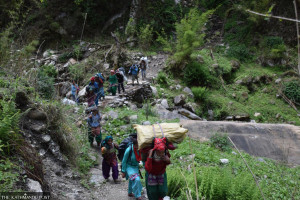
In April this year, immunisation workers deployed from the Public Health Office, Dolpa travelled four days to reach Chharka Bhot, one of the highest permanent human settlements in the world, located in upper Dolpa.
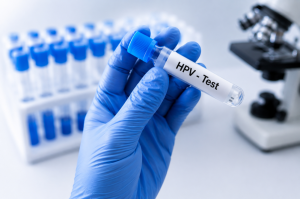
They walked aroud 14 hours a day, from 6 o’clock in the morning to 8 in the evening, with vaccine carriers containing human papillomavirus (HPV) vaccine doses, to reach the village, which sits at 4,350 metres.
“We did not have any other option except to walk,” said Dr Abhiyan Gautam, chief of the Immunisation Section at the Family Welfare Division under the Department of Health Services. “Our health workers walked across barren alpine terrain and valleys, through snow-covered trails, and crossed the Bhola Parchung and Chhoila passes at elevations of over 5,100 meters and 5,000 meters, respectively, and completed the campaign successfully.”
Officials found that people in the remote villages were highly supportive and welcomed them warmly. They also helped make the campaign a complete success, as all girls aged 10, or those studying in grade six, were administered the HPV vaccine.
As in remote Chharka Bhot in Upper Dolpa, vaccine acceptance is very high in rural settings. However, public health experts say the picture in urban areas and big cities is concerning.
According to last fiscal year’s data on immunisation maintained by the Ministry of Health and Food Safety, the median full immunisation rate in metropolitan areas was only 64 percent, whereas the rate in rural municipalities stands at 95 percent.
“Children living in cities and metropolitan areas were much less likely to receive all recommended vaccines than children living in rural municipalities,” reads the report.
The report stated that the nationwide full-immunisation rate dropped to 92 percent in fiscal year 2024-25 from 96 percent in the previous fiscal year, 2023-24. This means the proportion of children who received all required vaccines fell from 96 percent in the fiscal year 2023-24 to 92 percent in the fiscal year 2024-25.
“Children living in urban settings or metropolises not receiving all recommended doses of routine vaccines does not mean thay are getting zero doses,” said Dr Gautam. “But the coverage rate of routine immunisation is much better in rural settings compared to big cities and metropolises.”
As childhood immunisation is one of its priority programmes, the government provides 14 types of antigens against a range of diseases, including measles-rubella, pneumonia, tuberculosis, diphtheria, pertussis, tetanus, hepatitis B, rotavirus, Japanese encephalitis and typhoid, human papilloma virus under the regular immunisation programme, free of cost.
“The data maintained by the health ministry is based only on the official population figures for urban settings,” said Dr Shyam Raj Upreti, an immunisation expert, who is also the former director general at the Department of Health Service. “The actual number of children missing doses of routine vaccines could be much higher than what is shown in the government report.”
Experts say population dynamics, including floating populations, internal and external migration, the urban poor, scattered slums, a high density of working-class people, and a lack of awareness, among others, pose some of the biggest challenges to public health programmes, including routine immunisation, as the government's access to these groups has been limited for years.
They ask authorities to focus on high-risk groups and develop micro-plans when designing health programmes.
“The risk of vaccine-preventable disease outbreaks in big cities and in urban settings increases if the vaccine coverage remains constantly low,” said Upreti. “Authorities must make micro-plans to boost coverage of routine vaccines.”
Routine immunisation is one of the most successful programmes in Nepal, with high coverage. It is also credited with remarkable progress in reducing the under-five mortality rate.
However, the significant gap in full-immunisation rates between urban and rural areas poses a challenge to progress against vaccine-preventable diseases, say immunisation experts.
Last year, the government had declared the entire country fully immunised and sustained. But government data show that a large number of children have not received all vaccine doses offered under the routine immunisation programme.
The country has also witnessed measles outbreaks in multiple districts since the start of 2026, in which hundreds of children have been infected. Low vaccination coverage is blamed for the outbreaks. Health officials say most cases have been reported among marginalised communities and those who were not vaccinated in the past.
Arjun Poudel is a health reporter for The Kathmandu Post. Before joining the Post, he worked for Sagarmatha Television, Naya Patrika, Republica and The Himalayan Times.




 21.11°C Kathmandu