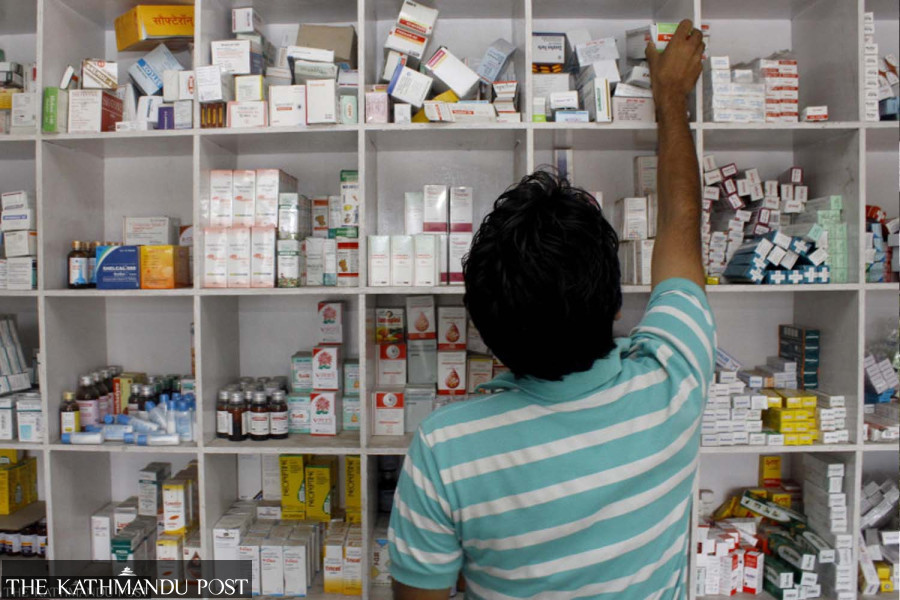
Medicines used by hundreds of thousands of patients across the country will become costlier soon, as pharma companies in Nepal warn they can no longer manufacture medicines at current prices due to a sharp rise in raw material and other costs.
Along with the higher raw material costs, the companies cite a sharp rise in the US dollar, increased transport fares, a shortage of medical-grade plastic as reasons for the price hike.
Representatives of the Association of Pharmaceutical Producers of Nepal met with Department of Drug Administration officials on Tuesday, seeking permission to raise medicine prices.
“Representatives of drug manufacturing companies complained about rising costs of raw materials and other related costs and sought permission for a price increase,” said Narayan Prasad Dhakal, director general at the department. “I asked them to furnish a report on the list of raw materials whose prices have increased significantly.”
The department, which is the national regulatory body of medicines—both allopathic and Ayurvedic, said that it cannot approve a price hike that would directly impact hundreds of thousands of patients across the country.
“I don’t have to say anything if the Cabinet decides on this issue, but it is not reasonable to raise medicine prices during hard times,” said Dhakal. “Manufacturers always try to increase prices during difficult periods. They want permission to increase prices by 10 percent on all medicines with immediate effect, which I denied.”
The department has asked the association to submit a list of raw materials whose prices have increased markedly.
Drug manufacturing companies had lobbied for price hikes when India restricted the supply of raw materials for dozens of medicines during the Covid pandemic.
Representatives of drug manufacturing companies, however, deny any intent to take undue advantage of the situation.
“It is a fact that the price of the US dollar has increased sharply, which affects the purchase of raw materials. Prices of some raw materials have increased up to 70 percent, and some medicines, including paracetamol, up to 100 percent,” said Biplab Adhikari, president of the Association of Pharmaceuticals Producers of Nepal.
“Fuel prices have risen, and this has raised transport costs. Many companies are facing shortages of medical grade plastic used to manufacture intravenous fluid containers, and packaging materials have also become expensive.”
On Saturday, the Nepali rupee hit an all-time low of Rs150.25 against the US dollar.
Adhikari said his association is preparing a list of raw materials whose prices have increased sharply to submit to the department.
He added that raw materials for widely used drugs, including paracetamol, which is used to control fever, and metformin used by diabetics, have risen sharply due to the ongoing war in the Gulf. Apart from that, the price of raw materials for antibiotics has also risen sharply, according to him.
The association said there are 83 domestic drug manufacturing companies in Nepal, and they produce nearly 50 percent of the medicines used in the country. More than 30,000 people are employed in the pharmaceutical sector, which has an estimated annual market of around Rs60 billion.
There are over 25,000 pharmacies operating throughout the country.
Arjun Poudel is a health reporter for The Kathmandu Post. Before joining the Post, he worked for Sagarmatha Television, Naya Patrika, Republica and The Himalayan Times.




 19.27°C Kathmandu