The Ministry of Health and Population has directed the Family Welfare Division under the Department of Health Services to prepare a detailed assessment so as to launch a mass immunisation drive against the Japanese encephalitis disease in 2026.
The ministry’s move comes amid excessive death and severity rate from the deadly disease on the unvaccinated population.
“With the assessment report, we will also seek a budget for the campaign,” an official at the department said, asking not to be named as he is not authorised to speak to the media. “We have tried our best to secure aid for the campaign, but no development partners have shown interest to finance the programme. We believe that it is the responsibility of the government to save the lives of the people.”
JE is a viral brain infection, endemic to Asia and parts of the Western Pacific. According to the World Health Organisation, it is a mosquito-borne flavivirus belonging to the same family as dengue, Zika, yellow fever, and West Nile viruses. The virus kills a third of those who fall ill and leaves up to a half of those who survive with severe life-long disabilities, according to the UN health body.
At least 35 people died and over 175 others have been infected with the disease in Nepal since June this year. The killer disease has spread to 175 local units of 45 districts.
Last year, 23 people succumbed to JE, including one in Kathmandu Valley, and over 80 people were infected.
New data from the Immunisation Section of the Family Welfare Division under the Department of Health Services shows that the majority—76 percent—of JE related deaths occurred in people above 40 years of age, meaning that all deceased were unvaccinated. The deadly virus first appeared in eastern Nepal in June and gradually spread to the western parts of the country. Of the 45 affected districts, 23 are hill districts.
Lumbini province reported 11 JE deaths and 55 infections, the highest in the country, followed by Gandaki province with five deaths and 34 infections, and Bagmati province with eight deaths and 24 infections.
Similarly, Koshi province reported four deaths and 23 infections, Madhesh province three deaths and 17 infections, Sudurpaschim province two deaths and 15 infections, and Karnali province one death and seven infections. The Post could not establish the address of one of the deceased.
The number of reported cases could be just the tip of the iceberg, as tests are usually carried out only on hospitalised patients with severe conditions, officials say.
Seventy percent of lab-confirmed JE cases have been detected in those above 15 years of age.
Doctors say complications from JE infection could cause permanent injuries to the brain and the nervous system. As there is no specific cure, treatment focuses on managing symptoms. However, safe and effective vaccines have been developed to prevent infection.
Health officials said that their attempts to persuade development partners, including the World Health Organisation, to support a mass JE vaccination campaign have not succeeded, as JE vaccination is not in priority of the aid agencies including the Global Alliance for Vaccines and Immunisations.
“Yes, officials are preparing an assessment report including estimated cost for the mass campaign,” said Dr Ramesh Kanta Adhikari, senior immunisation expert and the chair of the National Immunisation Advisory Committee. “We also hope the Chinese government helps with the immunisation drive, as Chinese companies manufacture JE vaccines.”
Experts say that the unvaccinated population are at high risk of getting infected and severe as data show most of the victims are unvaccinated.
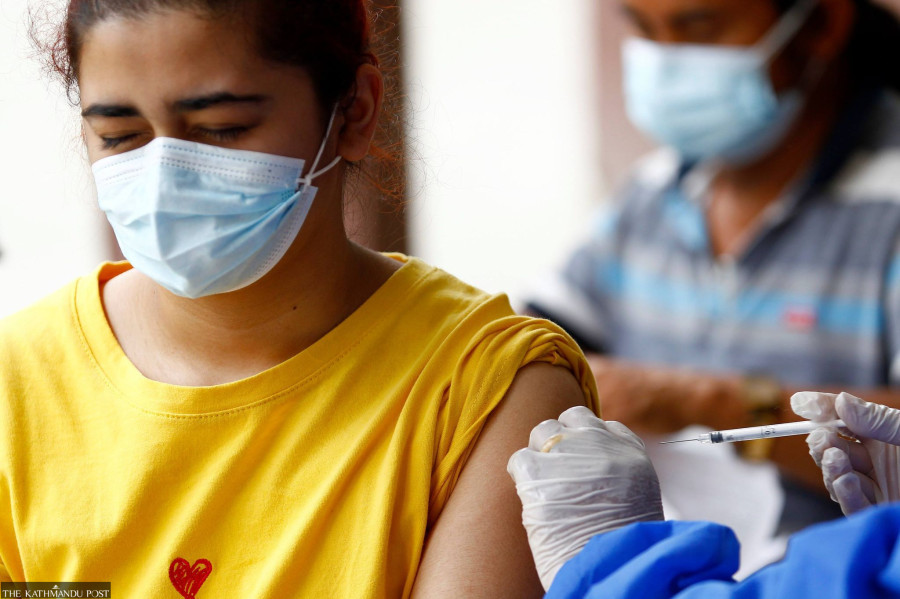
Health officials also agreed that vaccination could save dozens of lives every year from JE infection.
“Yes, our own experience shows, vaccination is an effective means for control of JE infection, severity, life-long disability and deaths,” said Dr Abhiyan Gautam, chief of the Immunisation Section at the Family Welfare Division.
In 2005, JE killed nearly 2,000 people in Nepal—mostly children in districts in the southern plains. Nepal started administering the vaccine in 2006, eight years before the World Health Organisation officially issued prequalification certification, due to high rates of infection and deaths from the virus at the time.
In the first phase, all populations of the highly affected four districts—Banke, Bardiya, Dang, and Kailali—were vaccinated. Later, the programme was expanded to 19 other affected districts, targeting children under 15.
The government integrated the JE vaccine into routine immunisation in 2015. Even then, people continue to die, and dozens get infected every year.
The JE virus is transmitted to humans through the bite of infected Culex mosquitoes. Pigs and ducks are considered natural reservoirs of the virus.
An estimated 12.5 million people are thought to be at high risk of JE infection in Nepal.




 15.68°C Kathmandu