



 14.73°C Kathmandu
Sat, Oct 24, 2026
Fiction Park
The circle of soft things
The children moved in rhythms she once knew by heart. Their laughter felt like an old echo.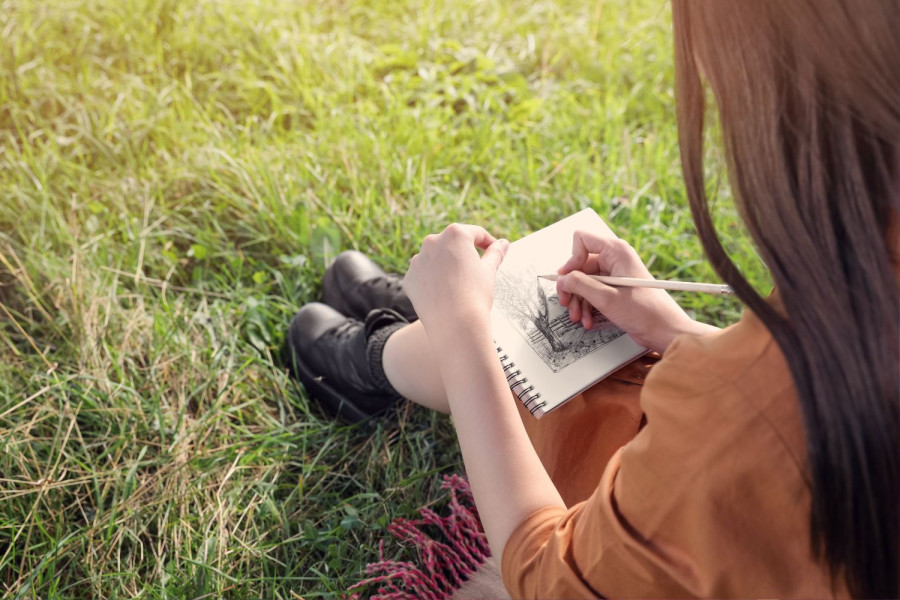
bookmark
Aarushi Adhikari
Published at : January 11, 2026
Updated at : January 11, 2026 08:20
The ground was alive long before anyone realised it. At first, it was just dust rising in the gentle afternoon breeze, a few scattered footprints, and a murmur. Then, like a spark striking dry grass, children gathered, and the entire area breathed. From a distance, the movement appeared random and unplanned, yet it had its own rhythm, formed by habit, memory, and the basic desire to move before being called back inside.
They moved together in a loose, laughing herd, hands linked, feet skipping over the dusty earth. Someone shouted, “Chu-chu train!” and instantly their small bodies rearranged into a wiggling line, the first child puffing out imaginary steam while the rest followed with delighted shrieks. From afar, it looked like a living ribbon, with bright shirts, mismatched slippers, and hair that bounced as they crossed the open ground.
Their train swerved left and right, dangerously close to collapsing into giggles. The leader exaggerated every turn, every halt, every whistle. The rest copied, stumbling and clutching at each other, tiny palms brushing away the fear of falling. When the “engine” stopped without warning, the whole line bumped like dominoes, collapsing into a heap of laughter and dust.
The sound carried across the school grounds, past classrooms with chipped paint and half-open windows, past walls that bore old murals fading into the plaster. The bell had rung long ago, but the children lingered, as if the ground itself had asked them to stay a little longer. Dust clung to their ankles and the hems of their uniforms, marking time more honestly than any clock.
Mira smiled as she watched them, the shade of the tree softening the afternoon heat. A few children caught her gaze and smiled shyly before darting back into the wave of chatter and play. Their dishevelled shirts fluttered in the wind, hair strands catching dust as they wiped their sweaty foreheads, already braced for another chaotic round of the train.
As she watched them gather again in a crooked line, something warm tugged at her chest. It was a memory, washed out in places yet glowing in a way that hurt.
She remembered standing on a similar patch of ground years ago, her own small fingers woven with those of friends she no longer saw. She remembered the sun on her back, the sticky sweat on her brow, the breathless laughter as they shouted “Chu-chu train!” in voices too light to worry about growing up.
Back then, play was never planned. It spilt out of time between classes, out of boredom, out of the simple need to move. No one told them it was important. No one documented it. And yet those moments stayed, more vividly than lessons or rules ever did. They settled quietly into memory, shaping how childhood felt long after the dust had been washed from their knees and the days themselves had blurred. The sweetness held her for a moment until reality tapped her shoulder.
One of the older kids stepped in front of her, his shadow merging with hers. He extended his sketchbook with both hands, eyes bright with the shy pride she had learned to recognise. Inside were drawings he had made over the months she had been gone. The edges of the pages were soft from handling, faint smudges marking places where his fingers had lingered. The smell of pencil and paper carried a quiet familiarity, as if the sketches themselves were whispering the hours of attention and care he had poured into them.
She took the book gently, flipping through page after page of pencil lines that had grown steadier, bolder, and more certain. Bottles, stools, and a corner of the classroom window. Objects chosen not because they were beautiful, but because they were there. Each sketch seemed to breathe with a kind of quiet life. The lines held hesitations and small triumphs, shadows cast just slightly off, curves that wavered with confidence gained slowly over time. As her eyes moved from page to page, she could almost feel the boy’s hand moving across the paper, learning, adjusting, discovering what it meant to see something fully.
She nodded, a quiet smile tugging at her lips as she met his eager eyes.
“Better than before,” Mira murmured, soft but honest.
The boy’s shoulders relaxed, relief melting the stiffness he had carried across the field.
“But,” she added, tapping the corner of one page, “here, notice how the lines feel unsure.” He leaned closer, frowning in concentration.
“You are watching the object,” she said, “but you are not really looking at it. Slow down. Notice where the shadow actually falls, where the curve tightens, where the line breathes. Do not rush. Let the drawing tell you what it needs.” Understanding flickered across his face, slow but steady.
She flipped to another page where he had drawn the same bottle three times. “This one,” she said, pointing at the middle sketch, “you did not overthink. That is why it feels stronger.”
A small, proud smile appeared on his face.
“You are improving,” she said, handing the sketchbook back. “But improvement does not end here. Next time I come, show me the same object again. Look at it longer. Draw it slower.”
He nodded with a seriousness older than his age, clutching the book to his chest before running back into the dust and laughter.
Mira watched him weave into the chatter, her earlier memory still glowing faintly inside her. Teaching, she had learned, was not about perfect lines or finished drawings. It was about teaching patience in a world that hurried children too quickly, about showing them that looking carefully was a skill worth practising. It was in the small pauses, the gentle corrections, the moments when a child’s eyes widened with understanding that true learning revealed itself. She realised that the work she did here, quiet and unassuming, mattered in ways that were impossible to measure, shaping not only how they drew, but how they saw, noticed, and remembered the world around them.
Through their games, their joy, and their shaky sketches, she remembered all the versions of herself she had left behind and all the ones she was still becoming.
Her gaze drifted across the ground. Dust spiralled in familiar patterns. The children moved in rhythms she once knew by heart. Their laughter, light, breathless, and unfiltered, felt like an old echo. Things had changed.
Once, she had stood exactly where they stood: knees scratched from falling, hands messy with chalk and soil, learning to draw crooked houses and lopsided trees with more imagination than skill. Back then, she was the one chasing shadows, hoping for a teacher’s nod and for someone older to notice a spark in her scribbles. Now she was the one giving that nod.
It struck her gently but deeply that the ground had stayed the same while she had changed. She was no longer the child tugging at a mentor’s sleeve; she had become the one steadying small hands, the one child looked for at the edge of the field. Her voice had grown into the voice she once admired: patient, encouraging, and shaping.
Time had moved quietly, almost sneakily, turning her from the one who learned to the one who taught.
A soft smile touched her lips. Maybe this was the circle nobody mentioned: how the things you loved as a child eventually return to you, asking to be passed on. As she watched the kids form another crooked “chu-chu train,” with dust spiralling behind them like smoke from an old engine, she felt neither sadness nor nostalgia, but a deep tenderness for the journey she had made.
From the little girl gripping her friend’s hand in a line of giggling children to the young woman standing under the tree, smiling as another line of tiny hands linked together and ran across the dusty ground, the ground breathed once more beneath their feet.
Aarushi Adhikari
Adhikari is a fine arts student.




Editor's Picks





E-PAPER | October 24, 2026

×