The government has finally got Ratna Park right. The iconic landmark, which was closed for renovation for eight months, was finally opened for the public last month. Initially, the park was built for children in memory of Queen Ratna. But due to disrepair, it slowly had turned into a haven for junkies and sex workers. At its nadir, the place reeked of urine and no one would want to take a breather there. But after the renovation, the park has witnessed drastic changes such as the inclusion of proper toilets, water taps and a surveillance system. In addition to that, it has become more child-friendly as well.
Kathmandu, badly designed as it is, does not have enough public spaces. This became more evident during the Great Earthquake, when lack of public spaces compelled people to take refuge in middle of the road. So, the government should perhaps consider transforming available spaces in the city into new parks for the public. This should not be very difficult if there is a strong will for it. In 2006, three landfill sites in Lalitpur areas were turned into community parks by the Lalitpur Sub-Metropolitan City, which was extremely appreciated by the locals. Nonetheless, the government has long realised the need for open spaces and public parks. Back in 2012, Kathmandu Valley Development Authority (KDVA) was established to beautify the Capital by establishing new parks, adding more greenery and cleaning streets, among other things. Last year, the government announced that ten more parks will be opened in the Capital. So far, the KVDA has proposed plans for building two parks, while it has completely revamped the Naraynchaur Park.
Merely building new parks in the city, however, will not make any difference. As observed in the case of Ratna Park, the problems with public projects of this kind is not creating them in the first place, but maintaining what has been created or transformed. But Kathmandu Metropolitan City (KMC) seems to have found a solution for that as well. Ratna Park re-opened for the public this time with an entrance fee—Rs. 25 for adults and Rs 15 for students—and within one month of reopening, it has successfully collected Rs. 700,000. This revenue collected from the visitors is going to be used for the park’s maintenance. Furthermore, KMC officials state that when people are charged with a fee, they tend to respect the parks even more. This technique should be applied to the future parks that the government plans to establish.
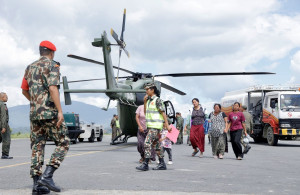
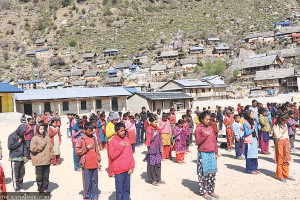
The Great Earthquake exposed the lack of open spaces in the Capital, and city dwellers have since realised the need for them during emergencies too. So community parks are essential for any urban settlement because they function as a communal space for recreational activities during normal times; and in times of disasters, such as during earthquakes, they become sites of refuge.




 23.12°C Kathmandu