ICC launches post-pregnancy guidelines to help female cricketers return to play
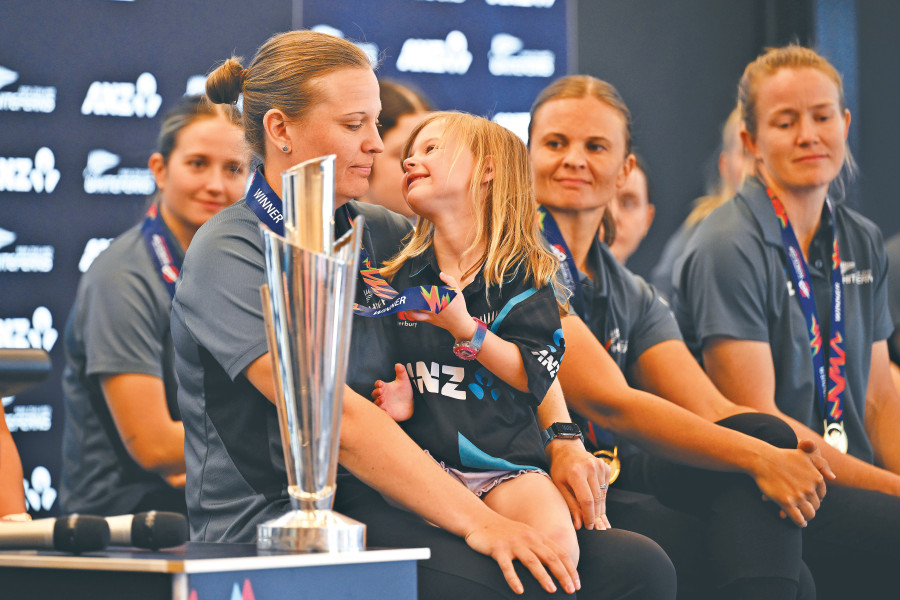
The guidelines, as per the global body of cricket, are part of its broader commitment to player health, wellbeing and the continued growth of the women’s game. New Zealand’s Lea Tahuhu with her daughter after returning home with the ICC T20 World Cup trophy in Christchurch, New Zealand, on November 1, 2024. File Photo: ICC
The International Cricket Council has launched ‘Return to Play Post-Pregnancy Guidelines’ for female cricketers.
“The guidelines provide players, Member Boards, medical professionals and coaches with a practical framework to support the return to cricket after pregnancy,” the ICC said in a statement on Monday.
According to the ICC, female athletes often delay motherhood until after their sporting career.
But it is changing.
“With women’s cricket becoming increasingly professional and career opportunities continuing to expand, more players are choosing to start families during their playing careers and return to elite cricket after giving birth,” the ICC states. “These Guidelines have been formed to aid that process and are part of the ICC’s broader commitment to player health, wellbeing and the continued growth of the women’s game.”
One of the ICC’s six strategic priorities includes the health and welfare of female cricketers.
Over the past couple of years, the ICC has also rolled out a range of women’s health initiatives under the 100% Cricket movement to educate players and staff, while building awareness and normalising important conversations in sporting environments.
The post-pregnancy guideline is another major step the body has taken to promote women’s cricket.
The ICC informed that the respective members can take the help of the Guidelines to develop their own pregnancy and return-to-play policies, in line with local legislation, while supporting player welfare through practical, physical and psychological guidance.
To support a safe and sustainable return to cricket, the Guidelines outline the ‘6 Rs’ framework: Ready, Review, Restore, Recondition, Return and Refine.
“The approach covers early recovery after birth, medical and wellbeing reviews, gradual return to structured training, cricket-specific conditioning, return to play and ongoing monitoring once a player is back in the cricket environment,” the ICC states.
The Guidelines outline practical support considerations, including flexible training environments, continued access to facilities and services, childcare advice, suitable spaces for feeding or caring for babies at playing venues, and travel support, where possible.
“The ICC’s Return to Play Post-Pregnancy Guidelines are designed to show players that having a baby doesn’t need to be the end of their career, and what we’re aiming to do with this policy is allow Member nations to facilitate the return to cricket for their players,” Dr Philippa Inge, who helped outline practical support considerations for the Guidelines, was quoted by the ICC.
Dr Inge, who is also an ICC Medical Advisory Committee member and Australia’s team doctor, added, “We know that many Members haven't necessarily had these in the past, and the aim has been to make them adaptable for the unique environments in which our Members need to use them. The guidelines serve as a template for Members, and strong support for an athlete returning to cricket post-pregnancy needs to be individualised to the specific needs of them and their family.”
Afy Fletcher, the West Indian cricketer who is competing at the ICC World Cup 2026 after giving birth to her son in 2021, believes these Guidelines will lead to more players being in a position to return to cricket after pregnancy.
“I think it's really good that the ICC is giving cricket boards policies to look after women after pregnancy,” Fletcher was quoted by the ICC. “It gives you a chance to have your family and then return, so I think that’s one of the best things they could have done for women’s cricket.”
Of her own return to cricket, Fletcher said: “Physical recovery was challenging but, more than that, I struggled to leave my child and miss creating precious moments. That’s why every moment I play on the field is driven by him. Every player’s journey is different, but you have to have strong support, get healthy and trust the process.”
Nayak Paudel covers sports for The Kathmandu Post. He previously worked at the Post (2018–19) and spent over five years at The Rising Nepal. His reporting spans crime, health, education, and social issues.




 27.12°C Kathmandu