



 14.2°C Kathmandu

Fri, Oct 16, 2026
Columns
Temptation of a directly-elected ‘hero’
Political frustration should not tempt us into constitutional romanticism, as no institutional model is ever a panacea.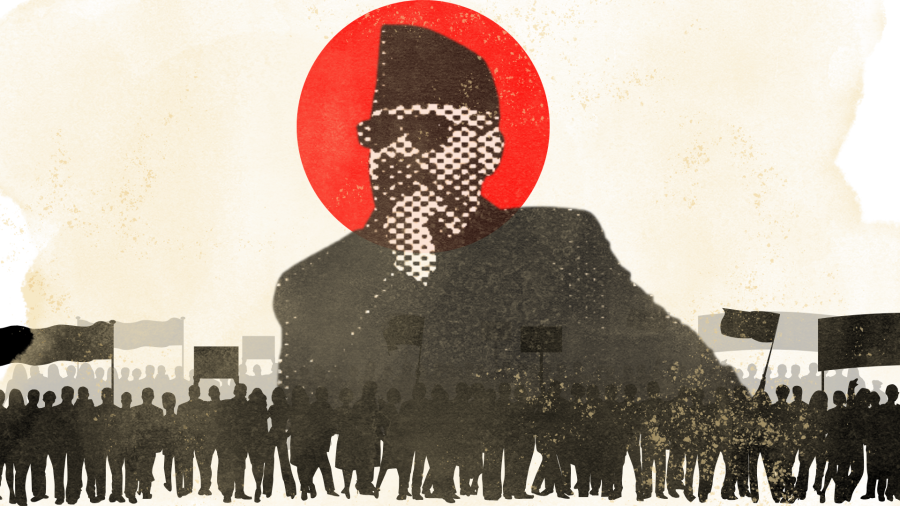
bookmark
Sanitya Kalika
Published at : June 28, 2026
Updated at : June 28, 2026 22:43
Every generation in Nepal is tempted to believe that its constitutional frustrations can be solved by finding the right leader, and thus, rediscovers, once every few years, an old constitutional debate over whether to retain a parliamentary system or directly elect its chief executive. The topic of constitutional amendment is once again dominating political discussions, and proposals for a directly elected executive have predictably returned to the forefront, with advocates long arguing that direct election would deliver political stability by freeing the executive from unstable coalition politics.
With the RSP’s leadership publicly committing to Balendra Shah’s full term, the ‘stability’ justification has lost its urgency. Yet the push continues because advocates contend that direct election would provide greater governmental stability by reducing dependence on fragile parliamentary politics that quite often betrays morality. That it would also give the executive an independent democratic mandate directly from the people, minimising the influence of party elites and encouraging more decisive and effective leadership. Such an argument is not devoid of merit because not every periodic election delivers a majority government.
Constitutions are not merely mechanisms for selecting officeholders. They are frameworks for distributing power, creating incentives and restraining political authority. The question before Nepal, therefore, is not simply who should elect the executive—it is whether constitutional reform would strengthen democratic institutions or further encourage a political culture that increasingly revolves around individual leaders rather than constitutional offices.
Temptation for a ‘change’
The appeal of a directly elected executive is understandable, as Nepal’s experience with coalition politics has often been extraordinarily frustrating. Governments have frequently changed before completing their terms, political bargaining has sometimes overshadowed governance, and public confidence in parliamentary politics has steadily eroded. Against this background, a directly elected executive appears to offer a simple solution—provide one individual with an independent democratic mandate and allow that government to govern without constantly negotiating parliamentary arithmetic.
Experiences elsewhere, however, suggest that the promise of stability should be approached with caution. Direct election undoubtedly changes the source of democratic legitimacy, but it does not eliminate political disagreement, as evident from the American example, which illustrates how divided government can produce prolonged legislative deadlock. Nepal may appear less susceptible to the kind of executive-legislative gridlock often associated with the US, because, unlike the American two-party system, Nepal’s politics is fragmented across multiple parties. A directly elected chief executive could still find themselves confronting a legislature controlled by rival parties or curiously polarised legislative coalitions. Separate democratic mandates do not eliminate political conflict; they instead ‘relocate’ it from coalition negotiations within parliament to constitutional bargaining between the executive and the legislature. Direct election, thus, does not, at all, remove the politico-constitutional necessity of sharing power through dialogue and cross-partisan support.
The search for a hero
One of the most striking features of Nepal’s contemporary politics is the growing personalisation of democratic competition. Electoral campaigns increasingly revolve around individual leaders rather than political parties, individual parliamentary candidates or coherent policy platforms. Public discourse increasingly searches for political saviours capable of solving deeply structural problems through personal leadership alone—an example of which is the RSP’s landslide victory based on an appeal to Balen’s charismatic leadership. The search for political heroes often precedes democratic backsliding, especially in politically immature democracies aspiring for rapid economic development.
Parliamentary government is far from perfect, as it often produces unstable coalitions and slow decision-making. Yet, the question is: So what? The constitutional objective of any democracy is not to maximise the tenure of any particular leader, but to ensure continuity of governance, policy predictability and democratic accountability. A country may change prime ministers as frequently as Japan or several European democracies do, while remaining institutionally and economically stable. Equally, a government may survive multiple full terms while steadily weakening its democratic institutions, like Orbán’s Hungary and Modi’s India. No constitutional model enjoys immunity from democratic backsliding, and dictatorships have come out of every political system imaginable.
Constitutional outcomes, thus, depend less on models of governance than on the interaction between constitutional design, electoral systems, party organisation, checks and balances, and political practice. Nepal’s constitutional conversation, therefore, risks asking the wrong question. Rather than asking which system is inherently superior to another, we should ask, with caution, what kind of political behaviour each institutional arrangement is likely to encourage under Nepal’s present conditions.
Once a chief executive derives authority directly from millions of voters, political legitimacy inevitably becomes more personalised. The executive may increasingly claim to represent ‘the people’ directly, while Parliament appears to represent merely political parties or constituency interests. Constitutional disagreements that would otherwise remain institutional disputes risk becoming contests between competing claims of democratic legitimacy. But successful constitutional systems depend on much more than electoral mechanisms, relying on institutional restraint, strong political parties, respect for constitutional conventions, independent courts, and a political culture that accepts constitutional limits, even when they frustrate immediate political objectives.
Can constitutional engineering solve politico-cultural problems?
The challenge today is an increasingly visible tendency to personalise democratic politics, and heading towards a directly-elected all-powerful ‘hero’—be it a president or a prime minister—can very well risk reinforcing that tendency. Political frustration should not tempt us into constitutional romanticism, as no institutional model is ever a panacea. If public dissatisfaction with political parties has produced an appetite for an unchecked charismatic leadership, and if voters romanticise the idea of directly electing a leader whom they can ‘blindly trust’ with the state, political discourse should focus on educating the public on the unglamorous and nuanced realities of governance rather than on amending the constitution.
Serious conversations about improving governmental stability, reforming coalition incentives and strengthening executive effectiveness are more important than amending the constitution. Voters aspiring for a stability-facilitated rapid economic development must realise that every constitutional arrangement involves trade-offs. Direct election may reduce one set of problems while creating another, and parliamentary governments may disperse authority while occasionally sacrificing decisiveness. The task of constitutional design is not to eliminate politics, but to channel it through institutions capable of balancing effective government with democratic accountability.
The danger lies in believing that constitutional engineering can solve problems that are fundamentally political and cultural. Weak parties, opportunistic coalition-building, declining public trust, hero worship, and personalised politics cannot be cured simply by changing how the executive is elected. Constitutional reform can improve incentives, but it cannot be a substitute for responsible political leadership or constitutional restraint.
Nepal needs a constitutional conversation that moves beyond the parliamentary-versus-presidential binary, as the greatest danger is not choosing the wrong constitutional model; it is expecting any constitutional model to save us from ourselves. To paraphrase Shakespeare from Julius Ceaser, the fault, dear Brutus-esque citizens, lies less in our constitutional stars than in ourselves!
Sanitya Kalika
Kalika is a Nepalese international lawyer and a Hering Scholar at the University of Oxford who previously served as an Assistant Professor of International Law at India’s O.P. Jindal Global University.



.PNG&w=200&height=120)

Most Read from Columns
Before you take credit for Khula Manch, read its history
Shah went to the UN to speak for Nepal, then left before he could make the most of it

Bhotekoshi flood wasn’t a freak event. It’s the Himalaya doing what it does

Lesson learned after the death of Ronaldo
Why passive neutrality won’t take Nepal anywhere
Editor's Picks

Constitutional Bench caught in seniority, ‘pick and choose’ dispute

A Dom boy’s long road to becoming a doctor

From blankets to handmade dolls, two foreign women bring comfort to flood survivors

News Analysis: When institutional defence exposes institutional fault lines

It’s a bird … it’s a plane … it’s the Indian ambassador’s farewell tweets
E-PAPER | October 16, 2026

×