



 14.81°C Kathmandu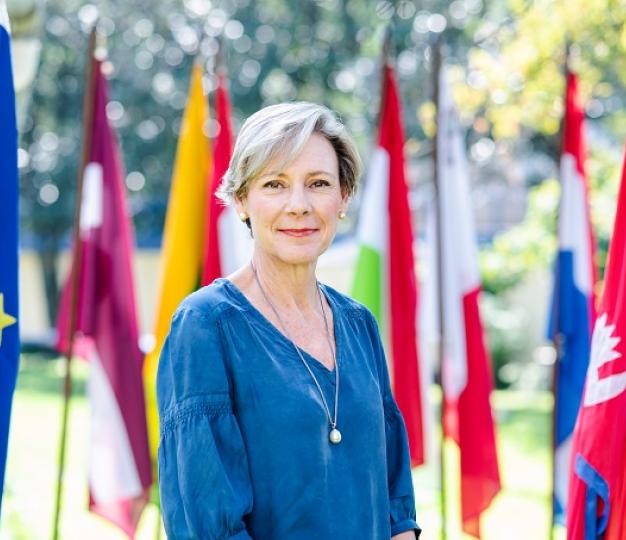
Sat, Oct 24, 2026
Columns
EU-Nepal partnership in a changing world
As the new government translates this mandate into action, the EU stands ready to support Nepal’s priorities.
bookmark
Veronique Lorenzo
Published at : May 7, 2026
Updated at : May 7, 2026 18:34
On May 9, 1950, as Europe lay in ruins after World War II, French Foreign Minister Robert Schuman proposed a radical idea: Former enemies France and Germany would merge their coal and steel industries under shared control. This cooperation made war between them ‘not merely unthinkable, but materially impossible.’ Tomorrow, May 9, marks the anniversary of what became known as the Schuman Declaration, which laid the foundation for the European Union (EU). Europeans remember and celebrate this day as Europe Day. Seventy-six years later, the EU has 27 Member States, and its 450 million citizens enjoy unprecedented peace, stability and prosperity.
Yet these very values, and the multilateral system that upholds them, are now under threat from wars and flagrant violations of international law. The unprovoked and brutal war against Ukraine by Russia, now in its fifth year, is an assault on the territorial sovereignty of Ukraine and a threat to the international order we have painstakingly built. If the world returns to the ‘might makes right’ order, nations, big or small, will no longer be secure within their borders. The EU’s stance is clear: We will stand with Ukraine for as long as it takes and until there is a just and durable peace. Our latest commitment of a €90 billion support package will help Ukraine defend its territory, protect its people and rebuild critical infrastructure destroyed by Russia. In parallel, our recently adopted 20th package of sanctions against Russia will continue to weaken its war machine.
Our successful regional integration and our emergence as a major political and economic actor were made possible by promoting our values of democracy, human rights and the rule of law. These values and our respect for a rules-based international order have earned us the trust of allies and partners, including Nepal.
Nepal proudly upheld these values as it navigated a turbulent year. Witnessing the recent elections to Nepal’s House of Representatives will remain one of the highlights of my term as Ambassador to Nepal. What impressed me most during the peaceful and orderly Election Day was the vibrant participation of voters of all ages and their clear faith in Nepal’s democracy. The election delivered a historic mandate for the Rastriya Swatantra Party, signalling Nepalis’ hunger for change and for a government that works for citizens.
As the new government translates this mandate into action, the EU stands ready to support Nepal’s priorities. I am delighted to say that more than 20 of our EU Member State Ambassadors based in Delhi will be visiting Nepal later this month to express this support in person. We don’t have all the answers, but we do have experience in building robust and inclusive institutions, generating prosperity and empowering youth. We have been loyal partners for over 50 years, and we will remain reliable and predictable in working with Nepal to address its priorities and the global crises that affect us all.
‘Global Gateway’ has become the EU’s main vehicle to address these challenges and support the prosperity agenda. Together with the EU Member States, EU Development Finance Institutions and the private sector, Global Gateway can support Nepal’s progress and narrow the investment gap through smart, clean and secure investments in quality infrastructure and connectivity, accelerating the green and digital transitions.
Most relevant in addressing the current energy crisis is our Global Gateway focus on renewable energy investments, where Team Europe is partnering with the government of Nepal to invest in energy generation, transmission and distribution, as well as pioneering energy-efficient and low-carbon technologies. The regional integration of energy markets is also at the heart of Europe’s successful energy transition, and we firmly believe our ‘Energy Connectivity in South Asia’ initiative can be of great benefit to Nepal and its neighbours.
Investing in young people determines the future quality of societies; that is why they are at the centre of the European Union’s priorities. Nepal is blessed with a young generation hungry for change, skilled in using digital tools and determined to build a better Nepal. We have been proud to maintain a consistent dialogue with young women and men from all walks of life and regions across Nepal, and to partner with civil society groups on cultural entrepreneurship, digital innovation and sports to equip youth with the tools they need to succeed.
In education, Team Europe remains a steady partner to the Government, supporting its efforts to improve learning outcomes and strengthen the overall performance of the education system. Nepal’s young generation is increasingly connected, forward-looking and eager to contribute. The education system must respond to these aspirations. Together, we are supporting efforts to enhance teaching quality, modernise curricula and integrate digital and practical skills, so that education better prepares young people for the opportunities and challenges of today’s world.
More than ever, we are looking to strengthen the link between education and employment. Greater involvement from the private sector is necessary to tailor skills to the needs of future employers and improve job prospects and entrepreneurial potential of Nepali youth.
Nepal’s graduation from Least Developed Country (LDC) status remains uncertain. The economic turbulence of recent months, now compounded by the impact of the West Asia crisis on energy prices and remittances, has raised legitimate concerns about Nepal’s trade losses arising from the end of its duty-free access to the European market and challenges in complying with the World Trade Organisation’s rules. Whether Nepal graduates this year or defers, it must approach the coming years as an opportunity to improve business competitiveness. Eventually, continued access to the EU market will require Nepal to join the EU Generalised Scheme of Preferences Plus (GSP+) and ensure adherence to international standards on labour rights and environmental protection, among others. The EU remains committed to supporting Nepal in ensuring a smooth transition.
On Europe Day, we are reminded that peace cannot be taken for granted, and we celebrate the possibility of cooperation, even under adverse conditions. With Nepal, we are turning our challenges into shared solutions. Every day, we work towards a future where our people can prosper in a fair and sustainable world. Happy Europe Day!Veronique Lorenzo
Lorenzo is the EU Ambassador to Nepal.

Most Read from Columns


Editor's Picks





E-PAPER | October 24, 2026

×