



 14.69°C Kathmandu

Sat, Oct 24, 2026
Columns
New leaders alone cannot change Nepal. A new system can
The choice is no longer about who governs, but whether the system itself will finally change.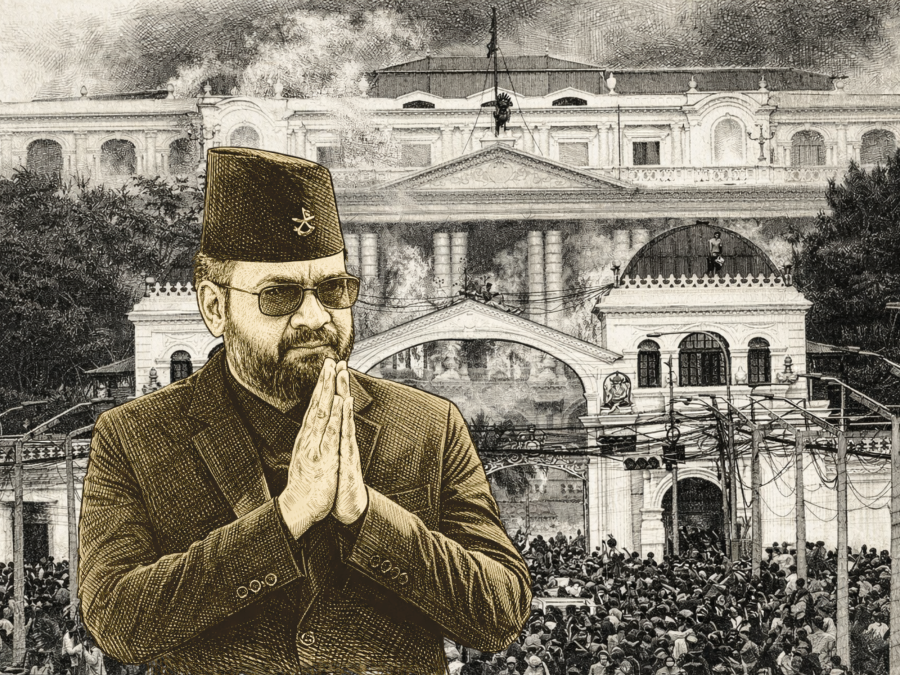
bookmark
Dr Binay Panjiyar
Published at : April 20, 2026
Updated at : April 20, 2026 16:26
Nepal’s 2026 elections have been widely framed as a rupture—a moment of reckoning shaped by youth anger, media scrutiny and a deep erosion of political credibility. But this is not the first time Nepal has stood at what feels like a turning point. It is rather the latest in a long series of beginnings that have yet to lead anywhere. What Nepal confronts today is a crisis of outcomes.
The real question, therefore, is not who has won or lost, but whether anything fundamental has changed. Can a state transform itself through the periodic rotation of power? Or does real transformation demand something far more difficult—a restructuring of institutions, incentives and the very purpose of governance?
A system in stasis
Nepal has never lacked political energy. From the democratic uprising of 1990 to the republican transition of 2006, from the Madhesh movements to the Gen Z protests of 2025, the country has repeatedly surged with moments of hope—each promising renewal, inclusion and transformation. And yet, each wave of change has ultimately settled into a familiar stillness.
What emerges is a pattern that is difficult to ignore: a system that remains fundamentally unchanged. Nepal has learned how to begin again—but not how to move forward. Each transition generates expectation, but rarely produces continuity of purpose. Politics resets; the system persists.
Alexis de Tocqueville warned that democracies can expand participation without strengthening institutions, creating a gap between voice and governance. Samuel P. Huntington similarly argued that when mobilisation outpaces institutional development, instability becomes inevitable. Nepal today sits squarely within this tension—politically awakened, yet institutionally unsettled; moving in moments, but never quite advancing in structure.
Fresh leaders, familiar limits
What, then, has this election truly changed? At the surface, quite a lot: new faces, sharper rhetoric and a leadership that speaks the language of accountability with greater urgency. Actors such as Swarnim Wagle and Rabi Lamichhane have embodied technocratic promise and anti-establishment energy. Yet their trajectories reveal a deeper continuity in reformist intent repeatedly colliding with structural constraint. As Douglass North and Daron Acemoglu remind us, institutions—not individuals—shape outcomes. Nepal’s system continues to reward patronage over performance, negotiation over policy, and survival over transformation. The result is a recurring pattern: new leaders, familiar limits. This election, therefore, marks not a structural break, but a growing tension between rising public expectations and a political system still designed to contain them.
Balen and the illusion of change
The rise of Balendra Shah captures a deeper shift in Nepal’s political imagination. His journey, from engineer and cultural figure to elected leader, symbolises a break from traditional party hierarchies and ideological grooming. He is the product of public frustration—an outsider elevated by a society searching for disruption in a system it no longer trusts. He represents possibility without baggage.
Yet, it is also what defines his limits. Balen’s politics is built on a language of decisiveness, nationalism and anti-corruption—powerful narratives in a country weary of coalition instability and elite bargaining. His assertive administrative style reinforces the image of a leader willing to act where others hesitate. But beneath this image lies a familiar pattern. The centralisation of authority, the reliance on personality over process, and the invocation of nationalist rhetoric echo older models of governance, reminiscent of the era of Mahendra Bir Bikram Shah Dev, when decisiveness was prioritised over institutional depth.
This is where the illusion begins. Populist leadership can diagnose failure with clarity—but it often struggles to construct durable alternatives. In Nepal’s fragile institutional landscape, rhetoric can mobilise, but it cannot substitute for policy. Balen’s trajectory reflects a leader who embodies change in form, yet operates within an unchanged system. The model he appears to echo—strong leadership over strong institutions—has already been tested in Nepal’s past, and it has already failed. The lesson, therefore, is not about Balen alone, but about the pattern he represents. Nepal’s politics continues to oscillate between hope and repetition, elevating new faces into an old system that remains remarkably resistant to change.
Nepal’s reflection on protests
Nepal’s 2025 protests were not an isolated rupture—they were part of a broader global moment defined by generational impatience. Across the world, younger citizens are no longer willing to inherit systems they do not trust. From the streets of France in 2023 to Sri Lanka in 2022, from Iran to Chile, a common impulse has emerged: a demand for accountability, dignity, and structural change. Different contexts, different regimes—but the same underlying question: Can existing systems still deliver?
Protest is powerful in dismantling legitimacy, but far less effective in constructing what comes next. It can force resignations, reshape elections, and disrupt entrenched elites—but it rarely provides the institutional blueprint required for transformation. Disruption, by itself, is not transformation. The challenge now is whether this energy can move beyond rejection toward reconstruction, whether anger can evolve into policy, and resistance into governance. For now, Nepal stands at a familiar threshold. Protests have reshaped power, but whether they will reshape the state remains an unanswered question.
Systems, not saviours
Historical evidence—both from Nepal and other countries—emphasises a crucial point: Institutional frameworks, rather than individual actors, ultimately influence outcomes. No leader, regardless of skill or intent, can alter a system designed to perpetuate inefficiency.
Reforms in Nepal have seldom resulted in meaningful structural transformation. The core challenge lies not in a lack of capable leaders, but in the absence of robust institutions that can guide behaviour, enforce accountability, and provide continuity beyond electoral cycles. Systems shape incentives, which in turn drive decision-making.
For lasting progress, Nepal must establish durable institutions that transcend governmental changes, constrain arbitrary authority, and foster economic productivity. Without such measures, the recurring cycle persists—manifesting in fresh leadership but yielding similar outcomes.
Breaking the illusion
The elections have delivered change. And yet, the distance between change and transformation remains as wide as ever. Because transformation is not a moment—it is a process. It does not arrive through ballots alone, nor through bursts of public anger, but through the slow and deliberate reshaping of the state itself.
That work, still, remains unfinished. And until it begins in earnest, Nepal will continue to move without advancing—caught in a cycle where every surge of hope settles into repetition. The choice before Nepal is no longer about who governs, but whether the system itself will finally change. History has given the country many moments. What it now demands is resolve to finally move forward.
Dr Binay Panjiyar
Panjiyar is a clinical research associate at Northwell Health, USA.



Most Read from Columns


Editor's Picks





E-PAPER | October 24, 2026

×