



 19.64°C Kathmandu

Sat, Oct 17, 2026
Columns
Nepal’s food system is under strain. Are we prepared to safeguard our future?
Nepal urgently needs a comprehensive, long-term strategy to safeguard its food security.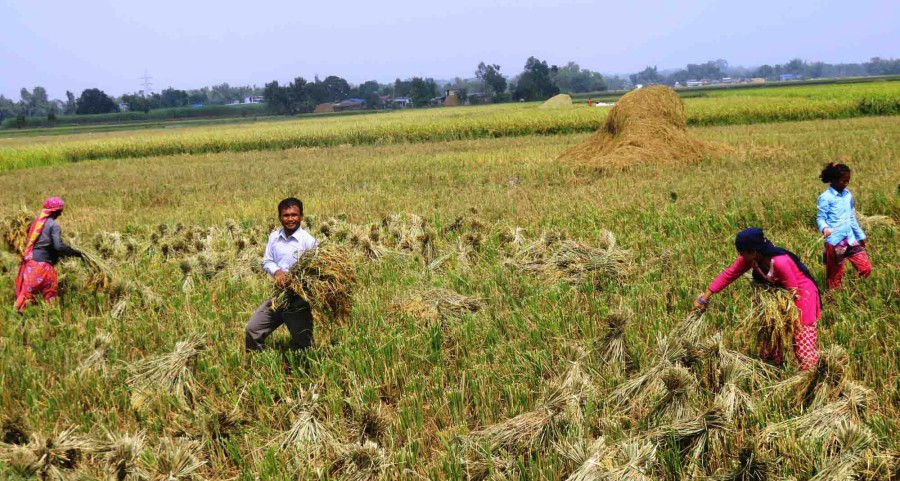
bookmark
Madhukar Upadhya
Published at : April 19, 2026
Updated at : April 19, 2026 18:24
Unpredictable weather patterns and extreme climatic events, both within and outside normal crop cycles, have become routine threats to Nepal’s agriculture. This year, the situation appears even more arduous due to incipient disruptions in fertiliser supplies stemming from the conflict in West Asia, raising serious concerns as the planting season for major crops such as maize and rice has just begun.
While the fallout of war in West Asia has primarily manifested as an energy crisis, its profound impact on global fertiliser supplies, affecting global food security, including that of Nepal, is as severe and immediate. And unlike fuel, there is no alternative for food. Consequently, the fertiliser shortage will be even more concerning in the coming months and years when current food stocks begin to run out. This is particularly worrying given Nepali agriculture’s increased dependence on imported chemical fertilisers.
As the newly-formed government assumes office amid these global uncertainties, public expectations for decisive action have been set exceptionally high. The full short- and long-term consequences of these intertwined global and domestic shocks may be ambiguous for now; this mise-en-scène serves as a prelude to what lies ahead. Nepal urgently needs a comprehensive, long-term strategy to safeguard its food security.
State of agriculture
Although agriculture has been a key development priority in Nepal’s plans over the preceding five decades, stagnation and declining productivity have rendered agriculture increasingly unattractive. We cannot expect lasting food security from a sector that is steadily losing its economic, social and even political appeal. Farming, after all, is a labour-intensive enterprise—a complex system that thrives only when assorted factors like weather, water, fertilisers, pest management and soil health work together effectively and efficiently.
Unfortunately, this delicate balance is collapsing fast. The sharp depopulation of livestock, a vital component of Nepali agriculture, offers a striking example. Between 2001 and 2021, cattle numbers declined by 36 percent and buffalo numbers by 15 percent. Once a cornerstone of farming, the traditional practice of building soil fertility through composting has dwindled. Manure heaps outside rural households and the annual ritual of manually transporting them to the fields before the planting season have gradually vanished from rural farming life. This has been further compounded by acute labour shortages in fodder collection.
Degradation of agricultural soil remains largely unaddressed by the state. A recent report highlighted that soils in Tarai are more degraded than those in the hills and high mountains, and that eastern Nepal shows greater degradation than the west. Additionally, heavy monsoon rains cause widespread soil erosion, with local water sources simultaneously drying or declining across the country. Consequently, when food production drops, and thus the corresponding income, farmers seek alternative livelihoods, forgoing farming altogether. It is therefore no surprise that about 37 percent of farmlands now lie fallow or have been abandoned.
Abandoned agricultural land is not merely a matter of fields going unused; it signals a deeper and more troubling pattern. Once land is taken out of cultivation, challenges such as water scarcity and erratic weather lose their immediacy, no longer urgent to manage food production. Critically missing from the equation is solemn attention to the steadily declining and degrading agricultural production base, along with concrete plans to revive lost spring sources, restore soil health and recultivate fallow land.
Insecure food security
The aforementioned local challenges have been aggravated by increasingly extreme weather events in recent years. Since we have been unable to effectively buttress our agricultural base against these challenges, food production continues to suffer. In 2021, unseasonal October rains led to rice losses worth Rs8 billion. Last year’s six-week delay in the monsoon caused paddy production to decline significantly. Moreover, a combination of increasingly frequent unseasonal monsoon rains, reduced use of organic compost, and acute fertiliser shortages is set to worsen the already dire situation. Nepal’s cereal import bill, which rose from Rs39 billion in 2015-16 to Rs60 billion in 2024-25, is likely to rise further. Food, even if adequately available, will become very expensive and unaffordable for many.
Even if there were an immediate return to normalcy in West Asia, fertiliser supplies would not resume anytime soon. The natural gas plants producing the feedstock have been severely damaged and could take several years to return to full operation and production. By then, disruptions from erratic weather will continue to intensify, inflicting further damage on crops and farmlands. To make matters worse, a strong El Niño event is brewing, likely to further suppress the monsoon and trigger periods of drought; some weather forecasts already project a 6 percent decrease in 2026 monsoon rainfall. The developing El Niño is also expected to break global temperature records with catastrophic consequences for agriculture.
The cumulative impacts of this developing scenario are expected to disrupt global food production. Traditional food-exporting countries may soon be unable to maintain exports as they grapple with their own fertiliser shortages and the impacts of weather anomalies. In normal times, we import the bulk of our food from India to meet domestic demand. However, fertiliser shortages are already affecting Indian agriculture; several major fertiliser-exporting countries have now halted exports to prioritise domestic needs. It is worth recalling the 2008 global food crisis when India banned rice exports (except for Basmati), triggering hardships in Nepal.
This time, the crisis runs much deeper. Nepal is particularly vulnerable to these shocks because of its already fragile economy, weakened institutions and decades of poor governance. Moreover, given the uncertainty in West Asia and its long-term impacts on migrant workers, remittances are likely to fall, compounding these ground realities and creating a perfect storm that may trigger a full-blown food crisis.
Re-centring priorities
Nepal’s development plans have heavily focused on physical infrastructure, often at the expense of our natural resource base. Herein lies the fundamental problem: For decades, researchers have highlighted how critical natural elements, particularly soil and water, have been degrading due to both internal and external factors, steadily undermining the very foundation of our agriculture and the environment. Yet these insights rarely found their way into development plans. Consequently, agricultural strategies continue to narrowly centre on seeds, pesticides and fertilisers, largely ignoring underlying issues such as drying springs, declining groundwater levels, degraded soils and accelerating soil erosion.
The misfortunes appear to be snowballing this year. Reduced availability of chemical fertilisers combined with a below-normal monsoon, possibly characterised by catastrophic rains interspersed by droughts, is likely to significantly impact agricultural output. Addressing this confluence of challenges, including the accompanying economic fallout of the Iran war—all within a short timeframe—requires prudent and urgent strategies. Failure to act decisively could dash the public’s heightened expectations that have hung over the government even before they had a chance to materialise.
Madhukar Upadhya
Upadhya is a senior watershed expert.




Most Read from Columns

Before you take credit for Khula Manch, read its history
Shah went to the UN to speak for Nepal, then left before he could make the most of it

Bhotekoshi flood wasn’t a freak event. It’s the Himalaya doing what it does
Lesson learned after the death of Ronaldo
Why passive neutrality won’t take Nepal anywhere
Editor's Picks

Constitutional Bench caught in seniority, ‘pick and choose’ dispute

A Dom boy’s long road to becoming a doctor

From blankets to handmade dolls, two foreign women bring comfort to flood survivors

News Analysis: When institutional defence exposes institutional fault lines

It’s a bird … it’s a plane … it’s the Indian ambassador’s farewell tweets
E-PAPER | October 17, 2026

×