



 17.84°C Kathmandu

Sun, Oct 25, 2026
Columns
The American-Israeli war on Iran is the quest for dominance
The talks in Pakistan aim not for peace but to buy time and weaken Iran permanently.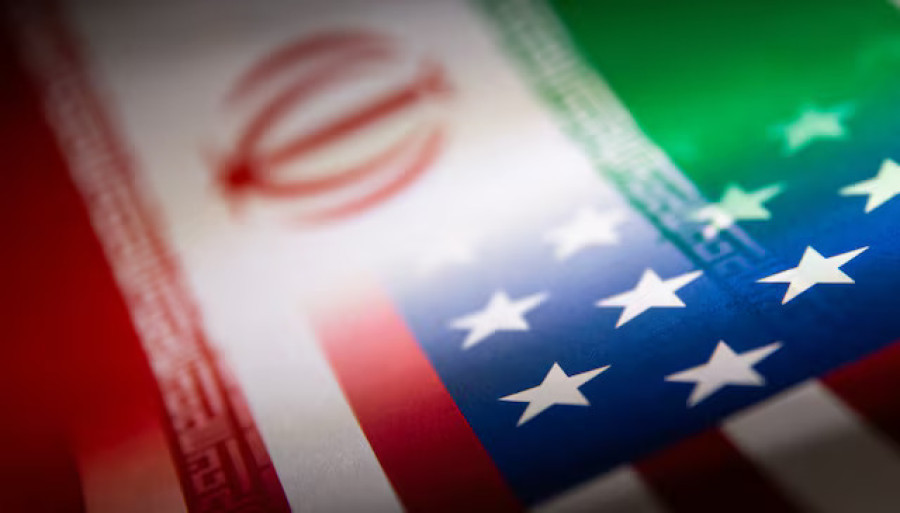
bookmark
Kashif Islam
Published at : April 17, 2026
Updated at : April 17, 2026 17:10
The American-Israeli war on Iran, currently on pause, lasted over a month. Even as it caused widespread destruction and hardship in Iran, the war disrupted global oil supply and production and caused economic hardship in distant parts of the world. The Gulf countries were particularly hit.
It is likely that America did not count on such a long campaign with few achievements except destruction. What Trump and his military advisors had in mind was a short, intense campaign leading to the overthrow of the regime or significantly weakening it, which could then be pressured to give up its nuclear and ballistic missile programs. They did not think Iran would hold out for so long, cause as much destruction in the Gulf countries and finally, disrupt shipping in the Strait of Hormuz.
To understand the unfolding crisis, one must go back to the geopolitical ambitions of the regional players.
Roots of the conflict
After years of tolerating a defiant regime in Iran, there was no real reason for the US to be attacking it. After all, the ground situation in Iran had not changed; Iran did not present a threat to any US interest in the wider region. Even assuming that Iran was close to acquiring nuclear weapons, the US didn’t need to attack it. Instead, the real causes for the war on Iran lie elsewhere.
For over 20 years, successive Israeli leaders have urged action on Iran’s nuclear program. The reason Israel has wanted to target Iran is not any actual level of threat but an attempt to remain the only nuclear-armed state in West Asia.
Just as the US has positioned itself as a global hegemon, projecting power using its overwhelming military power, Israel, as a key ally and client state of the US, has sought to maintain military hegemony in West Asia.
From its founding in 1948, the Jewish state has sought to maintain military predominance. It acquired nuclear weapons in the 1950s with the assistance of France and launched aggressive wars beginning with the 1956 Suez War. In the 1967 war, Israel captured the remaining parts of British Palestine, an occupation that has continued to this day.
Israel would not let any country acquire weapons that may threaten it. It bombed Iraqi nuclear sites in 1981. A more recent example was the fierce bombing Israel carried out in Syria following the fall of Assad in 2024. The strikes were targeted at ensuring Syria’s military weakness for a long time.
Military preeminence was ensured by acquiring advanced weapons and superior intelligence. A significant domestic military industry also sprang up in Israel, assisting its security ambitions.
The US has been a key enabler of Israeli regional dominance. Apart from direct military aid to Israel, the US entered into security arrangements with countries like Egypt and Saudi Arabia, where the US provided them with military and diplomatic support in exchange for security and non-interference with Israeli ambitions. For Israel, each West Asian country in the American sphere of influence was one less problem to deal with.
The challenge from Iran
The lone challenger to Israeli hegemony was Iran, which was outside the American sphere of control after the 1979 Islamic revolution. Iran had never targeted Israel directly, but it was the patron of the Lebanese Hezbollah that had an advanced missile program which could reach Israel and had a civilian nuclear program. It could, in theory, be used to develop nuclear weapons.
Throughout the years, Iran’s strategy had been one of strategic restraint. Iran believed that responding to any action by the US or Israel would likely prove detrimental and preferred projecting power through its proxies. Thus, it did not retaliate after the killing of General Qassem Sulemani and a prominent nuclear scientist, Fakhrizadeh, who was assassinated in what was widely believed to be an Israeli operation in 2020. The uneasy status quo was shattered in the aftermath of October 7.
The new reality
Coming under rocket fire from Hezbollah, Israel bombed the Iranian consulate in Damascus in 2024, killing several Iranian diplomats. In doing so, Israel had quietly crossed a red line.
Looking to reinstate deterrence, Iran retaliated using stocks of older drones and low-range cruise missiles. From the Iranian perspective, this was a limited attack intended as a warning to reestablish deterrence and, in their calculus, unlikely to provoke Israeli retaliation. However, that was not to be.
A few months later, in the middle of its genocidal war in Gaza, Israel assassinated Hamas leader Hania in Tehran while he was a state guest. In a way, this was designed to get Iran to respond, for if Iran didn’t retaliate, it would lose credibility in the eyes of its own people.
The Iranian response was more forceful than the previous one, yet it was limited and exhibited its commitment to strategic restraint. However, all of this was pretext enough for the Israeli establishment to decide that the threat from Iran as a rival power in West Asia had to be removed forever.
With any other US administration, concerns about the Iranian nuclear program would have been addressed in talks or increased sanctions. But Netanyahu’s leverage with the Trump administration allowed him to get the Americans on board for a war on Iran. The result was the 12-day war of 2025, when Israel and the US carried out extensive sabotage and bombing operations even as negotiators from both countries were engaged in talks at Geneva. Strategic restraint had failed. Iran’s deterrence was destroyed. There was a new reality in the region.
Almost instantaneously, Iran unleashed its missiles on Israel. The Iranian missiles tested the limits of Israel’s air defences and led to significant damage, the extent of which was only made known weeks later. Caught off guard, Israel pushed for a ceasefire, but it was clear that it was only buying time.
The endgame
The civilian unrest early this year in Iran, where armed groups of foreign-backed dissidents and agents attacked public properties and targeted government officials, was designed to overthrow the government. After its failure, Israel had no choice but to force Trump to complete the unfinished task in Iran.
The goal of the war was not only to end Iran’s nuclear program or destroy its stockpile of ballistic missiles, but to destroy Iran as a state. This explains the widespread targeting of political leaders and civilian infrastructure, including schools, hospitals and bridges. Also, the goal of the ongoing talks in Pakistan is not the desire for a durable peace but to buy time and find a way to permanently weaken Iran.
The logic of military supremacy leaves Israel and the US with no other choice.
Kashif Islam
The writer works in the financial services industry based out of Gurgaon.





Most Read from Columns





Editor's Picks





E-PAPER | October 25, 2026

×