



 14.81°C Kathmandu

Sat, Oct 24, 2026
Columns
Improving ambassador appointments
It is vital to appoint career diplomats as ambassadors to advance our national interests.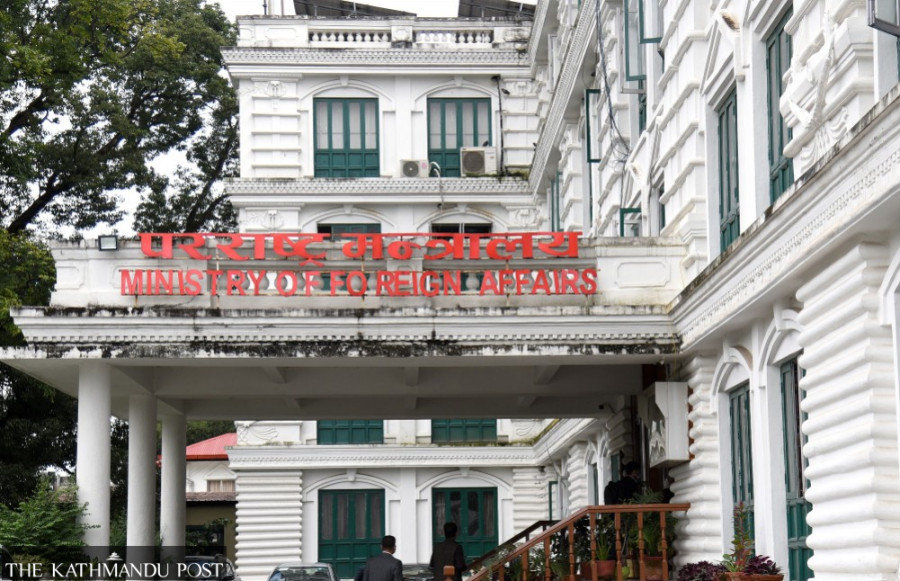
bookmark
Jhabindra Aryal
Published at : April 16, 2026
Updated at : April 17, 2026 17:27
Political appointees are political personalities, intellectuals and business figures who are generally rewarded for helping political parties or politicians. Career ambassadors, in contrast, are professional diplomats who make it to the top post through years of training and experience. Professional experiences and skills that career ambassadors are better equipped with yield strategic advantages and give them better visibility. Political appointees tend to have an inclination and loyalty to parties rather than the concerned ministry, and often promote party interests over national interests. Perhaps this is why political appointments have always been the subject of debate.
In this regard, well-trained career diplomats with specialised knowledge of protocol, cross-cultural dealings and negotiation tactics can ensure a mature diplomacy, enhancing outreach in the host country as well as a smooth management of the diplomatic mission. Seasoned diplomats have the edge in multilateral diplomacy, ensuring that negotiations are handled with professionalism. Given the current period of global challenges and complex security issues, diplomatic conduct must be precise and handled by qualified professionals who are aware of emerging challenges in the international arena. An uncanny sense of diplomatic nuances, along with the knowledge of institutional memory, gained through years of diplomatic services, has an increased significance in dealing with such complexities.
A foreign service official naturally aspires to become an ambassador. Political appointments tend to sideline the career officials, as disproportionate appointments interfere with the professional growth path of career diplomats who rise through the ranks, serving in numerous posts, handling technical and other complexities of diplomacy. Such professional dependability ensures a high level of expertise, continuity across changing governments and a deep understanding of the country’s strategic interests.
Globally, priorities are shifting towards appointing career diplomats as ambassadors. Nepal’s regional neighbours have started appointing a near-totality of ambassadors from the career pool. It depicts the level of trust in professionals. This model underscores the importance of a strong institutional base in safeguarding diplomacy from disruptions caused by political change.
In China, most ambassadors are appointed from career diplomats, though they have loyalty towards the Chinese Communist Party. If we look at the practice employed by the US, the percentage of political appointees is high, but not as high as in Nepal. The American President chooses ambassadors typically among donors, campaign fundraisers, allies, or personal friends. The system is frequently criticised as it undermines the meritocratic principles the US promotes globally.
Nepal has a hybrid system in ambassadorial appointment. According to the Guidelines on the Appointment of Ambassadors, 2075 BS, at least 50 percent of the total ambassadorial positions are to be filled from among the career diplomats, and the remaining 50 percent are political appointees. Since Nepal’s first ambassador, Bahadur Shumsher Rana, brother of then Prime Minister Juddha Shumsher Rana, was appointed to the United Kingdom in 1934, rewarding someone with an ambassadorial position based on patronage and kinship has been in practice. Even after the restoration of the multiparty democratic system in the 90s, the trend of appointing ‘near and dear ones’ has continued. It is now high time to revise the guidelines and set percentages in favour of career diplomats.
It is not a bad idea to have some ambassadors as political appointees based on merit: Former foreign service officials who have excelled in their services, noted personalities from diplomatic think tanks, well-known researchers or professors of international relations and diplomacy and experts of diplomacy and security.
Ambassadors are representatives of their governments. Due to Nepal’s unstable political landscape, the ambassadorial appointment has also been directly affected. The ambassadors appointed through political affiliation automatically become insecure as soon as their political masters go out of power. They are either recalled or they resign, reflecting the domestic political shifts. Thus, their tenure sometimes ends before they become acquainted with the host country.
In such a situation, ambassadors struggling with the fear of being recalled could hardly focus on diplomacy. Frequent changes in ambassadorial positions create a vacuum in the diplomatic circle, disrupting continuity and weakening institutional memory—affecting credibility abroad. Nepal, with its fragile economy, cannot afford a diplomatic vacuum and instability.
Foreign policy analysts in Nepal have also suggested that, though political appointees have performed well, overpoliticisation and recurrent changes of the mission heads can, in the long run, weaken the international engagement of the country. After all, diplomacy is measured through continuity, consistency and competence of the diplomats.
The current government may make a good start by strengthening the Ministry of Foreign Affairs (MoFA) as an autonomous entity that can recommend the ambassadorial candidates by establishing stringent and transparent criteria, ensuring that even political appointees meet the required professional and ethical standards and the principles of inclusivity. Secondly, the ministry must invest in its officials, preparing them to effectively promote and protect national interests with high professionalism and integrity. The ministry also needs to prescribe a formal code of ethics that could be easily understood and evenly applied to all with regard to diplomatic dealings.
The path a nation chooses to appoint an ambassador defines its priorities. An American diplomat has articulated, “The appointees come and go, but the service remains.” Appointing skilled and seasoned professionals is not just best; it is a national imperative for a country like Nepal to advance its national interests. Professional diplomats may not always be in the spotlight, yet they ensure that the nation’s voice resonates with dignity and credibility consistently. The new government, which enjoys a comfortable majority and a clear mandate to establish good governance and stable democracy, can change the course for this departure.
Jhabindra Aryal
Aryal is general secretary of the Association of the Former Career Ambassadors of Nepal.





Most Read from Columns




Editor's Picks





E-PAPER | October 24, 2026

×