



 14.4°C Kathmandu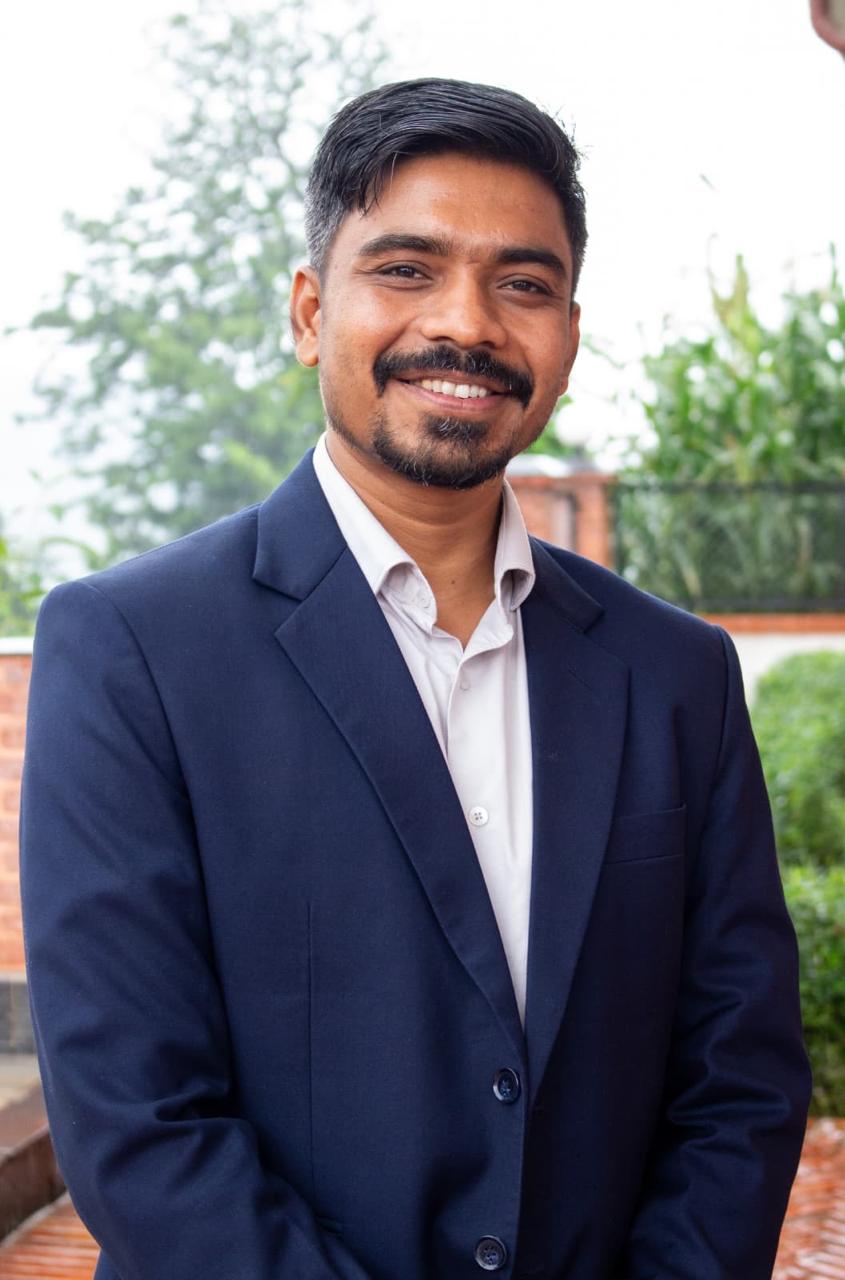

Fri, Oct 16, 2026
Columns
A tricky social media polarisation is emerging in Nepal. How will the government handle it?
For a government benefiting from digital populism, navigating social media challenges will be tough.
bookmark
Mahesh Kushwaha
Published at : April 5, 2026
Updated at : April 5, 2026 22:24
When the KP Sharma Oli government cracked down on social media platforms last year, it triggered a massive uprising that eventually toppled his government and displaced the old guards from Nepal’s power centre. While the underlying public frustration stemmed from political stagnation, rampant corruption and a lack of visible economic growth and employment opportunity, a crucial issue that remains overlooked is the role of big tech companies and social media in societies like Nepal’s. This article examines some aspects of social media in the current socio-political context.
First of all, the government’s crackdown on these multinational companies in September 2025 was not arbitrary. It was, instead, a manifestation of a much larger struggle between traditional Westphalian states and big tech companies that have amassed wealth, power and influence that surpass those of many countries in the Global South. Companies like Meta, Google, X and TikTok all operate with values, goals and strategies that rarely sit well with those of a state. For instance, their business models prioritise engagement, which is best sustained by conspiracy theories, dis/misinformation and polarising content—all of which are threats to any functioning democracy and societal harmony.
Most recent examples show how figures like Elon Musk have singlehandedly been able to sway elections in the US and Germany by propelling right-wing, anti-immigration content. Such extreme cases of political interference, along with other risks of social media polarisation, data privacy issues, deliberately addictive algorithmic models and rampant sexual content, have led many countries to push back against these big tech companies.
However, only a handful of countries, either authoritarian or holding significant leverage over big tech companies through market access, can afford these pushbacks. An important case in point is the 2024 standoff between Brazilian Supreme Federal Court Justice Alexandre de Moraes and Elon Musk. After weeks of a nationwide ban on X, Musk eventually bowed to Moraes, complied with the court order to suspend accounts spreading propaganda, and paid millions of dollars in fines for initial non-compliance.
More recently, Australia and France banned social media for teenagers. Even the Indian government, with a huge market for social media and big tech companies, has been able to solicit compliance over content moderation, to the point where many of these ‘moderations’ are censorship targeting political opponents. In short, countries that hold meaningful leverage over big tech companies and social media platforms have been able to somewhat overcome the challenges posed to their sovereignty.
But for smaller countries like Nepal, this task becomes difficult despite a large market for such companies, primarily because both diplomacy and statecraft prove too weak to force compliance from them. In addition, the big tech companies have increasingly been enmeshed in US diplomacy and foreign policy under the Trump administration, which sees any effort to regulate or crack down on American companies as a direct threat to its national interest. Therefore, a fear of retaliation further limits smaller countries from being confrontational, even when these companies’ actions and operations conflict with their sovereign decision-making.
Where nationalistic sentiments run high, an action against non-compliant social media platforms or big tech companies would be expected to draw little public resistance, especially when framed from a ‘threat to sovereignty’ perspective. However, at least two key factors seem to have worked against the Oli government’s decision to ban social media in September last year. First, the government placed a collective ban on all these companies at once, shutting down the country’s social media and messaging apps almost entirely.
For a country with millions of its people living abroad who depend on these apps to communicate with their families back home, cutting them off was a suicidal move. Besides, despite claims of non-compliance and challenge to sovereignty, Oli’s authoritarian tendencies in the past indicated that the underlying intent behind the ban might have been to muzzle his critics under the guise of content moderation, like in India. Even the companies must have assessed the unviability of such drastic measures.
Second, the ban coincided with an ongoing digital campaign against corruption and nepotism, which stoked further discontent among the youths. The youth-led social media posts, hashtags and reels had already popularised Oli’s and his peers’ involvement and impunity in Nepal’s large corruption cases; the ban simply felt like an attempt to silence these voices, which eventually triggered a massive unrest that led to an unprecedented loss of lives and properties.
However, amid the big political developments and headlines, the original issue related to the role, authority and influence of big tech companies and social media has unfortunately slipped from the attention of the Nepali state and public. The most immediate question is whether and to what extent these platforms, including Facebook, Instagram, X, TikTok and Discord, were accountable for the September 8-9 escalation. If online groups were planning to make Molotov cocktails and launch attacks on state buildings the next day, what legal and ethical questions did the platforms violate by failing to report these instances? How did their algorithms contribute to the escalation on September 8 and 9, and what guardrails must exist to prevent any future instances of a similar kind? These are some important questions, a serious investigation into which may not only prove decisive in making big tech companies more accountable and compliant but also in collecting appropriate fines and reparations in case of proven complicity.
At a more societal level, the bigger question that requires serious contemplation is how social media platforms have been polarising the country and what must be done to minimise their drastic consequences. One of the more concerning roles of social media in Nepal has been in an increasingly frequent communal tensions between Hindu and Muslim communities in Madhesh. What often starts as a local incident quickly spreads across the region through social media amplification. Many times, narratives are distorted in deliberate efforts to spread propaganda and pit societies against each other.
Urban populations are also no less prone to social media polarisation. By reinforcing pre-held beliefs and opinions, regardless of their authenticity, social media echo chambers and filter bubbles make people less tolerant of opposing views. The deeply polarised public, which assumes absolute freedom of expression and easy access to the means to do so, exercises little restraint in engaging in virtual confrontations. Many of these public comments are often abusive slurs, sexist and misogynistic remarks, racial attacks or outright personal threats. While women and the marginalised are often the biggest victims, the rampant online trolls and abuses have led to a notable degree of self-censorship among neutral civil society members, observers, commentators and experts.
This cautionary trend has led to a significant decline in healthy debates and discussions on matters of national importance, with growing fears of a shrinking civic space in Nepali democracy. For a government that has ridden the wave of digital populism and has benefited from it, navigating these challenges posed by social media will be a daunting task.
Mahesh Kushwaha
Kushwaha is a PhD Candidate in International Security at Dublin City University and a Non-Resident Fellow at CESIF-Nepal.



.PNG&w=200&height=120)

Most Read from Columns
Before you take credit for Khula Manch, read its history

Shah went to the UN to speak for Nepal, then left before he could make the most of it

Bhotekoshi flood wasn’t a freak event. It’s the Himalaya doing what it does
Lesson learned after the death of Ronaldo
Why passive neutrality won’t take Nepal anywhere
Editor's Picks

Constitutional Bench caught in seniority, ‘pick and choose’ dispute

A Dom boy’s long road to becoming a doctor

From blankets to handmade dolls, two foreign women bring comfort to flood survivors

News Analysis: When institutional defence exposes institutional fault lines

It’s a bird … it’s a plane … it’s the Indian ambassador’s farewell tweets
E-PAPER | October 16, 2026

×