



 28.33°C Kathmandu

Tue, Sep 29, 2026
Columns
Who owns the Gen Z movement?
What happens to the movement once it enters the machinery of power through a singular force?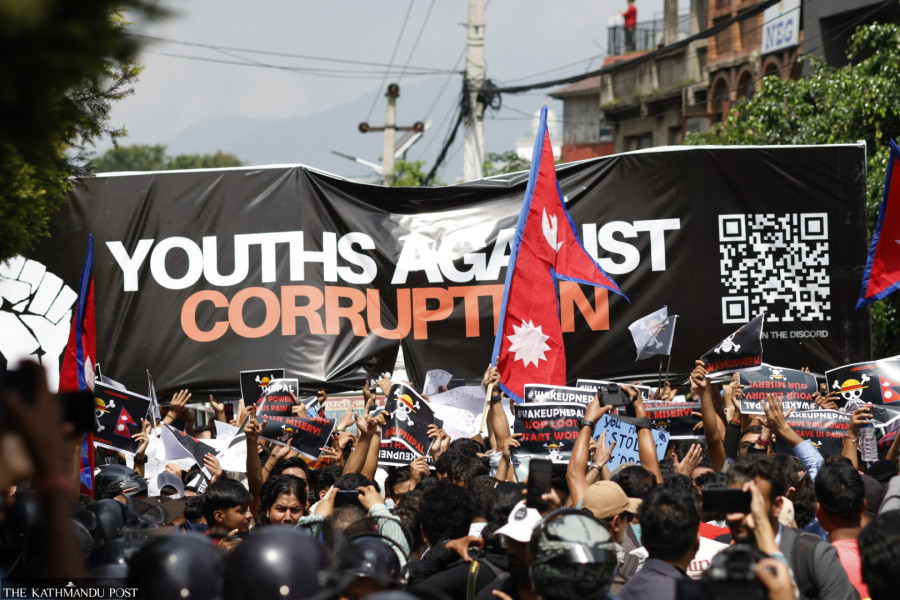
bookmark
Shoumya Risal
Published at : March 17, 2026
Updated at : March 18, 2026 07:07
Nepal has seen multiple revolutions since the 1990s. The foundations largely remain guided by frustration towards the establishment, a distrust of power, and a compelling desire for change.. Governments changed, regimes were rebranded, and constitutions were rewritten. However, foundational questions like power distribution, institutional accountability, and matters of public trust seem to be insufficiently addressed.
When Hannah Arendt wrote about the nature of revolutions being the ‘confrontation with the beginning’ in her book On Revolution, political experts envisioned the inception of a different order, and not merely the personnel in power. A revolution, in her sense, is fulfilled by reconstituting the very basis on which authority, legitimacy, and participation rest. The people will be driven by change. The anchor, however, risks being plural, thus driving revolutions towards the allure of a quick makeover while not touching upon the foundations that led to it.
The first People’s movement of 1990 came with the promise of a constitutional democracy. It was followed by the People’s movement of 2006, which sought to dismantle the monarchy and establish absolute sovereignty. Both movements were carried by echoes of the need for change. Yet, in the aftermath, the power structure simply seems to have adapted rather than transformed. The fundamental hierarchical blueprint of the Nepali society seems to have found ways to express itself through newer systems, while remaining infiltrated with the will to power and the deficit of accountability and trust. The Gen Z revolution in the country mirrored the same echoes of change. Banners that said ‘Youth Against Corruption’ took center stage as young Nepalis marched through the Maitighar Mandala to the Federal House of Representatives. The protesters were met with a familiar ferocity in the face of the power it sought to dismantle. Lives were lost, and streets teemed with violence as the symbols of authority became targets of public anger.
Like in history, power was eventually overthrown. State institutions, including the judiciary, Attorney General’s Office, and police stations, long seen as a source of hope for countless individuals awaiting justice over many years, were reduced to ashes. An interim government, tasked with conducting democratic elections, took custody of the country. The elections brought a new wave of political change, which emerged with overwhelming public support and consensual legitimacy from many young Nepalis. But gradually, the energy of the revolution appeared to be absorbed into the narrative of a singular force. And unfortunately, the plurality that once walked on the streets of New Baneshwor had found an expression within formal politics.
The difficult question now is: What happens to the movement once it enters the machinery of power through a singular force, while the larger question about the establishment of democratic values hangs in limbo? The Gen Z movement was never about the ascent of a singular force, regardless of the legitimacy of its mandate. At the core, the aftermath of the Gen Z revolution rests now in the question of memory. Will Nepal remember this movement as an unfinished project, or as the story of an overwhelming electoral victory? Whether the demands of a deeper engagement, stronger democratic values, reformed political parties, and structural change in power arrive remains to be seen.
Shoumya Risal
Risal is a lawyer and legislative/policy researcher.
.jpg&w=200&height=120)


Most Read from Columns
Editor's Picks

What triggered the Rasuwa flood? Scientists piece together a complex chain of events

The floods keep coming. Nepal keeps starting over

In a settlement destroyed by the Bhotekoshi flood, a disabled couple offer strangers the little they have

Nepal working on detailed assessment as Bhotekoshi flood reconstruction could cost up to $5 billion

Rabindra Dhant gave Nepal a reason to smile. Now his camp wants real action behind the praise
E-PAPER | September 29, 2026

×