



 19.2°C Kathmandu
Fri, Oct 9, 2026
Books
From rural Nepal to global health systems
‘Diaries in Global Health’ offers a nuanced look at illness and care through the author’s journey across cultures and systems.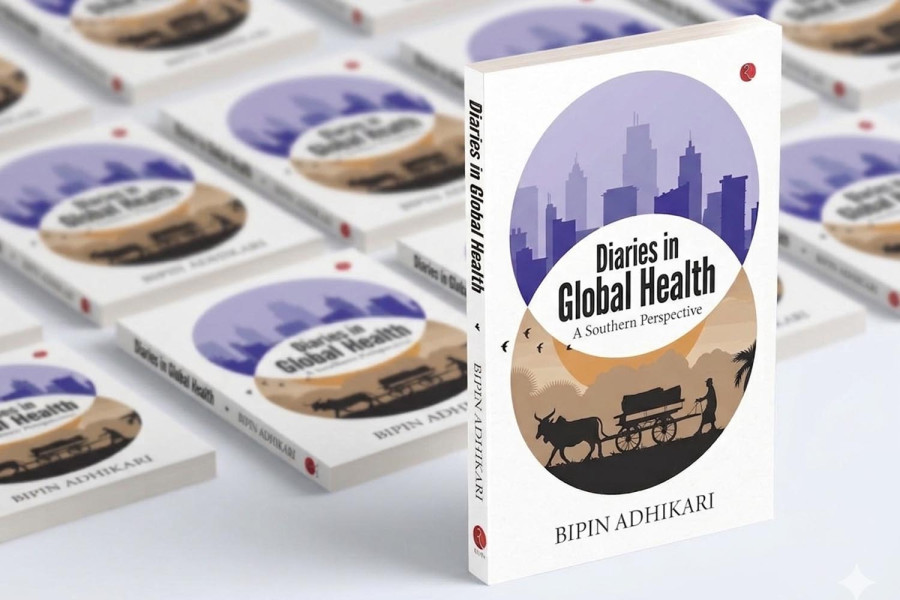
bookmark
Dipendra Pandey
Published at : April 11, 2026
Updated at : April 11, 2026 07:22
Global health is often framed in quantitative metrics such as rates, ratios, targets, and dashboards. But one thing to keep in mind is how these figures reflect stories of people moving across borders, working within fragile health systems, and living in communities under varied circumstances.
Many of these stories, lived by Global South researchers, remain underreported because of their limited involvement in such disciplines. ‘Diaries in Global Health’ by Bipin Adhikari is a reflective account that brings those perspectives to the fore. The book prompts readers to consider who the author is and how he attempts to build a narrative that encourages Global South scholars to become more proactive, introducing the term epistemic indebtedness, which calls on them to contribute to knowledge synthesis rather than rely solely on existing knowledge.
The book deviates from being simply a conventional memoir, and it also does not present itself as a critique of global health as a discipline. Instead, it takes readers from a small village in western Nepal to hospitals, universities, and research settings across countries over time. The narrative builds on a series of events and descriptions, encountering people and places and reflecting on them, sometimes leaving interpretation to the reader.
The first few chapters begin with what rural Nepal feels like and what it means to account for such a setting, for example, village life, farming, and walking to school. The author describes these experiences vividly, bringing readers into a sense of time, livelihood, and sanitation systems, and their link to health conditions. Many of these experiences will feel relatable to those who have grown up in the Global South.
One compelling example the author presents is illness and how it is interpreted through local beliefs and accepted as part of deeply rooted realities in constrained settings. This grounding of lived experience reminds readers of who we are, where we come from, and how this shapes our understanding of health. At the same time, it quietly challenges the tendency in global health to overlook the positionality of those producing knowledge.
When the story shifts to China, where the author studies medicine, he retains the lens shaped by his life in Nepal. This feels natural and reminds readers of cultural differences and how easily small details are taken for granted. Within these experiences, there is also a sense of dislocation, expressed through language barriers, unfamiliar norms, and subtle hierarchies. These experiences show how exposure can change perspective. They challenge what we assume as given and how perspectives shift, sometimes in significant ways.
The author also describes his encounters with Chinese food, culture, language, and medicine, noting differences from Nepal but also highlighting commonalities.
The diary format works particularly well in this book. Instead of presenting firm conclusions, it allows moments to unfold as they were lived, sometimes awkward, sometimes generous, sometimes difficult. There are small acts of kindness alongside experiences of vulnerability and, at times, aggression and violence. This makes the narrative feel less like a polished success story and more like an ongoing process of becoming. The author neither glorifies his positionality nor diminishes the value of presenting lived experiences as they are.
Upon the author’s return to Nepal, the narrative shifts again. Moving from the structured environment of China to Kathmandu feels like entering a very different reality, even for someone who grew up there. This shift offers an important reflection on how perspectives change across space and time. As a clinician, the author’s engagement with everyday realities in Nepal leads them to reflect more deeply on illness, its causes, and its wider impact. He takes readers beyond hospital settings, encouraging them to think about broader public health concerns. Issues such as water, sanitation, primary health care, remoteness, acceptability, and vulnerability are highlighted through interactions and lived experiences. This gives readers, both within and outside Nepal, a sense of what it means to see from a somewhat insider perspective.
The book also shares how clinicians, through routine practice, may become unaware of some limitations within the medical education system in Nepal. Some of these, as the author describes, are rooted in ways of thinking and teaching that are often didactic. Critical thinking, such as questioning and reflection, can sometimes be limited, particularly when learning is narrowly guided by textbooks. The author connects these patterns to a broader issue of a limited research culture in Nepal.
Some of the most striking moments come from everyday clinical encounters. When patients ask for “energy” to be added to intravenous fluids or exchange valuable household goods for vitamins, the response is not dismissal. Instead, the author pauses to consider why these practices make sense in context. It is a simple but important reminder that effective care requires understanding how people interpret illness, not just applying biomedical knowledge.
The author’s experiences of international travel also reveal the realities of hierarchy, particularly how passports can shape movement and treatment. Crossing borders with a Global South passport, working in high-income institutions, and even navigating low-income settings show how these hierarchies affect one’s standing. These reflections connect to broader discussions about how global health is structured and understood in global discourse.
The book also pays attention to the emotional side of this work, including the toll that everyday activities can bring. Moral discomfort and compassion fatigue do not appear as failures but as part of working in resource-constrained settings. In conflict or disaster contexts, good intentions can be challenging and sometimes misaligned with local norms, requiring sensitivity and appropriateness. Acknowledging these realities makes the account more honest and relatable.
Running through the narrative is a quieter theme, the importance placed on attention. Taking time to listen, observe, and resist rushing toward solutions. There are hints of mindfulness in this approach, though the author does not explicitly state them. In a field that increasingly values speed and scale, this emphasis feels important. It is especially relevant as global health moves toward artificial intelligence and data-driven systems. While technology can support decision-making, it cannot replace lived experience or moral responsibility. Health remains fundamentally human.
For readers from Nepal, many of the experiences described will feel familiar, including migration for education and work, struggles with infrastructure, and encounters with differences. Seeing these within a global health narrative offers a renewed perspective for both new and experienced scholars. These experiences become not just local realities, but sources of insight. For students and early-career professionals, the book offers reflection without prescribing what is right or wrong. For practitioners, it may feel recognisable.
In the end, ‘Diaries in Global Health’ calls for a balance. It does not reject knowledge from any geography or discipline, nor does it glorify tradition. Instead, it calls for a more pluralistic understanding of health, one that brings together biological and social, technical and political, personal and structural dimensions. In this sense, the Global South is not only a site of intervention, but also a source of knowledge, something that Global South scholars need to be proactive about.
At a time when global health is grappling with questions of trust, funding, integrity, and legitimacy, this book feels timely. It reminds us that progress is not only about indicators, but also about dignity, understanding, and care. It is a book that invites reflection and rewards it.
_________________
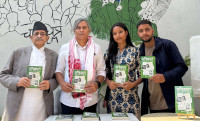
Diaries in Global Health
Author: Bipin Adhikari
Publisher: Rupa
Year: 2025
Dipendra Pandey
Dr Dipendra Pandey is a senior orthopaedic surgeon at the National Trauma Centre.

Editor's Picks
What triggered the Rasuwa flood? Scientists piece together a complex chain of events
The floods keep coming. Nepal keeps starting over
In a settlement destroyed by the Bhotekoshi flood, a disabled couple offer strangers the little they have
Nepal working on detailed assessment as Bhotekoshi flood reconstruction could cost up to $5 billion

Rabindra Dhant gave Nepal a reason to smile. Now his camp wants real action behind the praise
E-PAPER | October 09, 2026

×