



 18.54°C Kathmandu
Fri, Oct 16, 2026
Arts
‘Like a Rising River’ explores Nepali women through art
Fifteen artists translate lived experiences from across Nepal into powerful visual narratives on labour, identity, and resilience.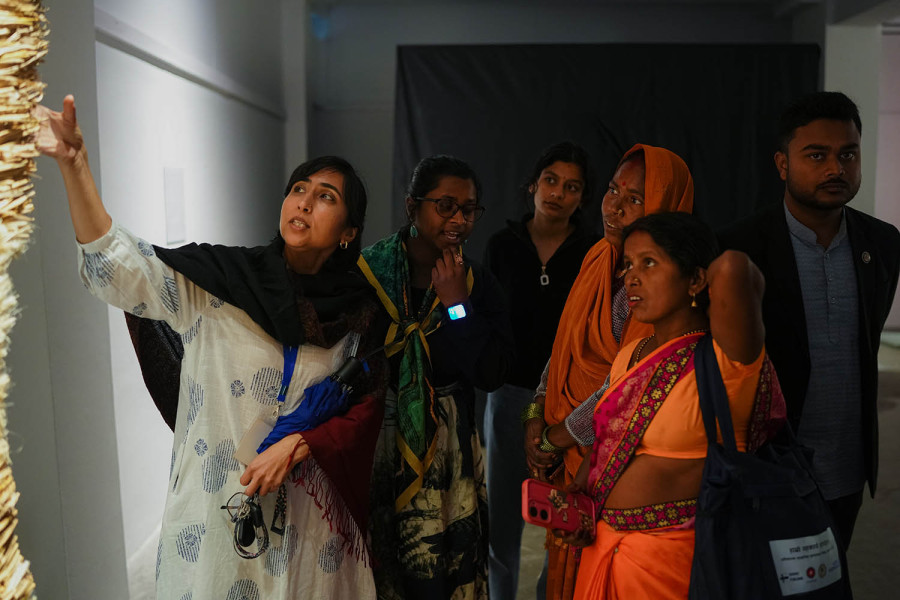
bookmark![]()
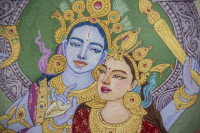
For the project, 15 Nepali artists, mainly women, travelled to four provinces. ![]()
![]()
![]()
![]()
Mokshyada Thapa
Published at : April 13, 2026
Updated at : April 13, 2026 11:36
Storytelling often becomes a voice for those who remain unheard. Using such a medium, Srijanalaya, along with UN Women Nepal and the Government of Finland, has put together an art exhibition titled ‘Like a Rising River: Stories of Women and Change’.
The exhibit is part of ‘Hamro Sahakarya: Our Collective Action’, a five-year-old initiative by UN Women Nepal, supported by the Government of Finland, that advocates for women’s empowerment.
For the project, 15 Nepali artists, mainly women, travelled to four provinces: Sudurpaschim, Bagmati, Sarlahi, and Madhesh. There, they had the chance to spend time with women from multiple communities and learn about the social and regional concerns they faced.
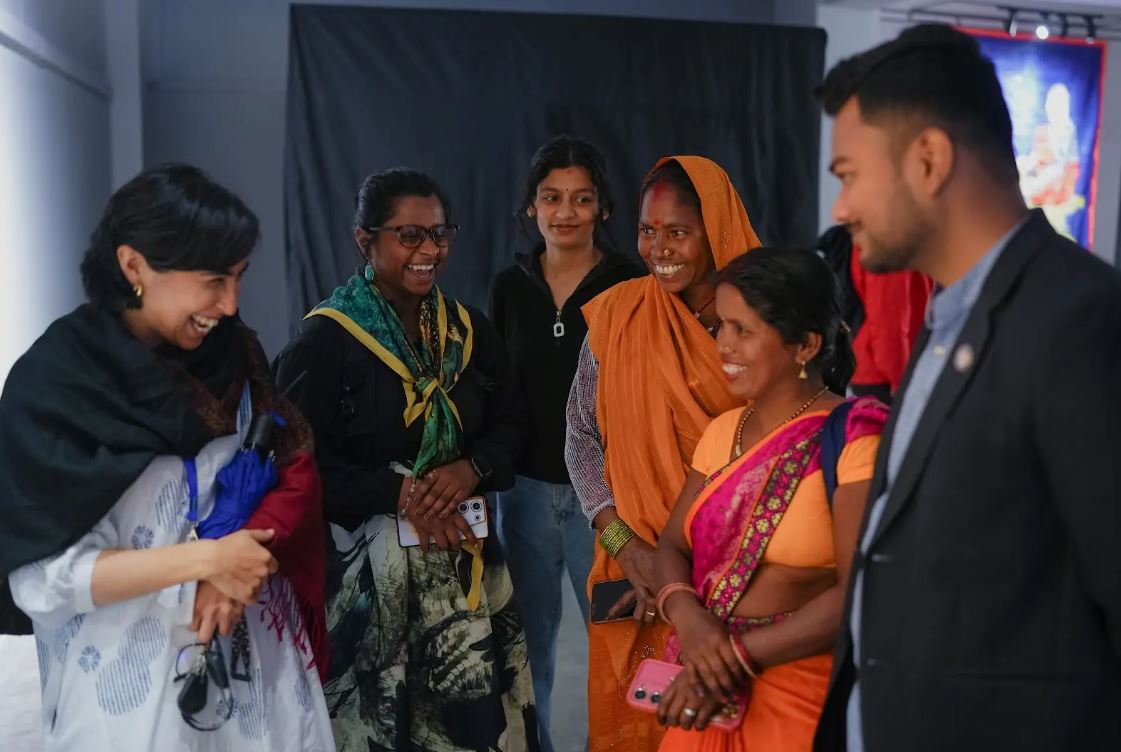
The opening ceremony consisted of a panel discussion with Amrita Ban (Nepal GenZ Front), Dhansara Badi (community leader from Surkhet), JB Biswokarma (researcher), and Sofiya Maharjan (artist). Additionally, the ceremony had closing remarks by Bandana Rana (CEDAW member), Patricia Fernandez-Pacheco (country representative for UN Women), Petri Puhakka (Finland’s ambassador), and Radhika Aryal (secretary, MOWCSC).
“The stories we bring today remind us why storytelling is important, as it brings culture and diverse backgrounds in one frame,” noted Fernandez-Pacheco during the discussion.
The panellists and concluding speakers emphasised that Nepal has demonstrated notable improvements for women and their rights, but these efforts still fall short of ensuring long-term change.
Among the artists, five—Junu Maya Tamang, Nabina Sunuwar, Shaili Malla, Sofiya Maharjan, and Sunita Maharjan—had their artworks displayed in two segments. The rest of the artists and writers worked to create 10 stories in the book ‘Urlado Nadisari’.
‘Like a Rising River’, which translates to ‘Urlado Nadisari’ in Nepali, has an emblematic meaning of its own—the river can be seen as a life source, but it also has the ability to take over when it is angry. In that sense, the rising river becomes a double-edged symbol, portraying two aspects of women’s lives.
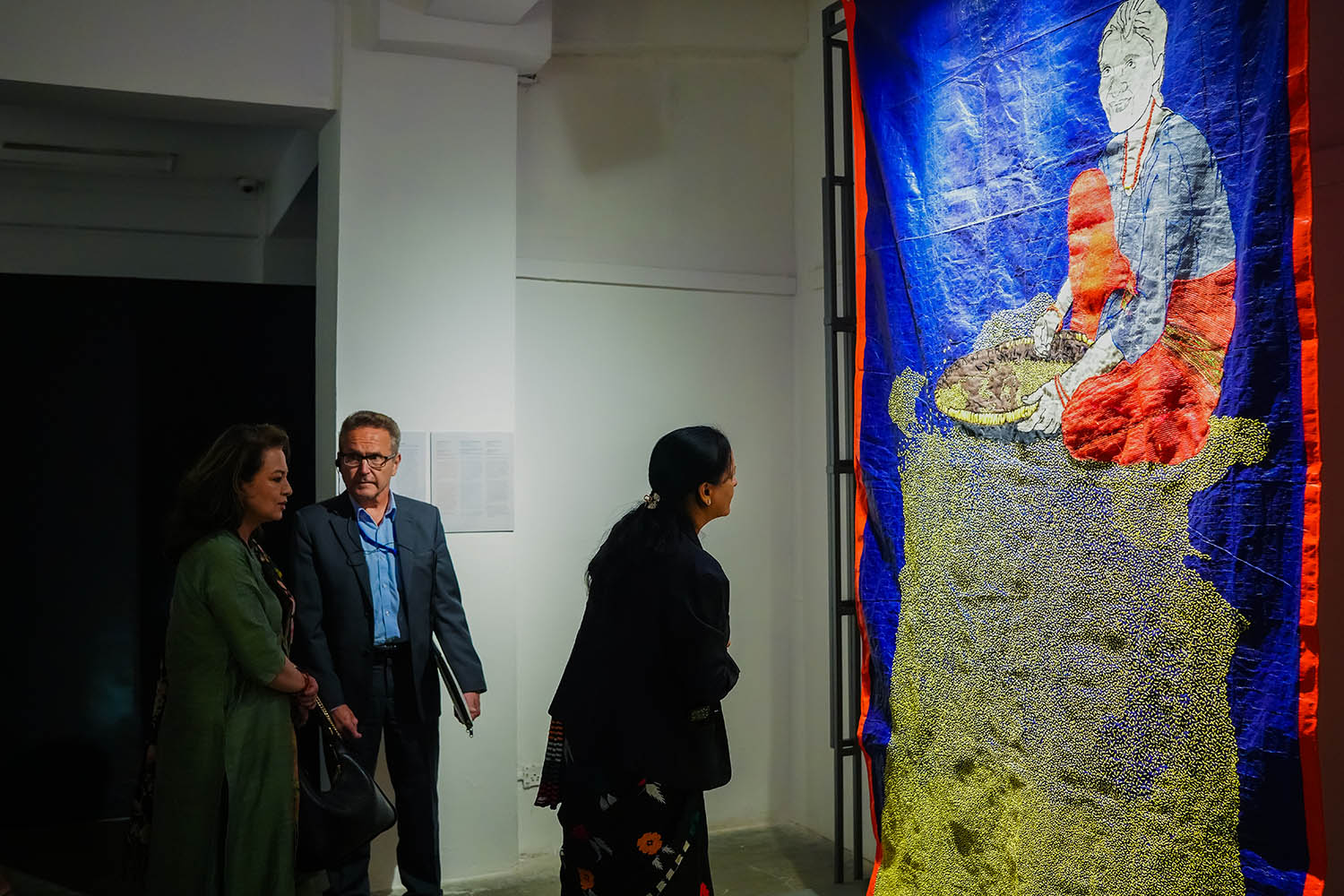
An artwork that commands visual attention with its large, encompassing presence is ‘The Winnower’s Rhythm’. Made entirely from stitching on a tarpaulin (a large sheet of waterproof cloth usually found in Nepali households), with sack and thread collages, the texture is its main component.
When artist Sofiya Maharjan visited Doti, she had the chance to see for herself how women’s hard labour went unnoticed every day.
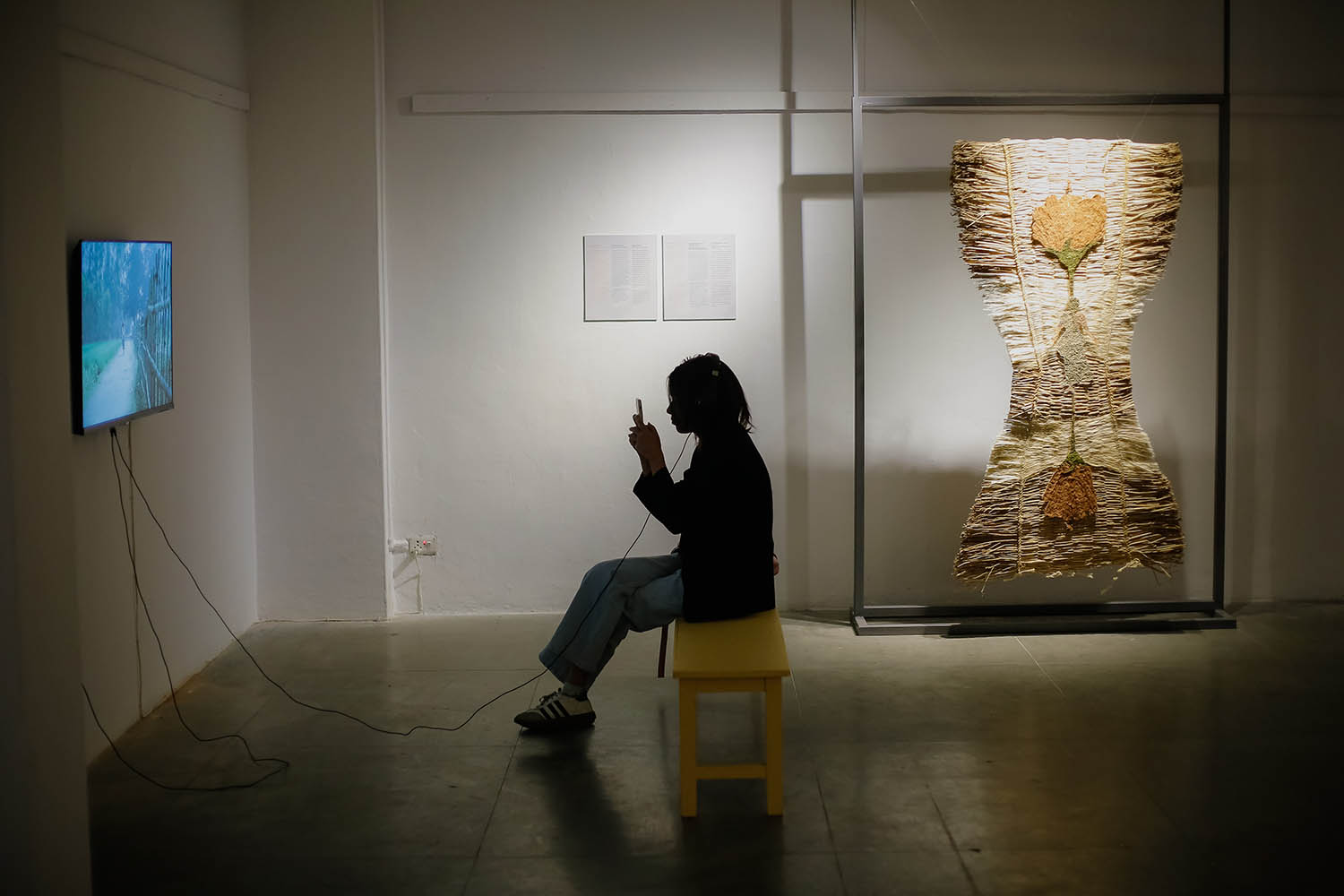
“Specifically, when I met Gauri Sarki, a local living near the hotel we were staying at, I saw how she never took breaks. For her, taking a break from household chores was to winnow wheat, which did not just suffice for a single family,” explains Maharjan, whose artwork entails a depiction of Gauri with a smile on her face, winnowing an endless saga of wheat.
Another piece covering an important element of Gauri’s life is ‘The Weight of the Invisible’, which, as the name suggests, refers to Gauri’s contribution to her household that, at times, cannot even be measured by herself.
Maharjan claims, “When we asked her how much money it took for her to buy the television in her house, she replied with two goats. She is responsible for sustaining her family with the goats she raises, but never gets credit for it.”
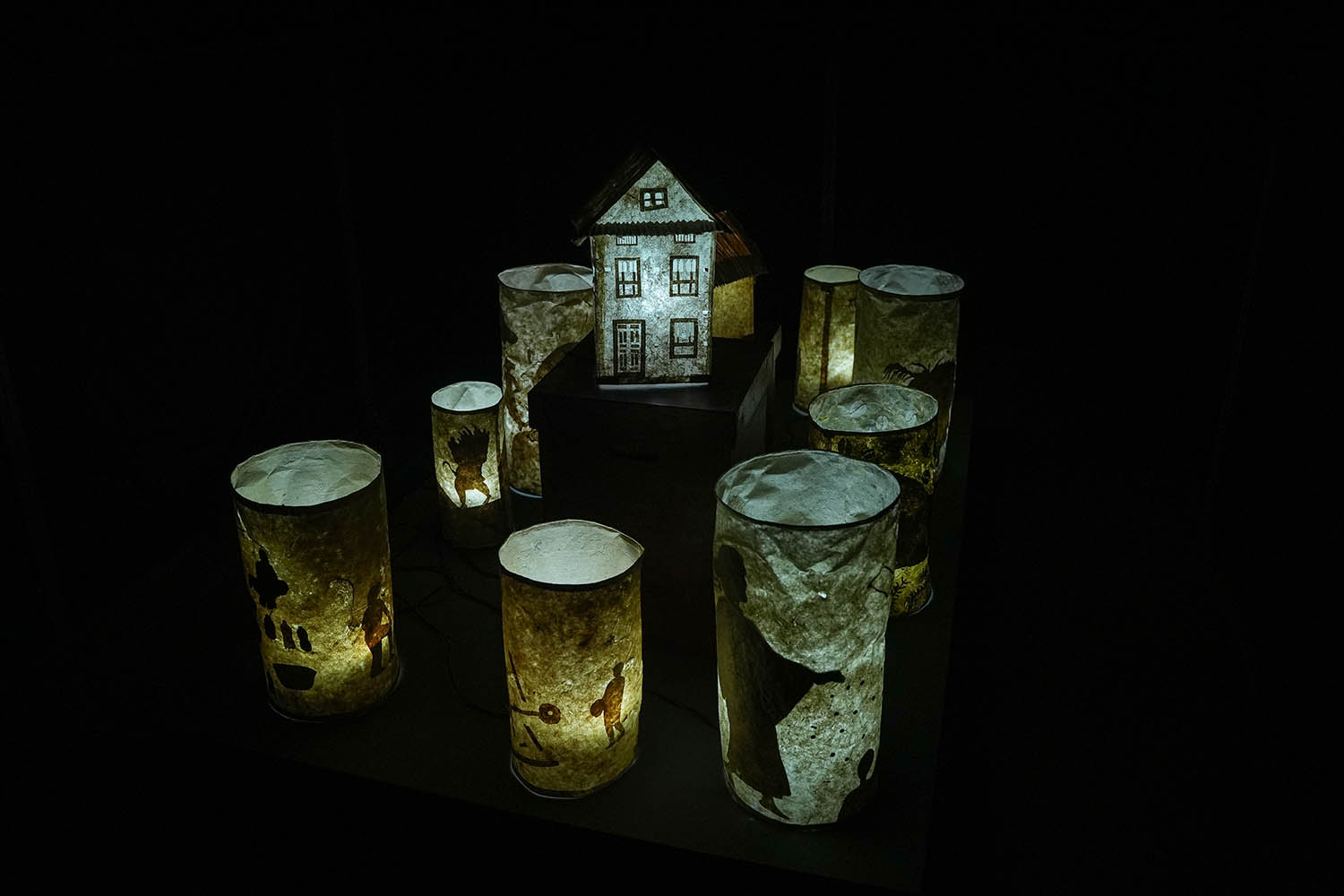
In ‘The Weight of the Invisible’, the artist has worked with a very thin, light white piece of fabric, which is meant to represent Gauri’s new house. On top of that, goats are stitched seamlessly. The choice of fabric was intentionally meant to emphasise the significance of Gauri’s femininity.
Similarly, artist Shaili Malla narrates the tale of the Badi community, considered an ‘untouchable’ Dalit community, through her mixed-media animation project.
Her work does not consist of rush, climax and dramatic experiences. There are layers and a slow build-up from one scene to another. Malla has incorporated real images and footage from Surkhet as a base for her animation. Blending mundane scenes from the Badi community with animation gives the video an unconventional yet soft feel, which draws the viewer’s attention calmly.
‘The Sand Houses That Do Not Fall’, with Malla’s voice-over narration, explores themes of the Badi community’s struggles—how their profession as musical entertainers ceased to exist, how they sell sand that dwells up outside their houses, and how kinship remains strong in the community.
Another hurdle for the community was constant catcalling by villagers due to a part of the community being involved in sex work, which is one of the stories in the storybook also named ‘Urlado Nadisari’.
Artist Sunita Maharjan’s piece ‘Woven Expectations: Boundaries, Resistance, and Reclaimed Space’ primarily explores how marriage builds on roles, shifts women’s lives, and burdens them with responsibilities and confinements.
Maharjan has created multiple benas (handcrafted fans given as dowries to brides), inspired by the Tharu community’s traditions. The bena is gifted by the girl’s side of the family, or sangi (girlfriends synonymous with mitini).
In Maharjan’s embroidery on woven plastic rice bags, the messages on these fans not only align with the exhibition’s women-centric theme but also serve as encouragement for newlywed girls.
For example, one of the stitched messages that stood out was ‘Malai Yatauta Dulna Man Lagcha’, acting as an indirect reminder.
But compiling the stories of over 100 women into 10 would mean under-representing some of them. Muna Gurung, the managing editor of the storybook, believes a different approach, such as fictionalisation, could solve the issue.
“We used fiction as a method, allowing certain stories to be more elastic and realistically compile different stories of communities into a single one,” says Gurung, ensuring the identity of the women who shared their intimate moments with the team remains anonymous while simultaneously preserving the harsh truth of their experiences in a delicate way.
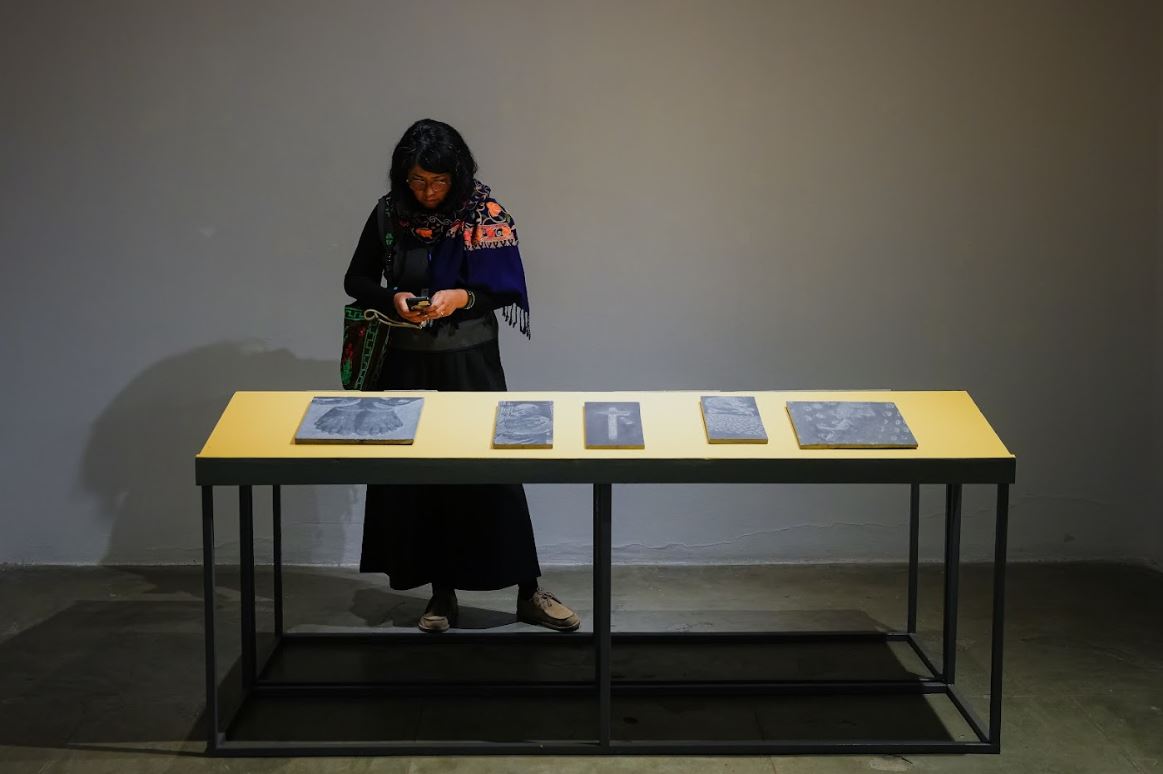
The exhibition acts as a creative outlet, paying tribute to women in general and, specifically, to the indigenous communities of Nepal. By highlighting their stories, ‘Urlado Nadisari’ has done more than just shed light on social concerns; it has paved the way for the recognition of women’s labour, whether through handwoven straw mats or carved stones.
The artists have done justice to their stories, with their pieces representing a laborious process that spanned months and the use of difficult media that demanded physical effort.
___________________________________
Like a Rising River: Stories of Women and Change
Where: Nepal Art Council, Babar Mahal
When: Until April 13
Time: 10:00 am to 6:00 pm
Entry: Free
Mokshyada Thapa
Mokshyada Thapa is a Culture & lifestyle intern at the post. She is an A-level graduate from St. Xavier’s College.
Editor's Picks

Constitutional Bench caught in seniority, ‘pick and choose’ dispute

A Dom boy’s long road to becoming a doctor

From blankets to handmade dolls, two foreign women bring comfort to flood survivors

News Analysis: When institutional defence exposes institutional fault lines

It’s a bird … it’s a plane … it’s the Indian ambassador’s farewell tweets
E-PAPER | October 16, 2026

×