



 12.65°C Kathmandu
Sat, Oct 24, 2026
Arts
From Venice to Kathmandu: Four decades through an artist’s eyes
Italian artist Giovanna Caruso’s exhibition at Kalā Salon reveals a deeply personal visual archive of festivals, faces and fleeting moments that trace her long relationship with Nepal.%20(1).jpg&w=900&height=601)
bookmark![]()
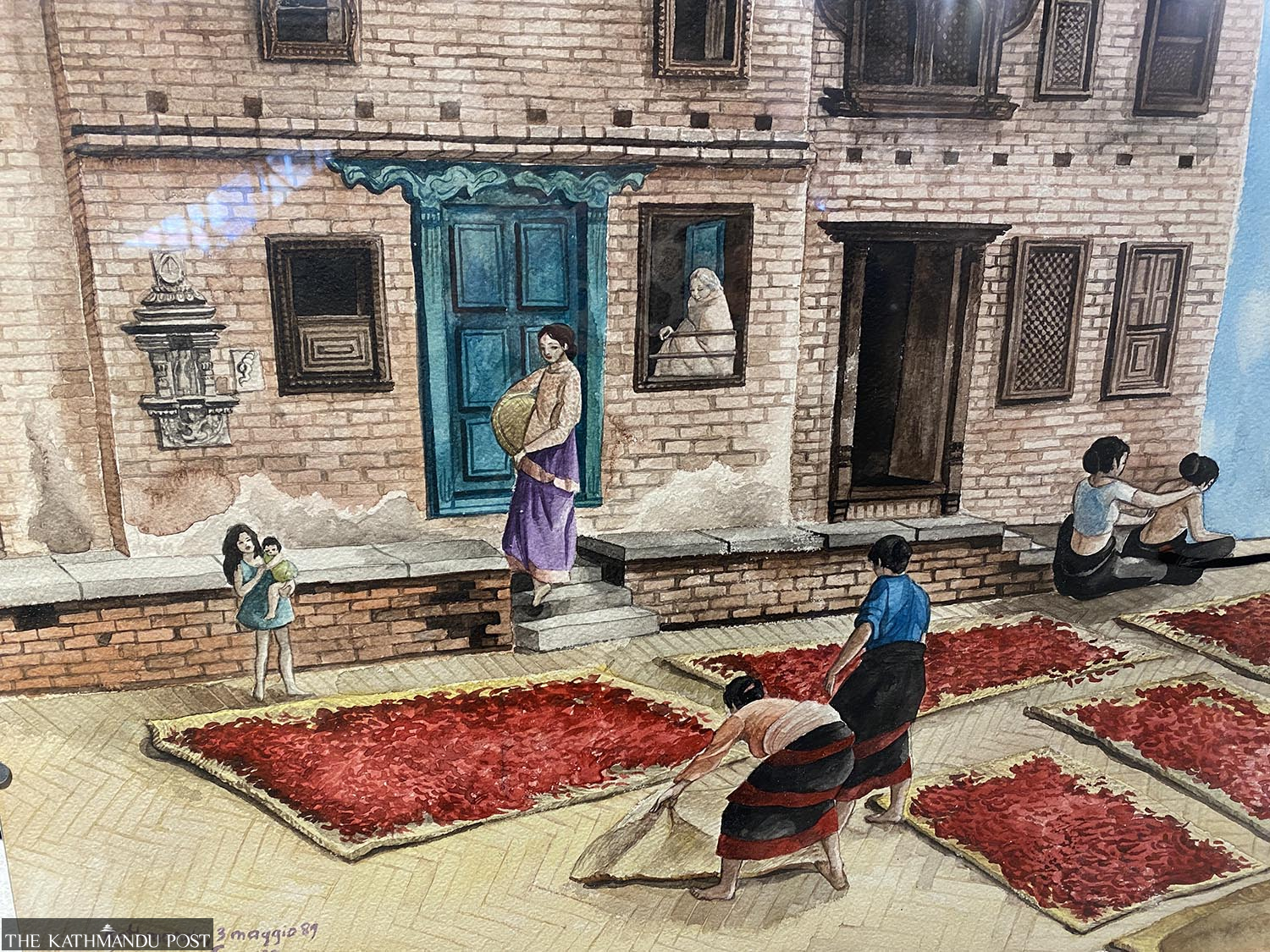
‘Chilli in Bhaktapur’ Britta Gfeller/TKP ![]()
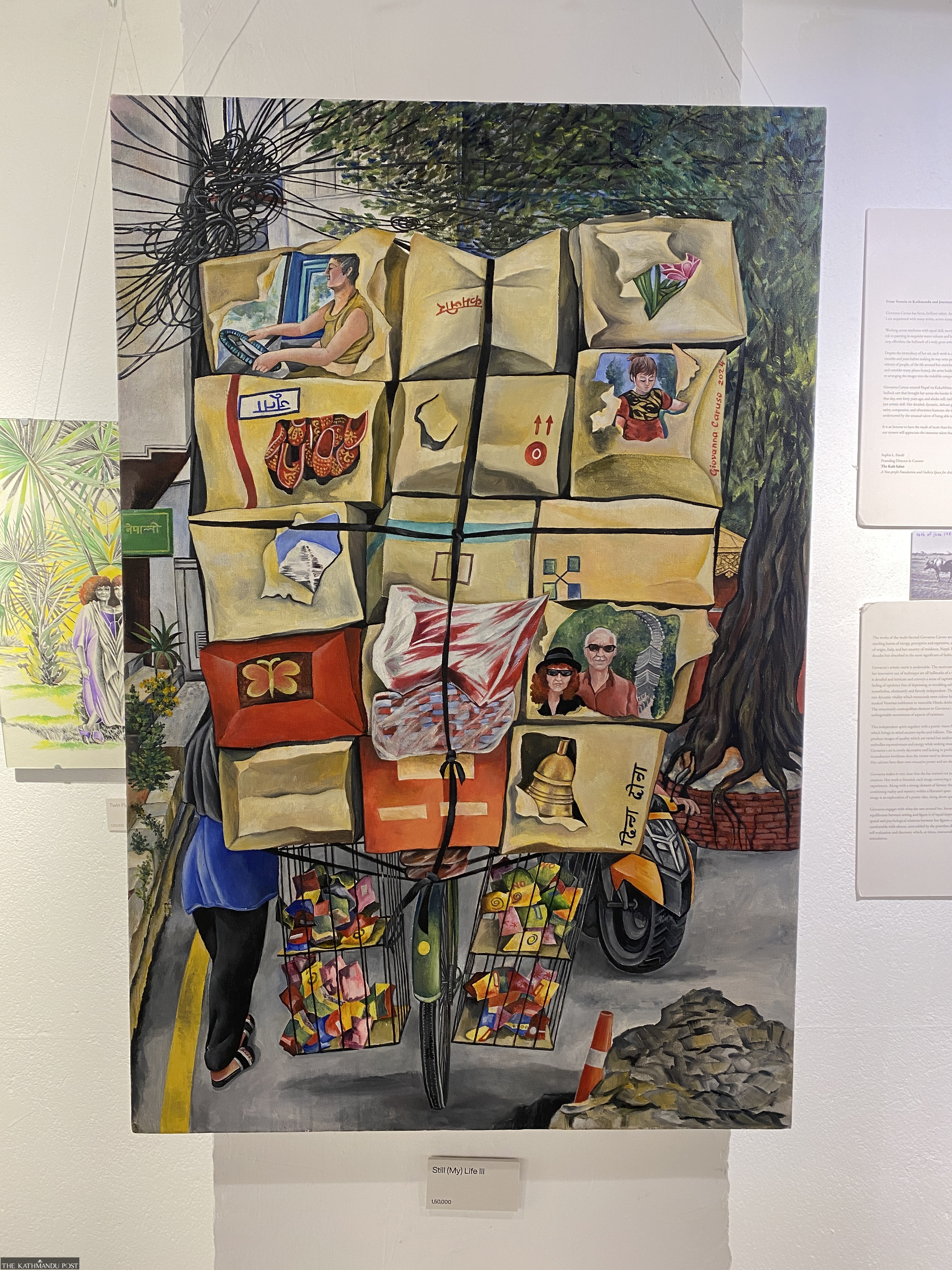
‘Still (My) Life III’ Britta Gfeller/TKP ![]()
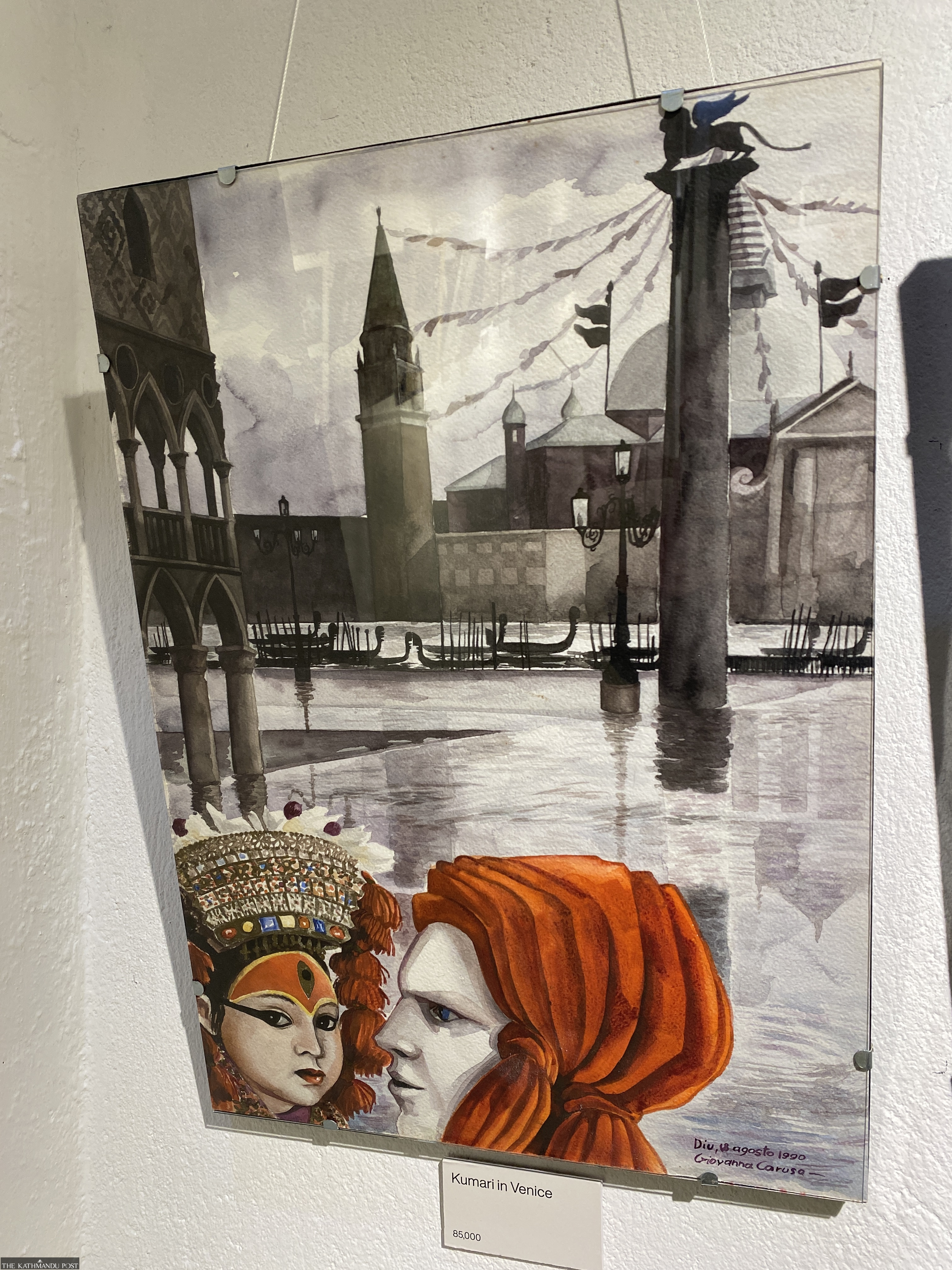
‘Kumari in Venice’ Britta Gfeller/TKP ![]()
Britta Gfeller/TKP ![]()
Britta Gfeller/TKP
Britta Gfeller
Published at : December 8, 2025
Updated at : December 8, 2025 14:43
Kathmandu
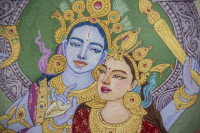
The Kumari visiting Venice. Venetian masks looking out of a window together with Shiva. Two women sitting on a lush tree, gossiping. Scenes from weddings, markets, mountains and temples. Or Goddesses from all over the world—with the faces of the artist’s friends.
Together, these images create a sense of movement across cultures, setting the tone for an exhibition spanning continents and decades.
The gallery The Kalā Salon in Thamel, Kathmandu is showing 96 paintings and drawings by Italian artist Giovanna Caruso under the title ‘From Venice to Kathmandu and Journeys in Between’—from oil painting to water colours to ink and pen, colourful or black and white. The exhibition is rich in variety, showcasing the artist’s work from over four decades. It is clear from the outset that Caruso shares a special bond with Nepal.
The artist first came here in 1983. She arrived on a bullock cart that had brought her across the border from India. Her love for the country began that day, and she has returned many times since, dividing her time between Italy, Nepal and Thailand.
“When she first came to Nepal, she immediately appreciated the richness, and she understood that there is a very deep culture here,” Sophia L Pandé explains. She is the curator of the exhibition and the founding director of the non-profit art gallery The Kalā Salon. “Giovanna Caruso makes the effort to attend all the festivals and speak to as many people as possible. Her work is an actual anthropological study,” Pandé says.
The curator cites the series about the religious festival Shikali Jatra in Khokana as an example. “All the people in her paintings and drawings, the Navadurgas, are real people. Others have photographs of the men who embodied the nine Navadurgas, the manifestations of the Goddess Durga, but Giovanna Caruso has drawn them with pen and ink on paper, which is a remarkable act of documentation.”
The artist and the founding director first met two years ago through Pandé’s husband, who is also Italian. “At first I didn’t realise that she was an amazing artist, I just thought she was a really cool, funky lady, really warm and interesting, and very well-travelled,” Pandé remembers. Only later, she learned about Caruso’s work—and immediately knew that she wanted to exhibit the artist’s oeuvre in her gallery.
Pandé’s mission with The Kalā Salon is to showcase people who work with their hands, and not limit the exhibitions to what is traditionally seen as ‘art’. Whether it is knitting, sewing, embroidery, painting or drawing—she wants to provide a wide platform. “I just have to connect with the work and feel that it’s valuable to people here in Kathmandu and Nepal to be able to interact with it,” Pandé explains. This was the case with Caruso’s work.
Realising this vision, however, required significant logistical effort. Bringing all 96 paintings and drawings to Kathmandu was not easy. Caruso and her partner transported them over the course of a year, always a few at once. Then they all had to be framed, which took another six weeks, before the curator could start arranging them in the gallery.
“In Nepal, art is often very serious,” the curator says. “But Giovanna’s works are full of humour and satire. And I hope that encourages other artists to also venture outside of just the very formal art.”
.JPG)
In many of the paintings and drawings now hanging in the gallery, Caruso included herself, often a woman with red, curly hair, for example, between Babas from the Pashupatinath Temple. According to Pandé, Caruso knows all the Babas by name.
Another aspect the curator points out is that, in the paintings, Caruso engages deeply with places and people. “One of the Babas died recently,” she says. “Giovanna Caruso was in tears. There’s one solo drawing of him in the exhibition to commemorate him.”
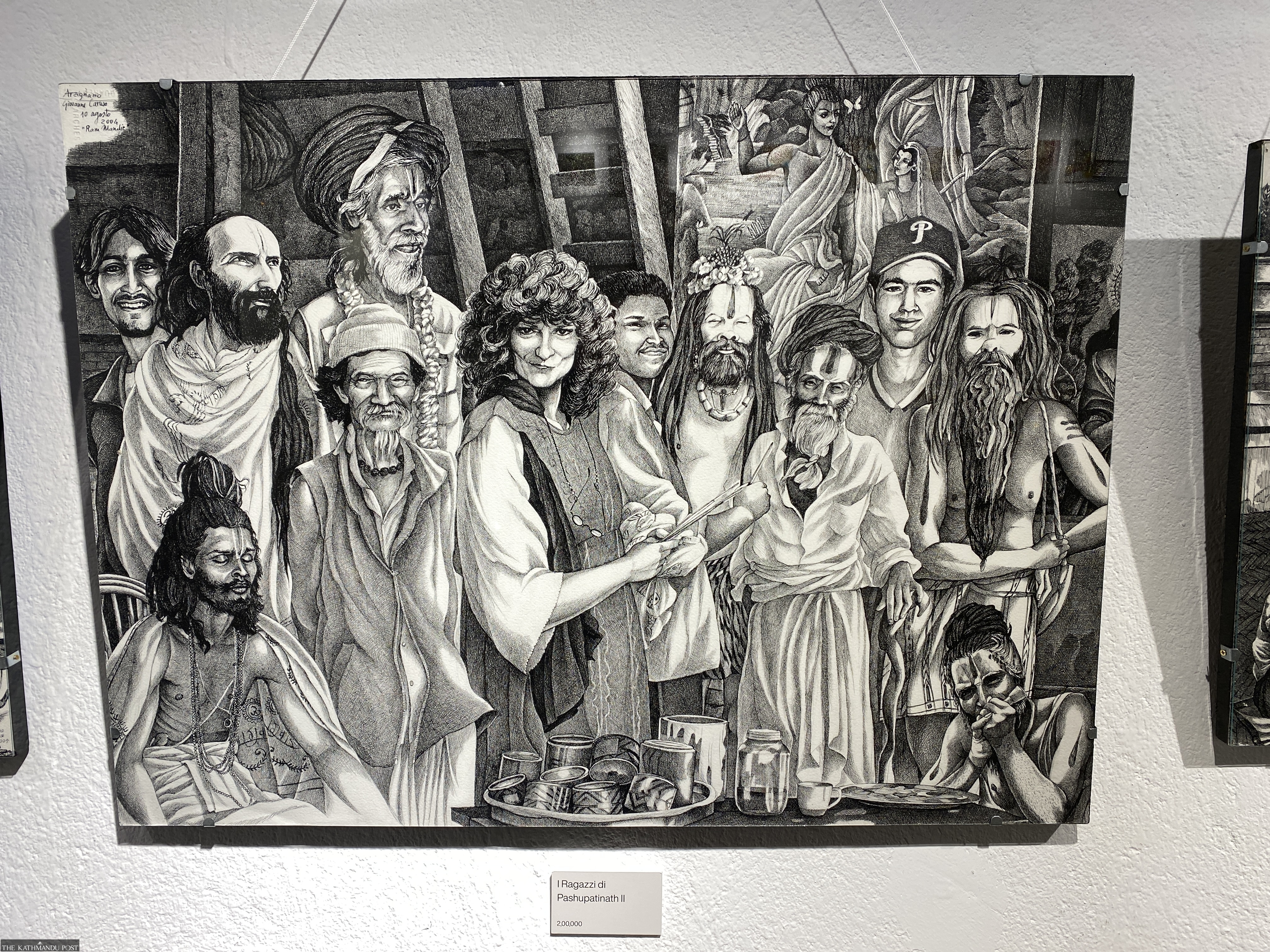
Such emotional ties help explain why this exhibition feels intimate. It is rare to see the work of artists who are not from Nepal or South Asia in the country, Pandé says. “It gives me great pleasure to provide an opportunity for young people to see this kind of work, which they otherwise would have had to travel to Europe to see, which is not possible for everybody,” Pandé says.
The artist was in Nepal for the first ten days of the exhibition and guided students and other interested people through her work. “I hope people will see that this exhibition is a piece of history, in some ways,” Pandé says. “A small four-decade history of the Kathmandu Valley, through the eyes of this world traveller.”
______
From Venice to Kathmandu and Journeys in Between
Where: The Kalā Salon, Chhaya Center, Thamel
When: Until December 12
Entry: Free
Britta Gfeller
Britta Gfeller was a culture and lifestyle intern at the Post.
Editor's Picks





E-PAPER | October 24, 2026

×