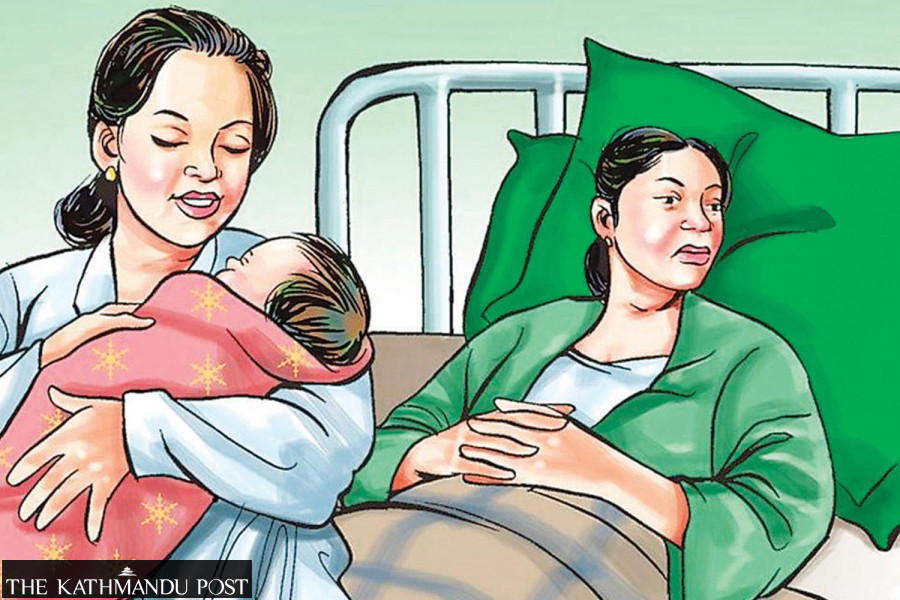
Hypertension is the leading cause of maternal deaths in Nepal, according to a study on maternal and perinatal deaths carried out by the Family Welfare Division under the Department of Health Services.
According to the study, which analysed 204 maternal deaths out of 240 reported in the fiscal year 2024-25, hypertensive disorder was responsible for around 18 percent of deaths.
Thirteen percent of maternal deaths were due to postpartum hemorrhage, followed by pregnancy related infections at 11 percent, unknown causes at 11 percent, amniotic fluid embolism— a rare, unpredictable obstructive emergency—at 8 percent, and abortive complication and underlying cardiac conditions at 7 percent each.
The study showed that 63 percent maternal deaths were reported from hospitals and 37 percent were reported from communities.
Of the 240 reported maternal deaths, 36 were not analysed due to incomplete information.
The majority of deaths—30 percent—were reported from Lumbini province, followed by Madhesh province at 18 percent, Koshi 16 percent, Bagmati 12 percent, Sudurpaschim 11 percent, Karnali seven percent and Gandaki at 6 percent.
Maternal and perinatal death surveillance is a key intervention for improving maternal, perinatal, and neonatal survival. Experts say such surveillance helps identify the causes of death.
The World Health Organisation said that maternal and perinatal death surveillance and response (MPDSR) is an essential quality improvement intervention, which permits the identification, notification, quantification and determination of causes and avoidability of maternal and neonatal deaths and stillbirths, with the goal of orienting measures necessary for their prevention.
According to the UN health body, systematic analyses of overall mortality trends, as well as events and contributing factors leading to individual deaths, can identify barriers in health systems and inspire local solutions to prevent such deaths in the future.
The primary goal of MPDSR is reducing future preventable maternal mortality through a continuous cycle of action and surveillance followed by interpretation of aggregated findings, which are used to recommend actions to prevent future deaths, says the WHO.
The Health Ministry’s report shows that five percent of maternal deaths occurred due to self harm or non-maternity causes. A previous report by the National Statistics Office had identified suicide as the leading cause of maternal deaths from non-maternity causes.
Prenatal depression and postnatal depression that lead patients to take their own lives are major contributors to maternal deaths in Nepal from non-maternity causes. Many women suffer from extreme sadness, anxiety, fatigue, and changes in sleeping and eating habits during pregnancy or after childbirth. Doctors say that, in extreme cases, women with any of these conditions may harm themselves.
Nepal has committed to reducing maternal and neonatal deaths, however, the MPDSR programme has not been implemented nationwide. The programme currently covers 56 districts, and officials say maternal and perinatal deaths are monitored only in those districts.
“We are working to expand the programme in four more districts in the ongoing fiscal year,” said Nisha Joshi, a health official serving at the Family Welfare Division, said. “We need to implement the programme in all 77 districts, but haven’t been able to do so at once due to budget constraints.”
Maternal health experts say that without the MPDSR programme, ongoing maternal and perinatal deaths cannot be effectively prevented. They say that unless the causes of deaths among mothers and babies are identified, it is impossible to reduce mortality rates.
Nepal has reduced maternal deaths by over 70 percent since 2000, according to a WHO report.
The UN health body’s report says that 142 Nepali women currently die from maternity-related complications per 100,000 live births. Similarly, neonatal mortality stands at 16.6 per 1,000 live births, and the stillbirth rate has decreased to 13.5 per 1,000 births.
Under the UN’s Sustainable Development Goals, the target is to reduce the maternal mortality rate to 75 per 100,000 live births by 2030.
The SDGs, which follow on from the Millennium Development Goals (MDGs), aim to end poverty and hunger and all forms of inequality in the world by 2030, and Nepal has committed to meeting the goals.




 16.88°C Kathmandu